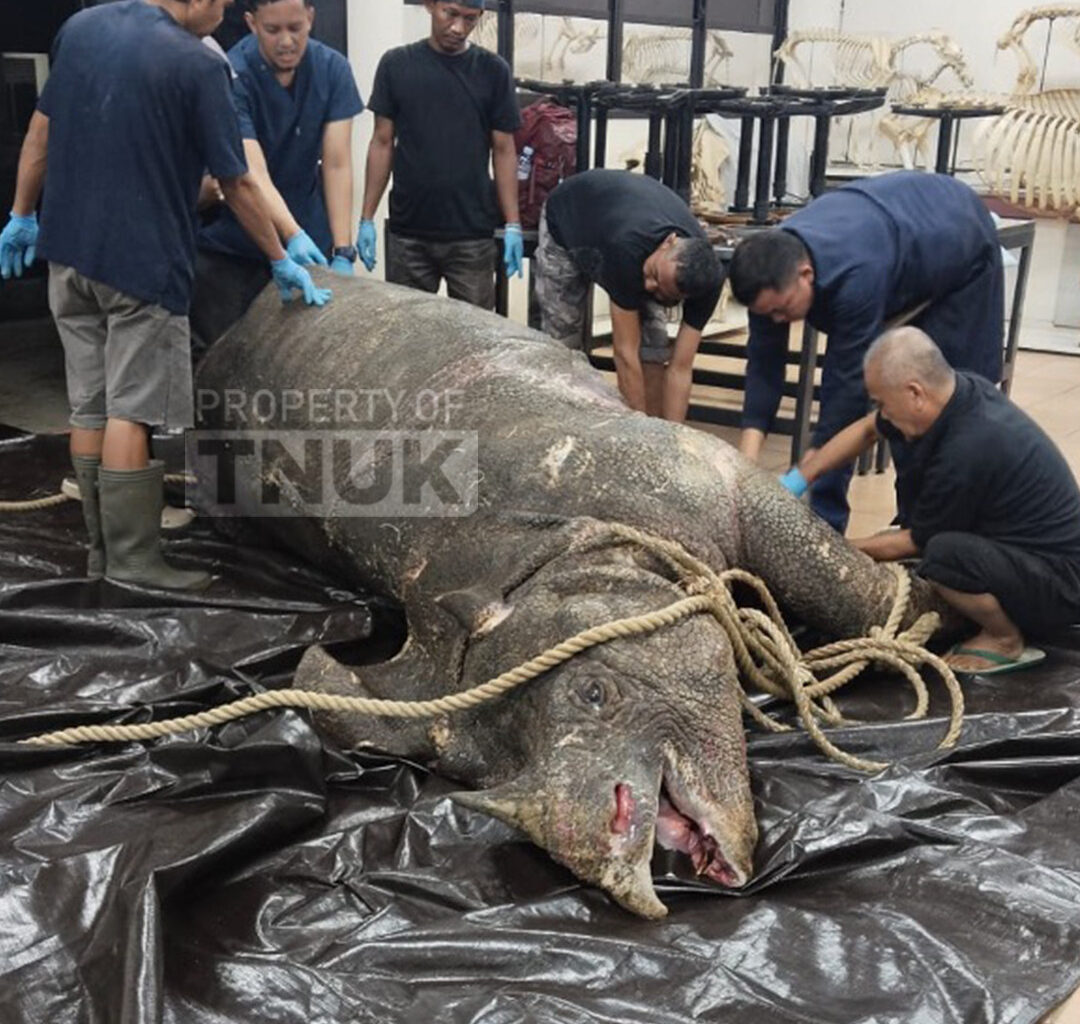
usofa, one of the world’s last remaining male Javan rhinoceroses, died shortly after his historic relocation from the wild to the Javan Rhino Study and Conservation Area (JRSCA) in Ujung Kulon National Park, Banten, part of a major conservation effort to save the critically endangered species.
Ardi Andono, head of Ujung Kulon National Park, said the rhino died on Nov. 7, just two days after arriving at the conservation facility.
“All procedures were carried out in accordance with international conservation standards, including simulations, ethical assessments and full logistical and security preparations. Musofa was successfully moved without injury, but he succumbed to chronic illnesses he had long suffered before the relocation,” Ardi said in a statement on Thursday.
He explained that a necropsy performed after Musofa’s death revealed a significant parasitic infection in his stomach, intestines and brain, which had caused extensive organ degeneration. Authorities also found old wounds from fights with other rhinos, which further worsened his condition but were not the primary cause of death.
Read also: IPB uses assisted reproductive technology to help save Indonesia’s endangered rhinos
Musofa was the first Javan rhino ever translocated from Ujung Kulon’s forest. His move to the conservation area was intended as a crucial step to stabilize the population, strengthen genetic diversity and enable a more structured habitat management. Researchers had planned to intensively monitor the rhino and eventually support breeding efforts through assisted reproductive technologies.

Every Monday, Wednesday and Friday morning.
Delivered straight to your inbox three times weekly, this curated briefing provides a concise overview of the day’s most important issues, covering a wide range of topics from politics to culture and society.
for signing up our newsletter!
Please check your email for your newsletter subscription.
Musofa and a female rhino were chosen in September after years of evaluation by park authorities, researchers and partner institutions. He was successfully captured in a pit trap on Nov. 3 and transported to the conservation zone using a KAPA K-61 amphibious vehicle provided by the Navy.