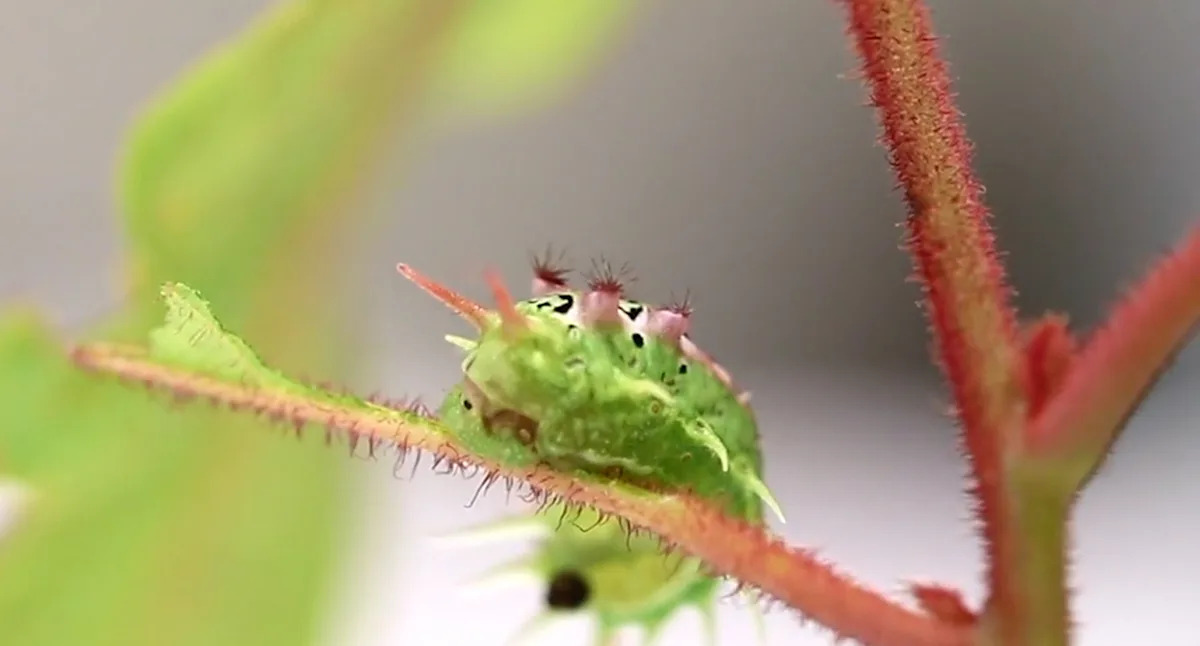
A backyard creature that’s famous for having spikes laced with over 150 painful venoms could have hidden benefits for humans. Scientists from the University of Queensland have sequenced the DNA of the mottled cup moth caterpillar and think its venom could be used in medicine.
Molecular scientist Dr Andrew Walker has been researching the species (doratifera vulnerans) for close to a decade, focusing on the potential for its protein-based toxins to kill bacteria and parasites.
“There are more than 150,000 species of moths and butterflies, and that includes several different groups that have independently evolved venoms with different compositions,” he said.
“Some of the venom molecules have insecticidal properties, so we are looking at them for use as pesticides, while others can activate receptors in the human body, so could potentially be used in medicine to treat epilepsy, stroke, or cancer.”
What does the caterpillar’s venom feel like?
Doratifera vulnerans is found in parts of Queensland, New South Wales, Victoria, and Western Australia. It’s a common species that feeds on the leaves of eucalyptus, melaleuca, guava and apricot.
Speaking with Yahoo News, Dr Walker revealed he’d been stung close to a dozen times, and he described the pain as similar to that caused by a paper wasp.
“It’s an instant burning pain. Unlike a wasp that’s very active, these caterpillars don’t move around much, so sometimes you feel the sting before you see one, so you know there must be one on the plant you’ve been rifling through,” he said.
Related: Tourists vow to avoid Australia over ‘dangerous’ detail in photo
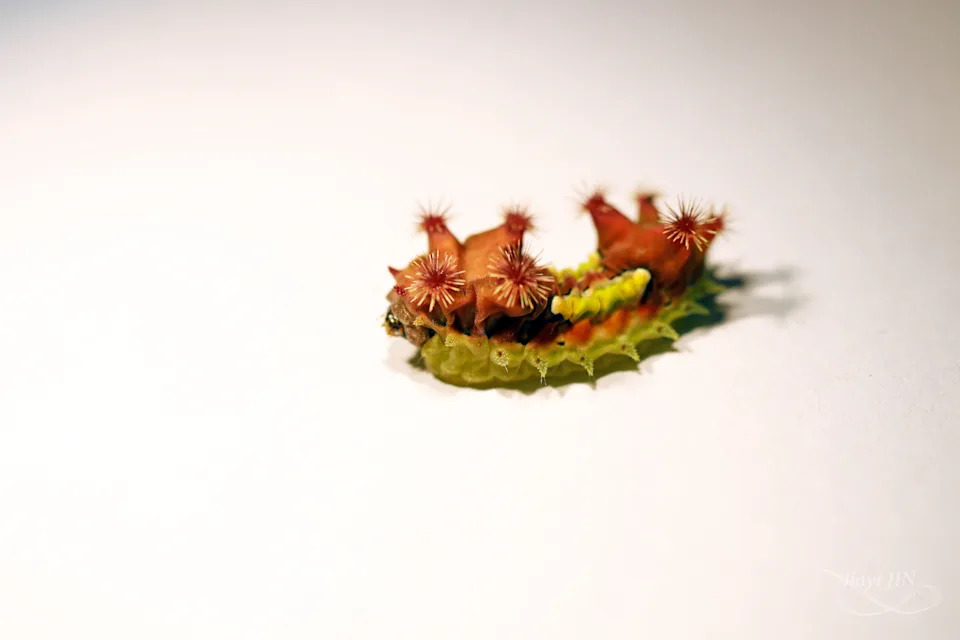
The caterpillars are known for their painful stings. Source: Jiayi Jin
New research reveals why toxins developed
Dr Walker was an author of new research published in the journal PNAS, which focused on how the toxins evolved in the caterpillars.
Because most of the world’s research into venoms has focused on snakes, Dr Walker said the team’s research is a “significant step forward in our knowledge”.
“They have switched in roles from having a role in the immune system to having roles in defence against predators,” he later told Yahoo.
What’s incredible about the evolution of these peptides is that they didn’t lose their anti-microbial properties.
“We expected the ones that adapted into pain-causing peptides would have lost their anti-microbial activity, but we found they had actually gotten stronger activity on some of the very hard to kill microbes — gram-positive bugs,” he added.
“So in that sense, we did find some blueprints to make molecules that are great at killing things like golden staph, but in their present form they cause excruciating pain, so they’re not great medicines yet.”
Love Australia’s weird and wonderful environment? 🐊🦘😳 Get our new newsletter showcasing the week’s best stories.
