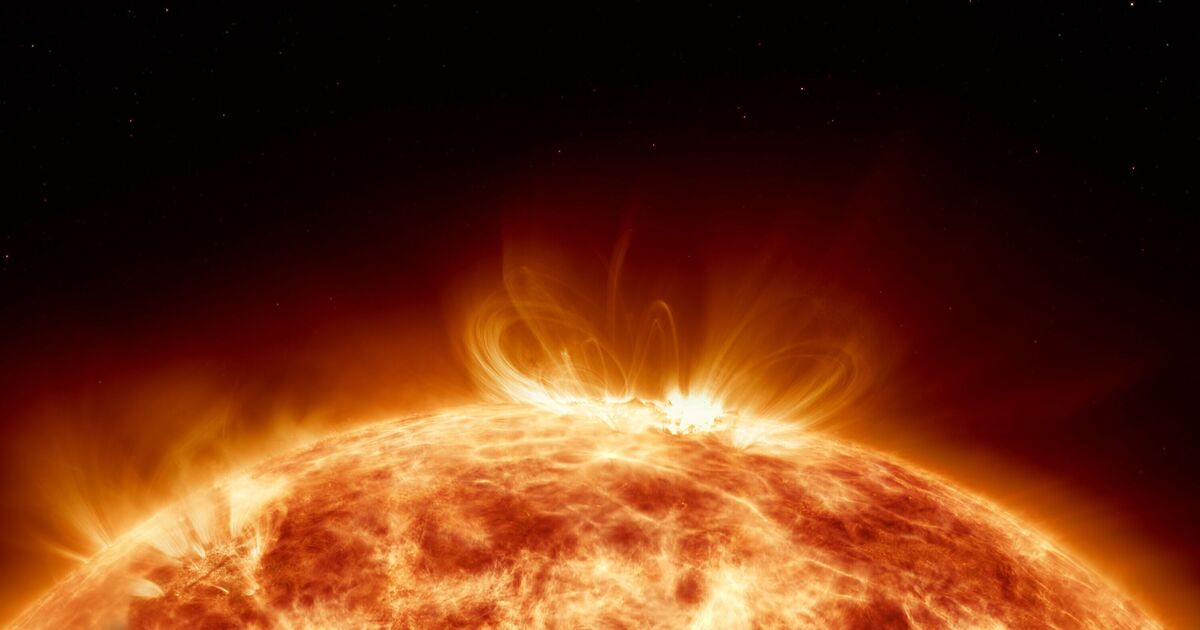
NASA has warned that a recent strong solar flare could disrupt life on Earth. The space agency announced Monday, December 1, that the powerful bursts of energy have been categorised as X-class, which denotes the most intense flares.
Its Solar Dynamics Observatory spacecraft, which watches the Sun constantly, captured images of the event. Strong solar flares can cause coronal mass ejections (CME), explosions of plasma and magnetic field that can cause geomagnetic storms when they are directed at Earth. The latest flare has been classified as an X1.9, with “X” marking it as one of the strongest categories of solar flares and the number indicating its specific level of intensity within that class.
On the upside, they can also produce spectacular displays of aurora borealis, also known as Northern Lights.
NASA said: “The Sun emitted a strong solar flare, peaking at 9.49 pm ET on November 30, 2025. This flare is classified as an X1.9 flare.”
Speaking about the impact this flare can have on people on Earth, the agency added: “Flares and solar eruptions can impact radio communications, electric power grids, navigation signals, and pose risks to spacecraft and astronauts.”
Krista Hammond, Met Office space weather manager said: “Data from these launches are vital for our understanding of how space weather impacts radiation levels through Earth’s atmosphere.”
Scientists from the University of Surrey explained that although the radiation from this solar event did not pose an immediate health risk, stronger storms in the future could be more concerning, particularly for aircraft electronics.
Their research showed that the energetic particles detected by probes have the potential to interfere with onboard computer memory, with estimates suggesting they could cause around 60 errors per hour for every gigabyte of data, highlighting the vulnerability of aviation systems during intense solar activity.
Space weather expert Clive Dyer from the University of Surrey told Independent: “This was the strongest Ground Level Event we’ve seen since December 2006. Our sensors have given the clearest picture yet of how rapidly conditions can change at aviation altitudes. We know from historical observations that significantly bigger events are possible, and we need to be ready.”