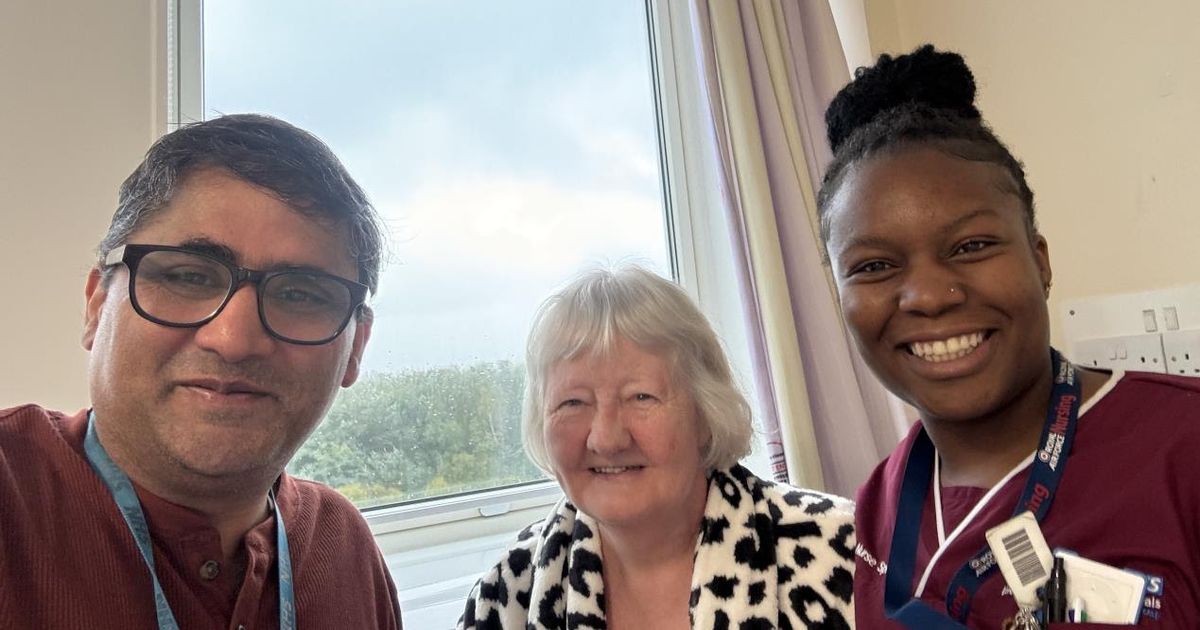
Stella Smeeton was going out for walks just one week after surgery Stella Smeeton with Professor Shakil Ahmed and a member of the Colorectal team(Image: University Hospitals of Liverpool Group)
A nan-of-two has become the first patient in Europe to receive life-changing bowel cancer surgery and be fully recovered just one week after surgery. Stella Smeeton, 69, from Cuddington in Cheshire, has made medical history after undergoing pioneering robotic surgery at Liverpool’s Aintree University Hospital.
Aintree’s surgical team recently became the first in Europe to use a transanal da Vinci access port to remove early-stage rectal cancer, a major breakthrough in robotic-assisted cancer treatment. The operation, performed in October 2025 by the hospital’s specialist Colorectal team, used the £2 million da Vinci single-port (SP) robotic system. The same team also became the first in the NHS to use the device when it arrived in 2024.
The single-port system allows surgeons to work through just one small entry point, giving far greater precision than traditional surgery and significantly reducing recovery times.
Stella was referred to Aintree after her local hospital discovered a complex bowel growth suspected to be cancerous. Because she had undergone similar surgery in 2009 and the new growth required specialist expertise, she was sent to Aintree’s internationally recognised Colorectal service, which is one of the busiest in the UK for early-stage rectal cancer.
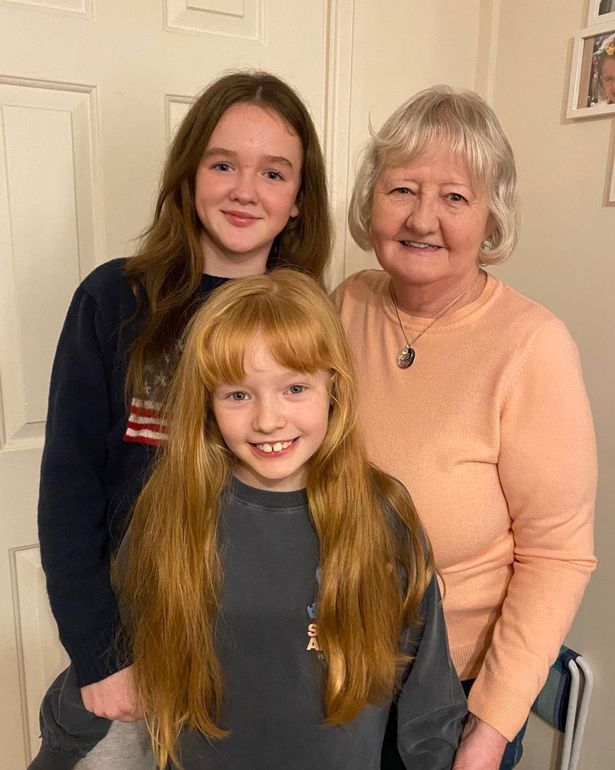 Stella Smeeton with her grandchildren Elsie and Thea(Image: University Hospitals of Liverpool Group)
Stella praised the care she received and said the speed of her recovery far exceeded her expectations.
Stella said: “From the minute I was referred to Aintree, the care was second to none.
“Before the operation, I was told it could take three to six months to recover using traditional methods, but just a week after surgery, I’m already going on walks with my husband and enjoying time with my granddaughters.
“It’s a blessing to have access to this technology and I’m sure many more patients will benefit from it, just as I have, in the years to come.”
The da Vinci SP was part-funded by a £1 million donation from the Marina Dalglish Appeal. Hospitals in Liverpool have achieved several UK firsts in robotic surgery.
Broadgreen Hospital was the first to perform prostate cancer surgery using the da Vinci SP and the first to complete knee replacement surgery with VELYS robotic technology, while the Endocrine service at the Royal Liverpool was the first in the region to use robotics to treat adrenal gland cancer.
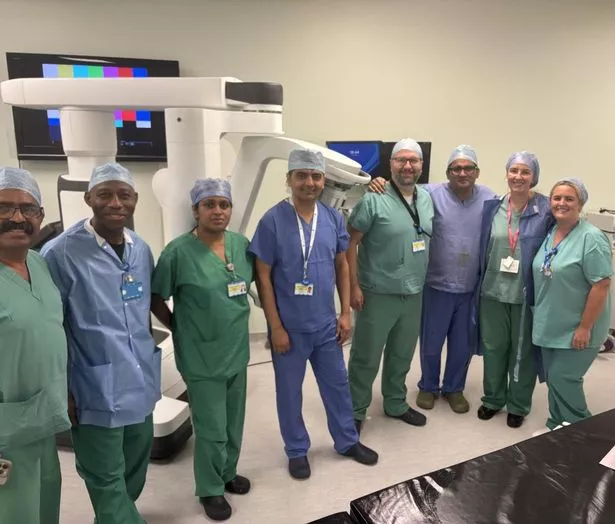 Aintree Hospital’s Colorectal team with the Da Vinci single-port robot(Image: University Hospitals of Liverpool Group)
Surgeons operate the robot from a nearby console, using hand and foot controls to guide its miniature instruments inside the body. A high-definition 3D camera provides a live, magnified video feed, allowing for enhanced visibility throughout the procedure.
The Colorectal service performs surgery on more than 700 patients each year and is continually investing in innovative forms of treatment.
Professor Shakil Ahmed, Clinical Director for Colorectal Surgery at NHS University Hospitals of Liverpool Group, who lead the procedure, said: “Delivering this kind of surgery is a major milestone for us and for patients in our region and reflects the dedication and expertise of our team.
“Access to this state-of-the-art technology allows us to carry out more complex procedures with less risk. Single-port robotic surgery gives our surgeons a significantly improved chance of fully removing cancerous tissue from the colon or rectum. For patients like Stella, this means faster recovery, fewer complications and better outcomes.”
“We’re committed to ensuring the benefits of this advanced surgical technique are felt far and wide. We’re actively training colorectal specialists across the UK, Europe and Australia in the use of single-port robotic surgery and its advantages. Our ambition is to remain at the forefront of colorectal innovation and help shape the future of care both nationally and internationally.”