
Kathleen Delamare remembered living in the tenement slums of Dublin and the first day moving in to a new flat on Townsend Street on the south side of the city.
The decades long tenant of what would become Markievicz House told the author of a new book before she passed away two years ago aged 96: “If I won the lottery tomorrow I would not want to leave.”
That is a short testament to the abilities of Herbert Simms, the English architect tasked by Dublin corporation to oversee what became the construction of 17,000 homes for people as they were relocated from terrible tenement conditions to a network of inner city flats and cottages in what were then the suburbs, including Crumlin.
 Author Eoin Ó Brion with Kathleen Delamere inside her flat in Markievicz House. PICTURE: MAL MCCANN (Mal McCann)
“He left an enormous legacy,” said Eoin Ó Brion, the author of the just published ‘Flats and Cottages: Herbert Simms and the Housing of Dublin’s Working Class, 1932–1948’.

The book, to be launched at Dublin City Hall on Tuesday evening, is a joint project with photographer Mal McCann, The Irish News picture editor. A Belfast launch takes place next Monday at James Connolly House on the Falls Road.
Many are still standing, which reveals the quality of the construction that Simms demanded, said Mr Ó Brion, the Sinn Féin TD for Dublin Mid-West and the party’s housing spokesperson.
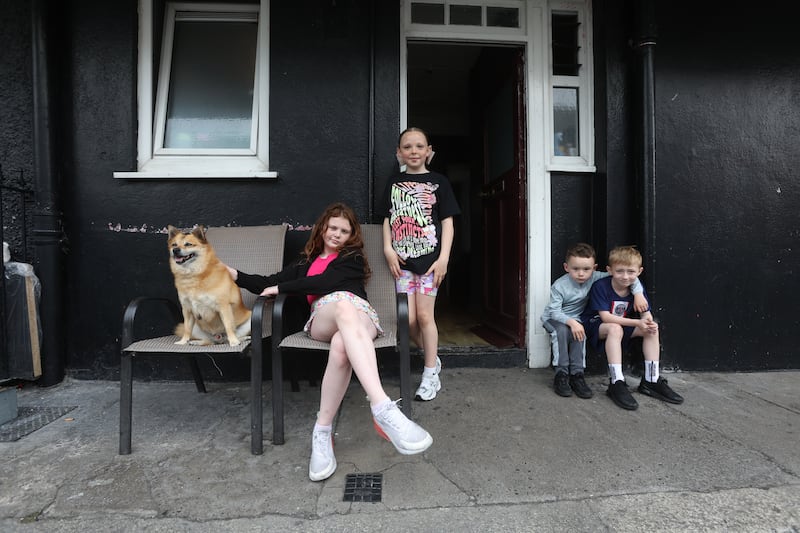 Children pose for a photograph at St Michan’s House in the north inner city. PICTURE: MAL MCCANN (Mal McCann)
At a time of enormous economic difficulties, including due to a long running trade war with Britain and then the Second World War “how did the Free State, only a decade old….manage to clear so many slums and build flats and cottages for working class Dubs,” Mr Ó Brion asks.
There was a political will among successive governments at the time that they needed to support local authorities and demolish the tenements.
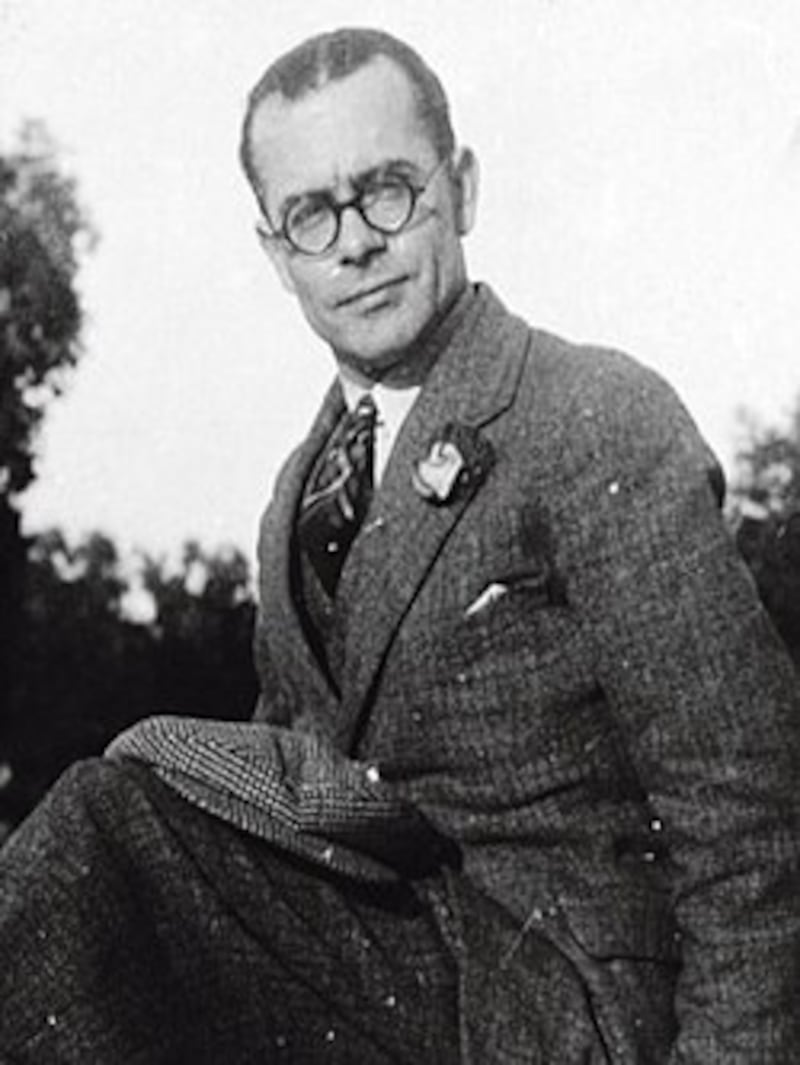 Herbert Simms
Simms was aided by his team and by members of civic society and trade unions, said Mr Ó Brion. The book also examines what can be learned as Ireland, north and south, deals with its contemporary housing crisis.
There was a tragic end to the story as Simms took his own life in 1948, aged just 50.
He may have suffered from long term mental health issues, potentially PTSD from the First World War.
 Racing past Emmet Buildings in style. PICTURE: MAL MCCANN (Mal McCann)
But, the author said, he was also “worked to death, under relentless pressure and demands and the battles over standards and quality”.
Mal McCann said the “project reminded me that architecture is never just about bricks and mortar, it’s about the people who make those spaces their own”.
“I tried to capture the community spirit and daily life. Working with Eoin was a privilege his knowledge of Simms and the Dublin communities gave the whole project depth and context,” the photographer added.