Alaïa opens first China flagship in Beijing, designed by Halleroed
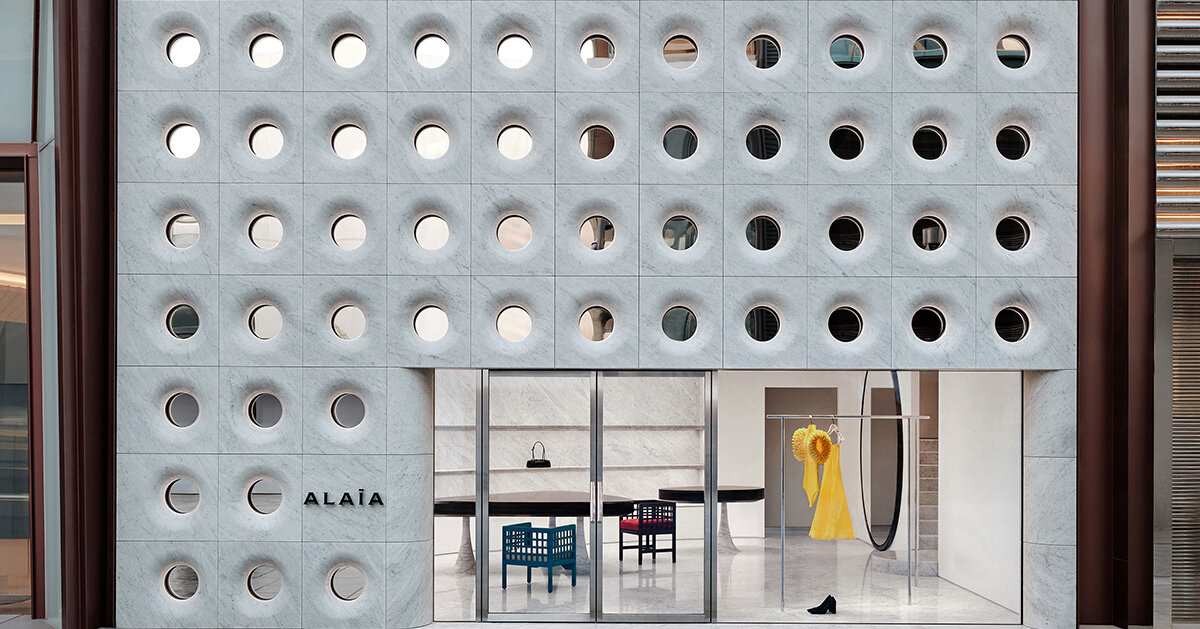
Alaïa steps into China with the opening of its first flagship store, located in Taikoo Li Sanlitun, Beijing. The two-floor boutique, designed through a close collaboration between Creative Director Pieter Mulier and Halleroed, translates sensuality, radical minimalism, and sculptural form, core principles of the brand, into architecture.
From the street, the facade, a solid plane of Carrara marble, is punctuated by circular and rounded windows inspired by Alaïa’s signature perforated motifs. This rhythmic patterning lightens the mass of the stone while preserving a sense of gravity and calm. Monumental yet restrained, the exterior introduces a new architectural expression for the Maison, one that merges couture detail with urban presence.
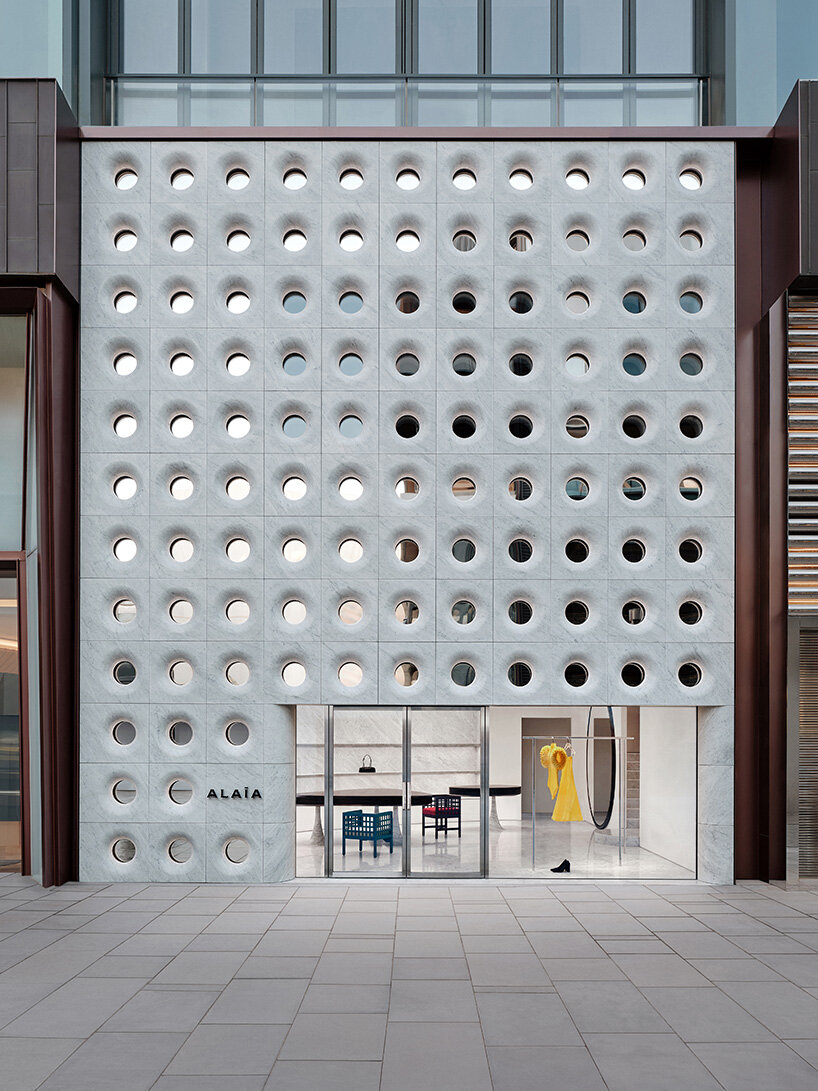
all images by Jonathan Leijonhufvud
Curves and Geometry in a Sculpted Retail Landscape
Curved, organic lines are set against sharp geometric forms, mirroring the dualities that define the Parisian fashion house’s approach to fashion. On the ground floor, a sweeping marble shelving unit anchors the space, while sculptural podiums rise from the floor like carved extensions of the architecture. The layout treats display furniture as part of the spatial composition.
Two large cubic chairs, designed by French fashion designer Paul Poiret, are placed within the space, their bold geometry amplifying the tension between softness and structural clarity. Upstairs, the atmosphere becomes more subdued, offering a setting for the full Alaïa wardrobe, from ready-to-wear to accessories and essentials. Seating by Philippe Malouin frames views toward the rounded openings of the facade by Swedish architecture studio Halleroed, allowing the geometry of the windows to shape the rhythm inside the room. Throughout the boutique, the emphasis remains on craftsmanship, whether expressed in stone, furniture, or the spatial interplay of curves and planes.
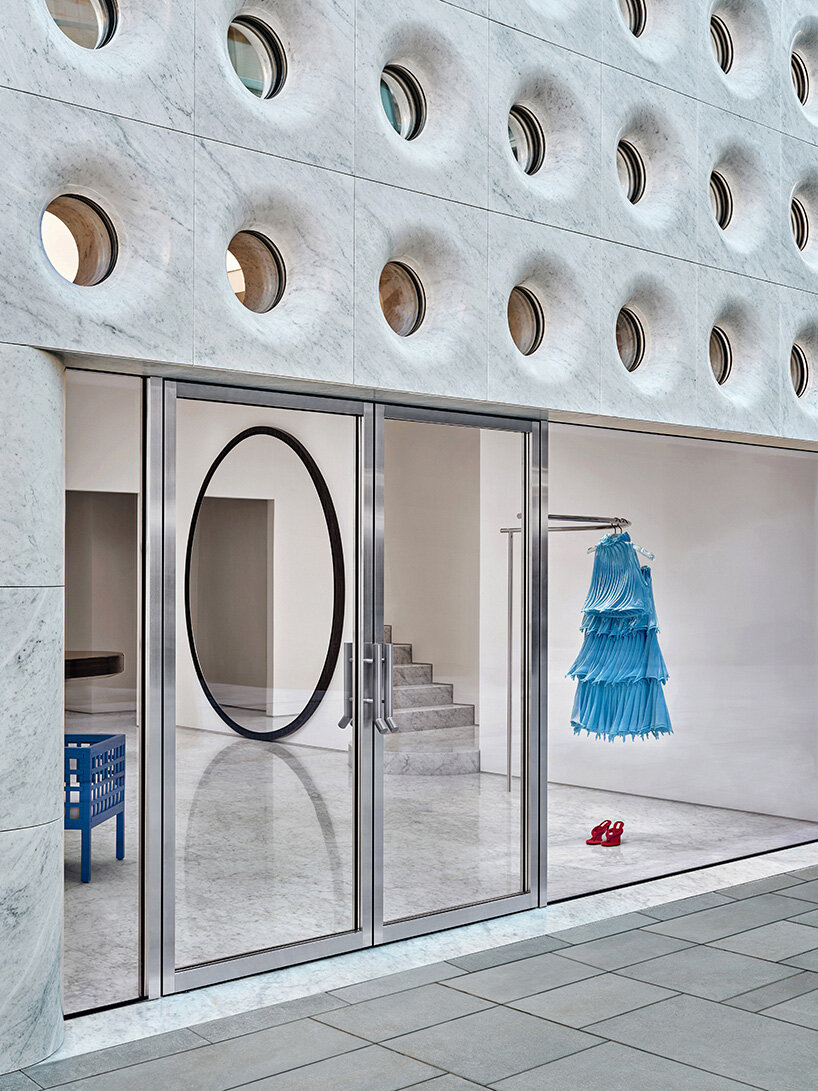
a solid plane of Carrara marble
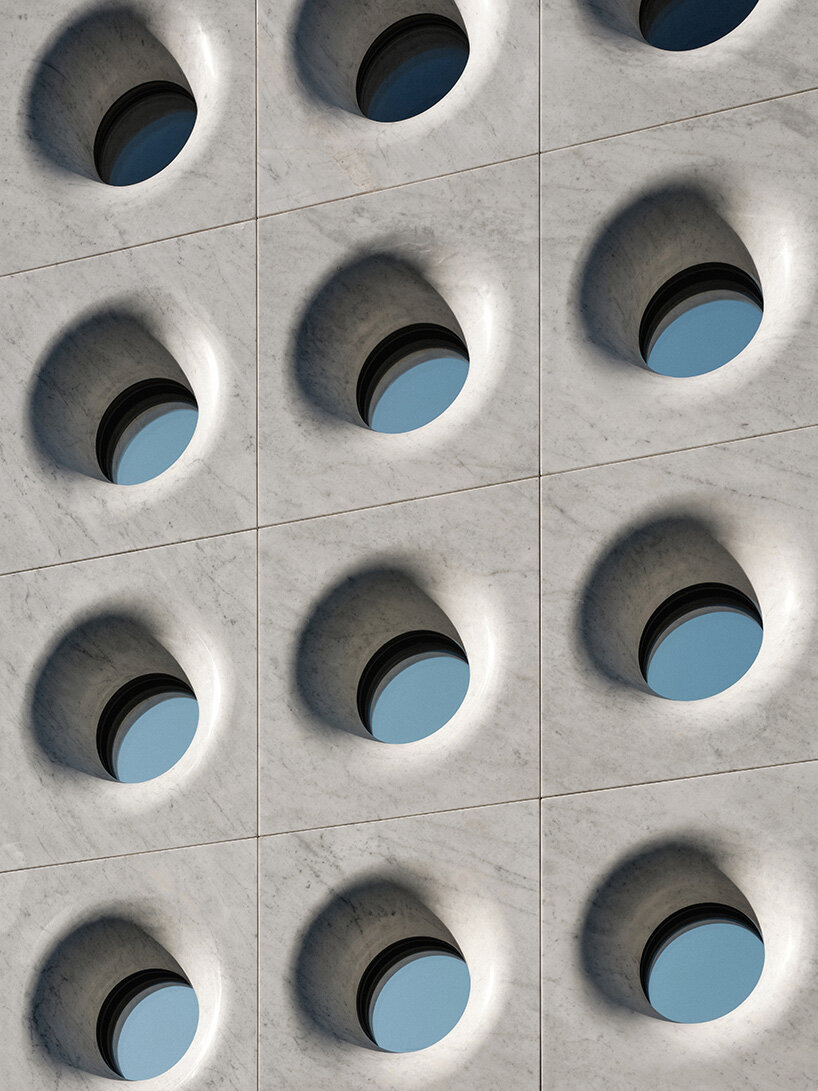
the facade is punctuated by circular and rounded windows
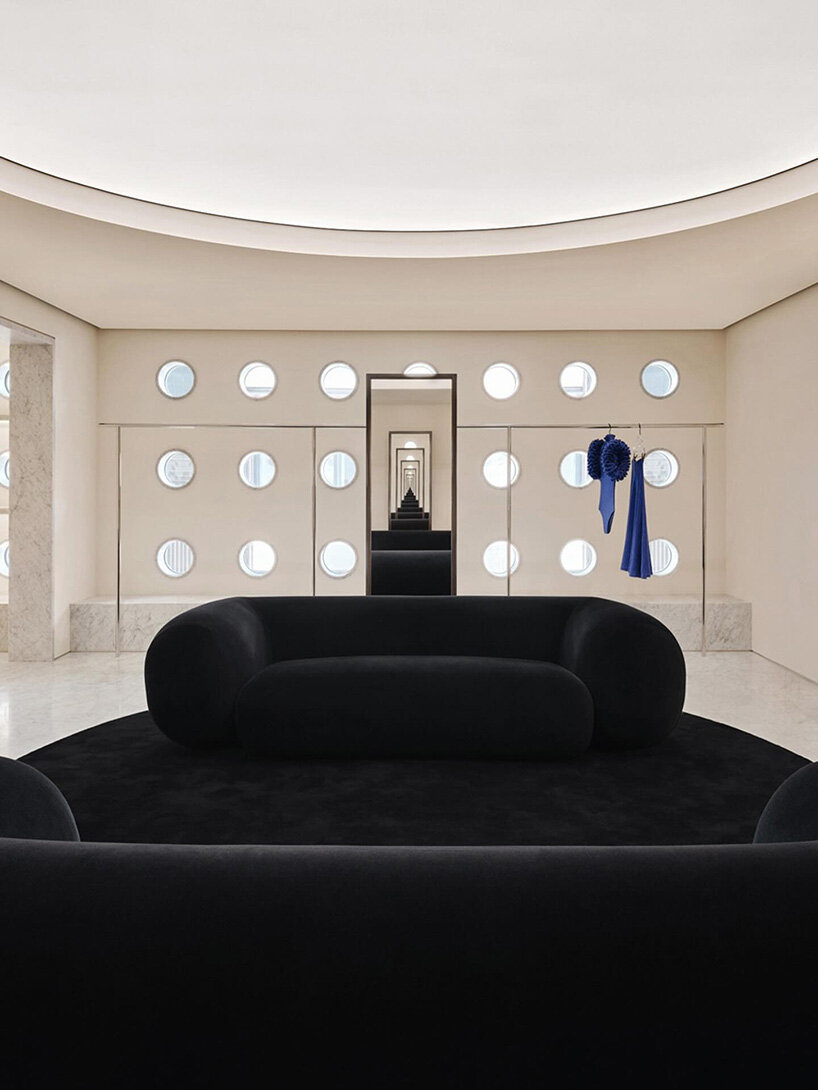
the geometry of the windows shape the rhythm inside the room
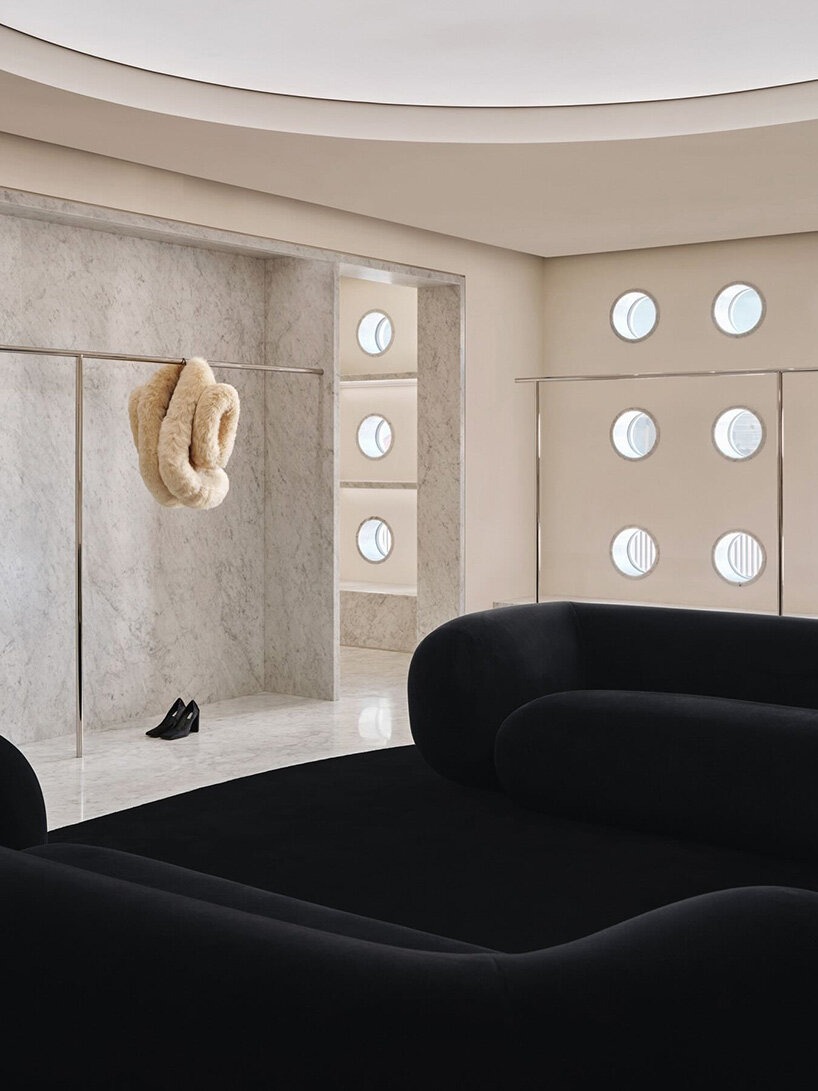
the emphasis remains on craftsmanship