
The sharp rise in mental health diagnoses among young people has ignited a polarizing debate. Many identify global upheavals as the source of the surge in mental illness — Covid-19, social media, climate anxiety. Others ask if the epidemic is a mirage, arguing that we are medicalizing everyday stress and sadness that are part of the human condition.
These questions matter. Mental health services are under extraordinary strain. I’m based in the U.K., where long NHS waiting lists grab the headlines, but it’s far from a local issue. In the U.S 16.5% of youths between the ages of 6 and 17 experienced a mental health disorder in the past year. Just 9% of people with depression globally receive adequate treatment.
Behind those statistics are people suffering, some severely. Regardless of whether you believe the overall rise in diagnoses reflects reality or overreach, it’s hard to deny that many people need urgent help from systems that are struggling to provide it.
However, focusing on who “counts” as mentally ill ultimately sends us down the wrong path. It frames the issue as binary — ill or not ill — when the reality is far more complex. What we urgently need is not a narrowing of definitions but a smarter, more personalized approach to finding the right solution for the right person at the right time.
Right now, hugely diverse groups of people are funneled into a limited set of treatment paths, despite the enormous variation in their experiences, and even greater differences in how they respond to treatment. It’s like looking at the full spectrum of a rainbow and responding as if we see only red, yellow, and blue.
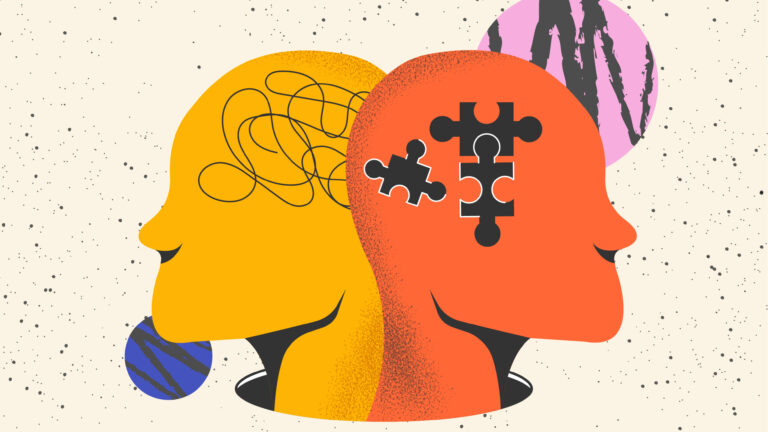
The two very different types of mental health stigma
Imagine if we could match individuals to the solutions most likely to work for them, based on their specific needs and characteristics. We’d treat people faster, reduce waiting lists, and prevent conditions from escalating. We’d also identify who could benefit from lower-resource support and move through treatment quickly, who needs urgent intervention, and how to improve early-stage care to stop problems before they become acute.
Opening up our perspective can also allow us to think beyond “treatment.” For some people, the most effective way to improve their mental health is not through clinical interventions but through policy changes, community initiatives, or strategies that tackle an individual’s needs holistically. For example, Wellcome funds research that tests innovative approaches both inside and outside traditional health care settings, ranging from use of digital avatars with support from clinicians to help those who experience distressing voices, to the use of group singing to help address some cases of postpartum depression.
When we reframe the challenge this way, we can move the debate beyond a sole focus on health care systems, which are often gated and resource-limited. It creates possibilities for prevention, social support, and structural changes that can reduce risk and promote mental health at scale.
This still requires innovation within health care, but by broadening our lens, we can design solutions that meet people where they are, rather than forcing everyone through the same bottleneck.
This isn’t a pipe dream. Scientists are making progress toward identifying new solutions that are set to revolutionize mental health care within the next five years. In 2024, the Food and Drug Administration approved the first new approach to schizophrenia in decades. Research funded by Wellcome is underway to understand why different people respond differently to the same medications, so we can predict who will benefit from which antidepressant, for example. Researchers are also analyzing the effects of social initiatives and community support —ranging from social prescribing to broader policy changes — on different groups with mental health problems.
Other studies are exploring how to personalize talking therapies, sleep interventions, exercise, or nutrition based on factors like genetics, learning style, or past experience. There’s also work to identify cohorts whose mental health challenges may stem from specific biological issues — such as inflammation or sensitivity to changes in light — so solutions can target these root causes.
The temptation, given the scale of the current mental health challenge, is to conclude that the answer lies in declaring much of it illusory, that a substantial proportion of people simply don’t need intervention. And yes, mental health science must always respect the boundary between treatable conditions and the ordinary ups and downs of life.

What if we’re talking about teens’ mental health too much?
But dismissing the current crisis won’t make it go away. Instead, we should rise to it, recognizing that different people need different types of support, and for some this may involve self-care or require other wider societal change. Using cutting-edge science can help find effective solutions that can then be delivered rapidly, equitably, and at scale.
This approach would transform mental health care. It would stop problems at the earliest point, preventing them from becoming chronic or recurrent. It would help people return to rewarding family, social, and professional lives. And it would move us beyond the sterile debate about overdiagnosis toward a future where mental health care is as precise and personalized as any other branch of medicine.
The question isn’t whether too many people are being diagnosed. It’s whether we’re willing to invest in the science and systems that can ensure every person gets the solutions they truly need.
Miranda Wolpert is director of mental health at Wellcome.