Topline
Today sees the beginning of the Geminids, the most prolific meteor shower of the year. A meteor shower that favours the Northern Hemisphere, it’s a display often overlooked by skywatchers despite the potential to produce up to 120 “shooting stars” in a clear, dark sky.
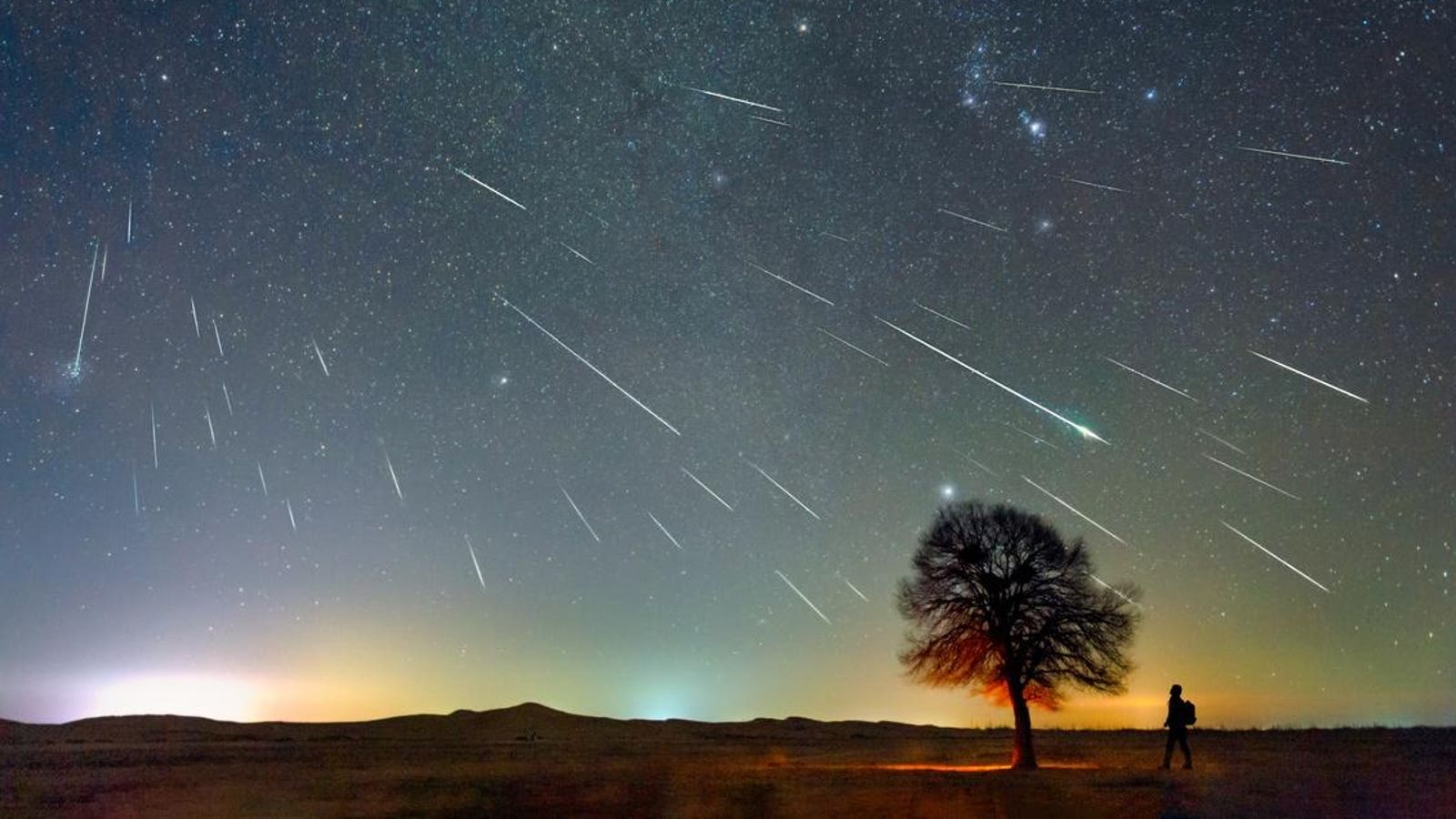
The Geminid meteor shower on December 13, 2020 was photographed in the Kubuqi Desert of Inner Mongolia, China, on a very cold night of minus 20 degrees
gettyKey Facts
The Geminid meteor shower runs from Thursday, Dec. 4, through Wednesday, Dec. 17, 2025, with its peak overnight on Saturday, Dec. 13 and Sunday, Dec. 14, according to the American Meteor Society.
Skywatchers can see Geminids on any clear night from Dec. 4 through Dec. 17, but there’s a much better chance on the peak night.
The Geminids are known for bright, multicolored meteors. At their peak, they can produce up to 120 meteors per hour under a moonless night sky. The moon won’t rise until about 2:00 a.m. on Dec. 14.
What Causes The Geminid Meteor Shower
Each Geminid meteor is a fragment from 3200 Phaethon, a rocky object that orbits the sun every 524 days, making the Geminids one of the only major showers not caused by a traditional comet. The fragments slam into Earth’s atmosphere as the planet passes through its debris stream.
Read More