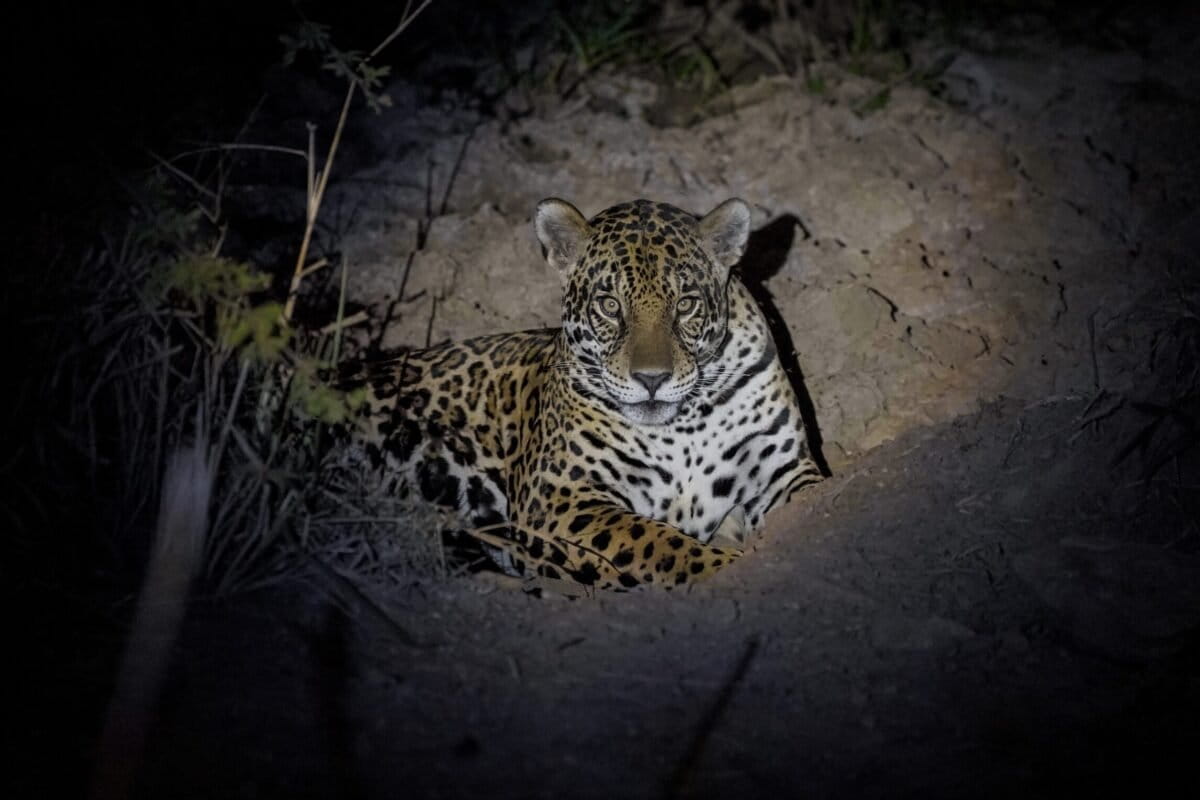
- In Brazil’s state of Mato Grosso do Sul, the Reprocon research group, which specializes in assisted wildlife reproduction, has been investing in cloning methods and protocols for jaguars since 2023.
- Fragmented habitat has isolated jaguar populations, causing them to cross with members of the same gene pool. Today, artificial insemination, in vitro fertilization and cloning techniques have been improving the genetics of groups to avoid eventual extinction of the species because of inbreeding.
- Cloning is used together with other endangered wildlife conservation strategies like creating, expanding and connecting preserved habitat. Reprocon expects to transfer its first cloned embryos to female cats in 2026.
See All Key Ideas
MIRANDA, Brazil — We made three attempts to capture a jaguar after arriving at Fazenda Bodoquena in Miranda, Mato Grosso do Sul state, on a Thursday afternoon in early September. Part of the team went to set up a snare trap near a cow carcass that had been found earlier that day. We were sure we would catch one because jaguars usually come back to eat off their prey for a few days after a kill. With more than 70,000 hectares (173,000 acres) spread between the Pantanal wetland area and the Cerrado savanna, Fazenda Bodoquena conciliates cattle raising and biodiversity conservation. Once a month, it receives researchers from Reprocon, a group specialized in assisted wildlife reproduction.
That night, we returned to our lodgings to eat dinner and monitor the movement from afar: We watched satellite images from a camera installed at the site on our cell phones. As we watched, the camera showed images of a female jaguar, but not the male we believed to have killed the animal. She seemed wary, nearing the carcass and backing off again a few times. When she finally got close enough to our trap, she set it off and managed to dash away. The researchers went to set the trap again, but no more wildcats appeared that night.
A new carcass was found on Friday, and the team set the trap (which is only set at the end of the day so that no cats can be trapped during the hot daylight hours). Now, with two snares set, our chances had doubled. It wasn’t long before a jaguar appeared at the second site to check out the carcass, but this one also managed to disarm the trap. Surprising, said the researchers, “this almost never happens!” But we still had time for another try the next day.
After finding a third carcass on Saturday and setting a third snare trap, we were waiting attentively with our eyes on the app during a dinner being held at the farm for its employees. It happened so quickly that we barely had time to see the capture: At 21:10, an animal appeared on the screen, went straight to its prey without hesitation and got caught in the snare.
Three hours passed between the time the jaguar was caught and released. When we arrived at the site, Reprocon’s founding member and scientific director Gediendson Ribeiro de Araujo approached the animal to estimate its weight so it could be anesthetized. The team of five researchers and a few volunteers began to organize the material and assemble the operations table nearby. Araujo approached the jaguar again to shoot it with the anesthetic dart and, after it had taken effect, the animal was weighed: 113 kilograms (250 pounds).
 Partial aerial view of Fazenda Bodoquena in Miranda, MS. Image by Gustavo Fonseca.
 Reprocon’s team of researchers installs a snare trap near to a bovine carcass on Fazenda Bodoquena. Image by Gustavo Fonseca.
Over the next two hours, the researchers carried out an array of physical measurements and collected samples of fur, ticks, semen, blood and even a piece of the animal’s ear. At the end of the procedure, an anesthesia reverser was applied and the jaguar — which, by that point, had received the name Leonço — was placed a distance away on the grass at the other side of a fence. After two minutes, he began to move and staggered off into the dark forest. Leonço is estimated to be eight years old. Males normally live approximately 13 years in the wild — less than females because of the fights they engage in with other males, and Leonço has a few marks on his face to prove it.
The next day, the team organized its equipment and we returned to Reprocon’s lab in Campo Grande, where it is located together with Mato Grosso Federal University’s Central Vivarium. Monday was the day to process the biological and genetic material collected from the animal, identifying and separating the samples and placing the ear cells to cultivate.
Araujo and his wife Thyara de Deco-Souza Araujo, who is also a veterinarian and Reprocon co-founder, together with other researchers, have been working with assisted wildlife reproduction since finishing school. The focus until recently was collection of semen to conserve the genetic variety of different species as a part of reproduction for conservation (hence the name of the group). But it so happens that semen samples are not always of good enough quality — or even alive at all — to be frozen and used on a later date. Such was the case with Leonço: His semen was dead, maybe because of the cold air temperature that night. The capture would have been in vain had the group not adopted a new strategy two years ago, sleeping in that tiny piece of ear tissue: cloning.
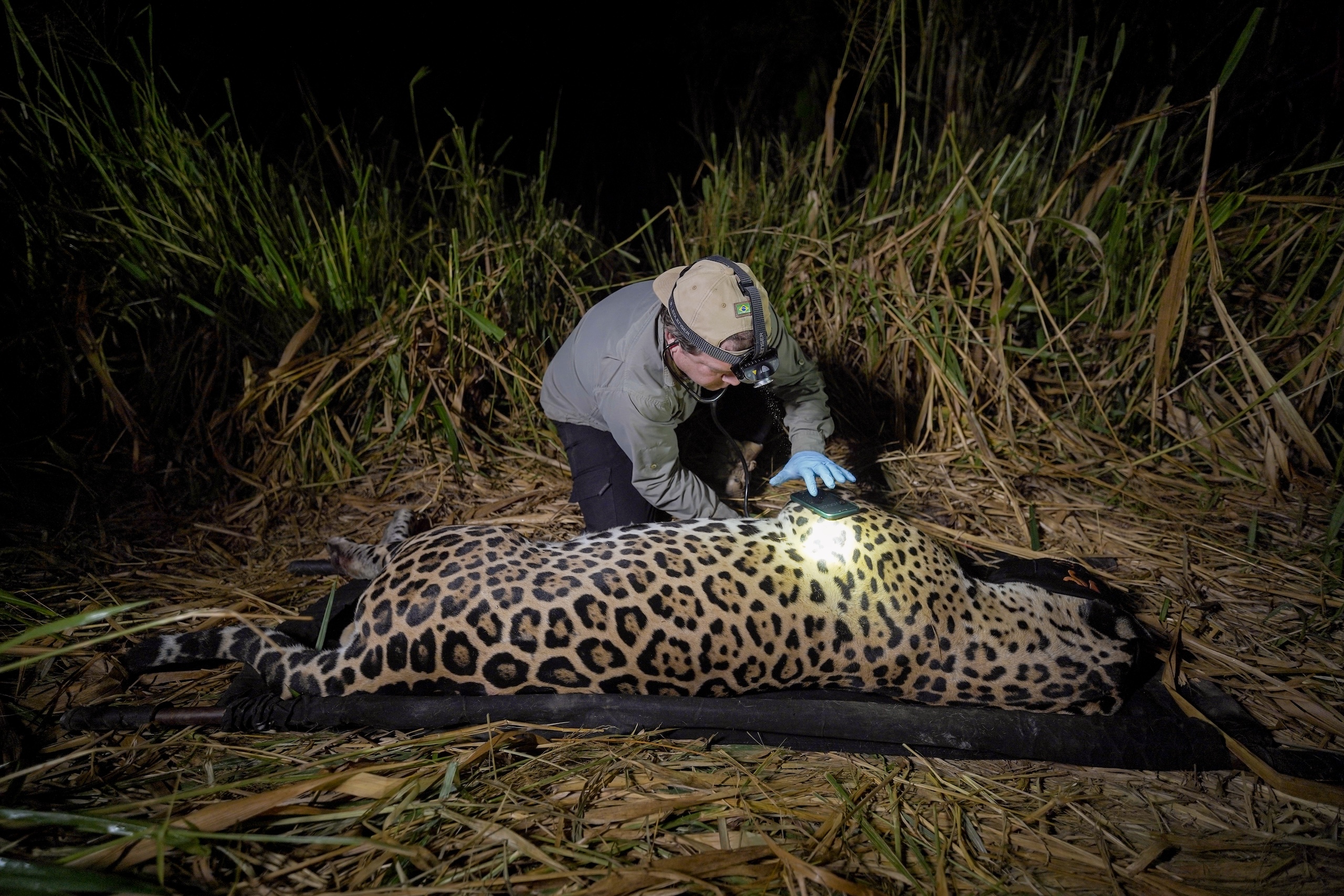 Researcher Gediendson Ribeiro de Araujo listens to the heart of a male jaguar named Leonço who was captured to gather biological and genetic material. Image by Gustavo Fonseca.
Life and death of jaguars in Brazil
The jaguar is the largest feline on the American continents, and they live in all the Brazilian biomes except for the Pampas. There are no subspecies, but the species does have subpopulations or ecotypes. A recent study showed that there could be between 6,000 and 7,000 individuals living today in the protected regions of Amazonia. According to conservative data from the National Jaguar Conservation Plan of Action, there could be 10,000-21,000 individuals in Amazonia today, up to 5,000 in the Pantanal and 1,000 in the Cerrado. There are fewer than 250 adult jaguars in the Atlantic rainforest and the semi-arid Caatinga, where the species is at critical risk of extinction.
The size of the territory needed for a jaguar to survive depends on the availability of food there, says Thyara Araujo. They need anywhere from 400-500 square kilometers (155-193 square miles) depending on the amount of prey available — the more prey, the less the cat needs to walk to feed itself. The characteristics of the biome and the prey living there — which include white-lipped and collared peccaries, capybaras, tapirs, deer and alligators, among others — also influence the size of the jaguar. In the Pantanal, where the largest individuals live, they can weigh more than 130 kg (286 lbs), while the Caatinga jaguars weigh around 50 kg (110 lbs). Males need more territory than females, and encounters between the two are most common during mating season. After the litter is born (usually composed of two kittens) the mother stays with them for two years. When they are young, the males disperse to more distant regions than the females. But this natural dispersal has been impaired by changes to the landscape. Loss of habitat and its consequential fragmentation are the main threat to Brazil’s jaguars. They also mean fewer species that can be prey for felines, which leads to conflicts with humans and death by retaliation, as the jaguars end up feeding on domesticated animals and pets. Road kills are also a threat: From 2016-23, according to the non-profit Instituto Homem Pantaneiro (IHP) in Mato Gosso do Sul, 19 jaguars were killed on BR-262 highway between Miranda and Corumbá in Mato Grosso do Sul.
Aside from these dangers, another problem that Gedienson Araujo mentions is the lack or a strong jaguar conservation program in captivity, or “under human care” — the more commonly used term. “The jaguars in the Caatinga and Atlantic rainforest are extremely endangered, and we don’t have any individuals in captivity that could provide a genetic bank for reproduction and later reintroduction of the young to free populations,” he says.
This is the point at which reproductive technologies for threatened species conservation become important. In biomes where the natural environments are most fragmented like the Atlantic Forest, the jaguar population lives in small, isolated groups. This means the individuals reproduce amongst themselves, which leads to increased consanguinity and consequently reproductive problems, malformations and abortions, which eventually culminate in the extinction of that particular population. In these cases, it’s necessary to “oxygenate” those populations by introducing new genes.
Having animals in captivity in these critical biomes, says Araujo, would make it possible to reproduce them and later reintroduce them to nature.
Creating green corridors between forest fragments also connects isolated populations, but oftentimes there are cities between the remaining patches of vegetation. In this case, assisted reproduction becomes a conservation tool, either through artificial insemination, in vitro fertilization or, more recently, through cloning research. “We can get the genetic material from one region and take it to another within the same biome by producing embryos in a lab and later transferring them to the females,” Araujo explains.
 A jaguar (Panthera onca) in the Brazilian Pantanal. Image by Gregoire Dubois.
Reproduction technologies for conservation
Assisted reproduction for wild animals has been around since the 1970s when it was adapted from techniques that had been developed for producing animals for the meat market. Researchers from different institutions with some experience in the field joined together in 2017 to create the Reprocon group with the aim to research and perfect these techniques for a set of wild Brazilian species with a focus on their reproduction and genetic conservation. Today their main focus is the jaguar, but the team works, or has worked, with the reproduction of wild canids such as the maned wolf and bush dog as well as the giant anteater, puma, ocelot, pampas cat, tapir, stingray, sharks and snakes.
The group is recognized globally for having standardized the pharmacological collection of jaguar semen, which is less stressful for the animal than other methods. “Our work is to develop biotechnologies to collect material and oxygenate populations, both in the wild and in captivity. We also store this material for the future,” says Gedienson Araujo.
The biological and genetic material stored in his biobank includes frozen blood samples from about 160 jaguars, tissue from 60 individuals and semen from 30 males. It is the world’s largest bank of jaguar tissue — hence that tiny piece of ear. When cultivated in the lab, the tissue sample will release fibroblasts, which are somatic cells from the stem cell family that can be used for cloning. All samples are stored in nitrogen tanks.
The Araujos have been collecting semen from jaguars since 2010, but research on forming embryos began in 2023. “In the beginning, we focused a lot on the males, but semen has many restrictions. It was always very frustrating when we’d go into the field to capture a jaguar to collect semen, but instead we’d capture a female, a young animal, a very old animal, or maybe even a male, but a male that at the time had no semen, or bad semen,” says Gediendson Araujo.
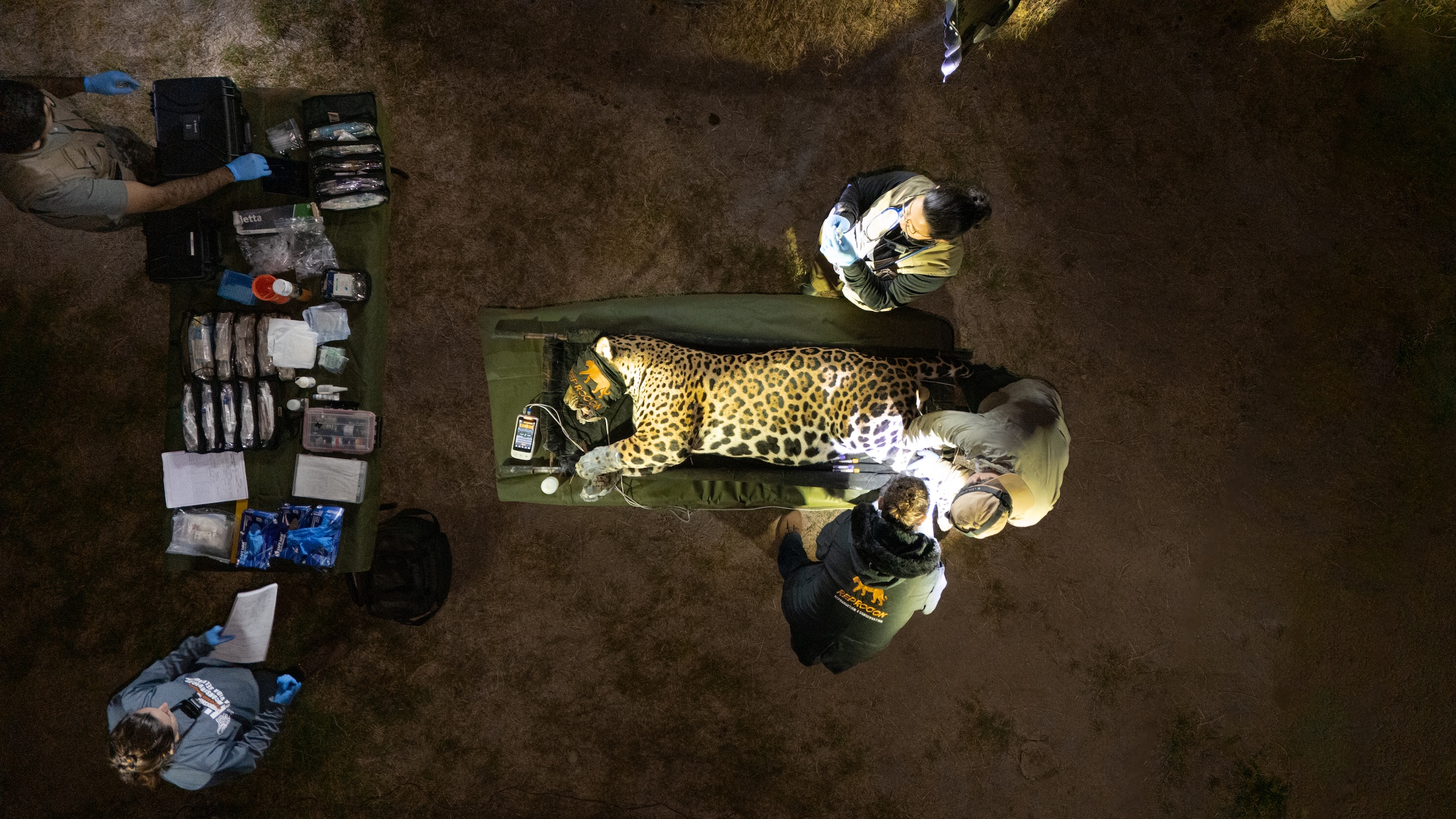 Reprocon researchers collect genetic and biological material from the jaguar named Leonço for later use in assisted reproduction methods for the species. Image by Gustavo Fonseca.
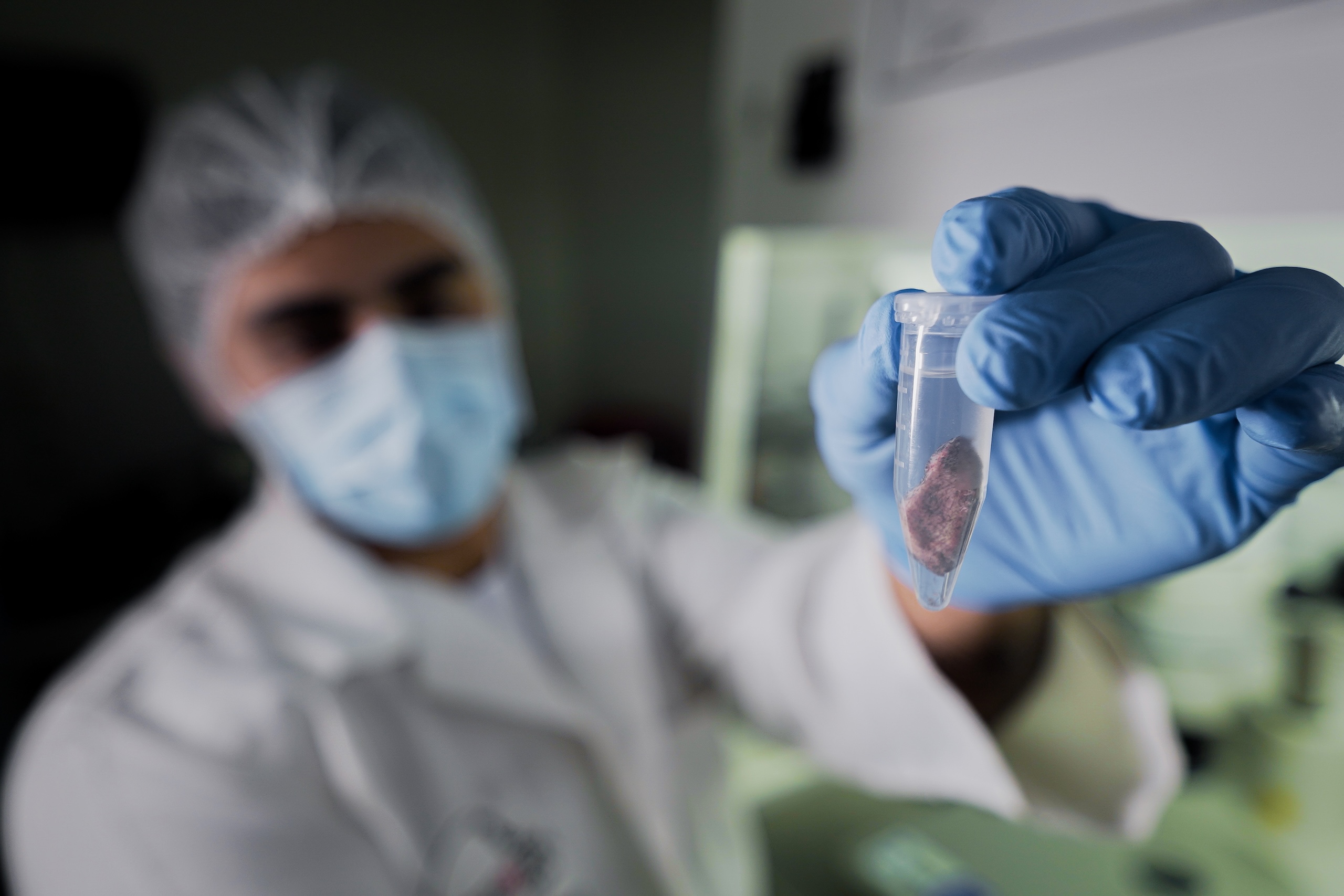 A piece of Leonço’s ear. The cultivation of ear tissue in a lab generates 20 million fibroblasts — cells that are used for the cloning process. Image by Gustavo Fonseca.
They dedicated themselves to the task but never managed to reserve the genetic material needed to generate descendants. That was when they saw that the best options for conservation would be via somatic cells. Aside from being able to collect samples from any animal they captured, it also works with felines that are found dead — one of the samples is from a young female that was run over and would have had at least a dozen descendants.
The cloning process begins with the cultivation of a piece of skin in a solution of many nutrients on sheets of glass. The fibroblast cells contained in that tissue then begin to proliferate. Each fibroblast (20 to 30 million are released from two centimeters of ear within a month) can generate a cloned embryo.
For the cloning process itself, the genetic material must be taken out of an ovum — which, in the case of an animal is called an oocyte — and insert the fibroblast into it. Next, electrofusion is performed, which is like an electric shock by which the cell is activated and begins to develop into an embryo with the genetic material of the donor. Finally, this embryo should be inserted into a female so gestation can complete and a cloned baby is born.
Last year, Reprocon worked with a team of Argentine researchers and managed to reach the morula stage, one of the initial stages of an embryo’s development, within three days of fertilization. “It was a first attempt, and now we’re working to move forward and obtain a cloned embryo this year. Next year, we hope to make the first attempts to transfer the embryo to the female,” Araujo reveals.
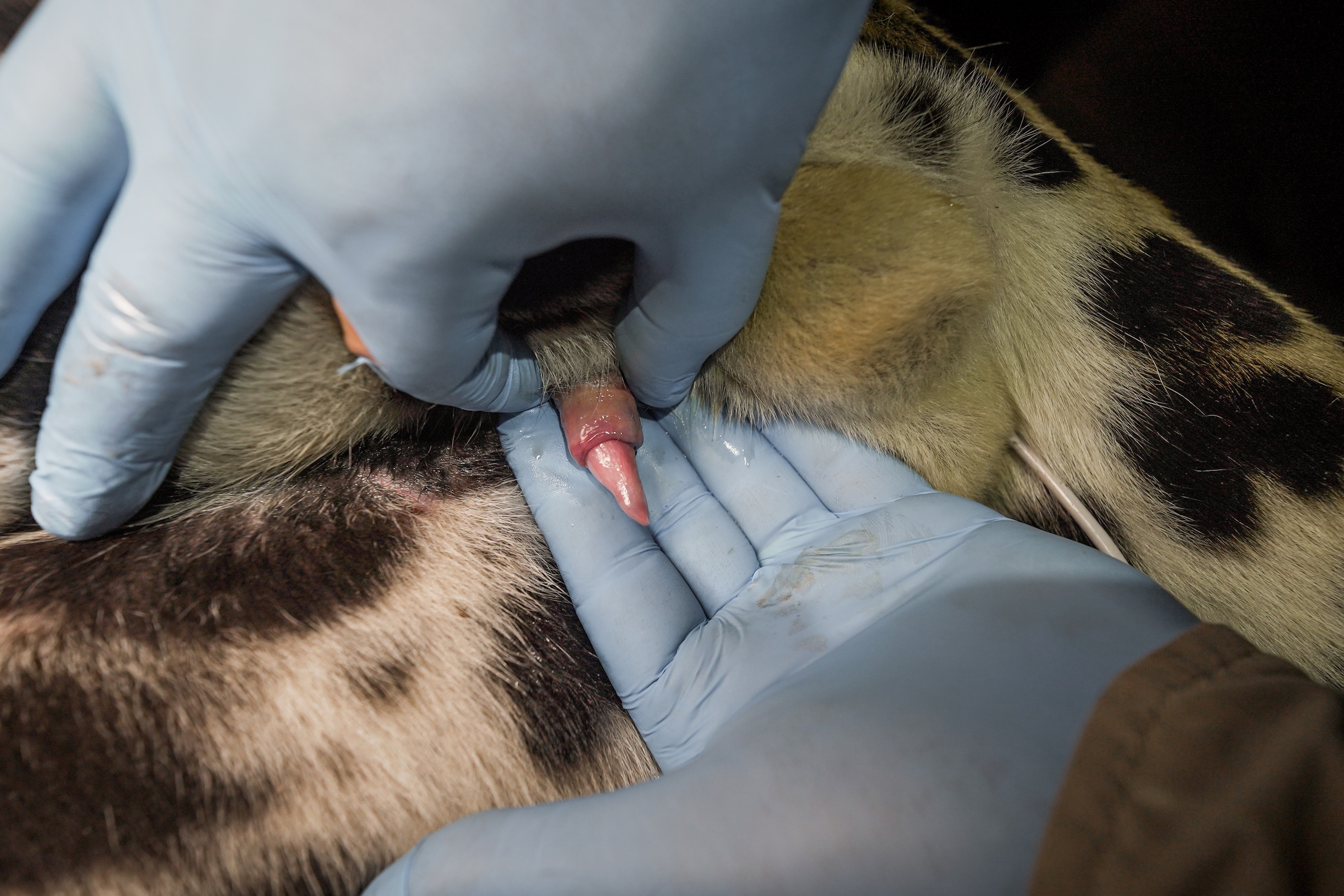 Semen is collected during the field capture of Leonço the jaguar. Image by Gustavo Fonseca.
Partnerships and innovation
Besides Argentine team, the group has also formed international partnerships with researchers from Colombia, Canada and the U.S. in its multidisciplinary project. After the first animal is born, the young offspring will need to be observed to analyze its behavior and identify potential effects of cloning during its development, like impact on the animal’s health.
“We can only improve the techniques by developing and applying them so they can be effectively be used for conservation purposes,” Thyara Araujo says. “We still don’t know if the animal will have a shorter lifespan, if it will be able to reproduce, or even if it will be able to be released into nature. But what we are really after is having an animal in the wild, so we are always focused on going after techniques, improving them and getting better results.
Maitê Cardoso Coelho da Silva, one of the veterinarian researchers in the group, developed a microfluidic device for jaguar sperm washing and another for selection. The devices are mobile replacements for large laboratory equipment like benchtop incubators and centrifuges, which cannot be taken into the field. The devices are made from silicone, molded into shapes created with a 3D printer, and cost $15. Each unit can be reused up to nine times.
Microfluidic technology is present in our daily lives, used in products like quick pregnancy and COVID-19 tests. In the work applied to jaguars, one of the devices uses the technique to select the highest quality, most fertile sperm, increasing the chances of successful artificial insemination. The other device acts as a centrifuge. “I need to be able to extract the seminal fluid to obtain good-quality cells and be able to freeze and store them in our biobank. This device already does it in the field,” da Silva explains.
Reprocon plans to contribute to jaguar conservation with assisted reproduction, especially cloning strategies in Brazil. “Conservation won’t happen with a single strategy. We need to preserve natural areas, study free-range populations and those under human care, expand and connect preserved habitat, and also involve people in these activities,” Thyara Araujo says. For her, cloning will never save the jaguar, but it is a strategy for storing material and preserving the genetic makeup of populations. It is another valuable tool in the fight to protect biodiversity and guarantee its right to life.
Banner image: A jaguar sighted on Fazenda Bodoquena (MS). Image by Gustavo Fonseca.
This story was first published here in Portuguese on Oct. 8, 2025.
