
Oregon is witnessing a remarkable milestone in wildlife recovery, as the state’s rare and once-endangered predator population surpasses 200 for the first time in 80 years. According to a recent article by The Bulletin, this marks a significant step forward for a species that was nearly wiped out due to 19th-century extermination campaigns. As their numbers grow, so does the hope that this predator will continue to thrive in Oregon’s wilderness, signaling a healthier and more balanced ecosystem.
A Historic Recovery: The Oregon Wolf Population Surpasses 200
For nearly a century, Oregon’s gray wolf population was decimated, leaving the state with no wolves until the late 1990s. The 1800s saw a concerted effort by ranchers to exterminate wolves, nearly wiping out the species in the Western United States. By 1950, wolves had vanished from Oregon. But in 1999, a lone wolf appeared, marking the beginning of a slow yet steady recovery. In recent years, the population has steadily increased, with the 204 wolves counted in December signaling a resurgence that experts did not think possible just a few decades ago. This latest population increase marks a 15% growth over the previous year, indicating that the species is gradually reclaiming its place in Oregon’s ecosystem.
As Susan Prince, co-founder of the Wolf Welcome Committee, points out, this increase is not just a victory for wolves but a positive indicator for the environment.
“They’re an indicator of a healthy ecosystem, especially the Metolius area. There is a lot of continuous land there that can support these wolves. That is a real benefit, it’s a great sign that these wolves came here on their own and they are trying to stay,” she said.
The Method Behind the Count: Reliable Data and Documentation
To ensure an accurate understanding of the population’s growth, the Oregon Department of Fish and Wildlife relies on a variety of methods, including radio collar data, trail cameras, and aerial surveys. This comprehensive approach allows the department to track and count the wolves in a way that minimizes errors or overestimation. Aaron Bott, a wolf biologist with the Oregon Department of Fish and Wildlife, emphasized the importance of conservative estimates when it comes to wildlife reporting.
“While we know more wolves are out there, we report only what we can document with confidence. This method provides a conservative and verifiable baseline, reflecting only those wolves we can confirm were present at the end of the year,” he said.
This cautious and precise approach helps ensure that data about the wolf population remains credible, which is especially important given the debates and tensions surrounding wolf management in the region.
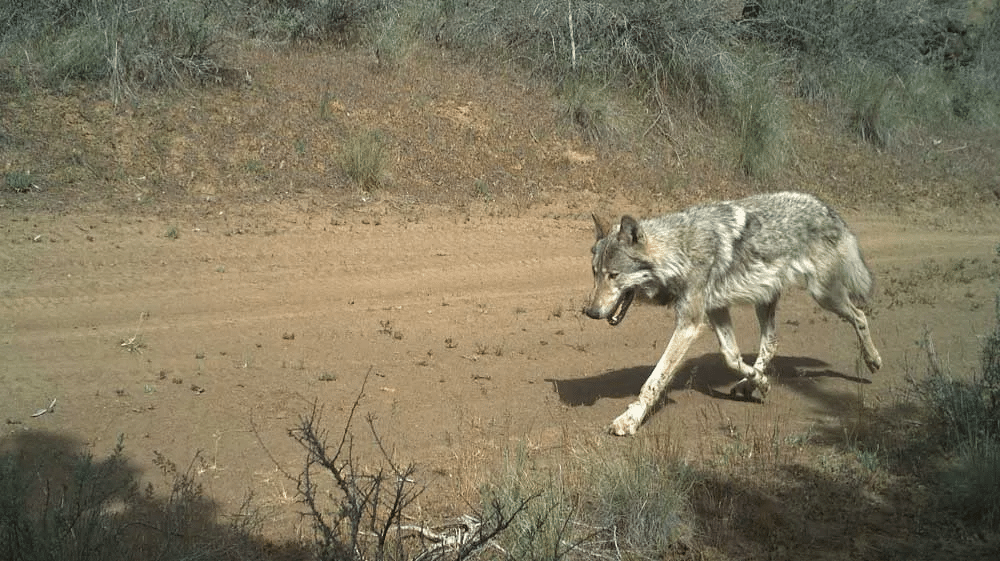 A wolf from the Metolius Pack trots past a trail camera in May 2022 on U.S. Forest Service land in Jefferson County. Wolves have more recently been observed in eastern Deschutes County.
Challenges and Opposition: The Tension Between Conservation and Livestock Safety
While the recovery of the wolf population is celebrated by conservationists, it also raises concerns, especially from local farmers and ranchers. Wolves, as apex predators, pose potential threats to livestock, including cattle and sheep, which can lead to significant financial losses. Some critics argue that the growing wolf population puts undue stress on local herds, leading to complications in the management of farming and ranching operations.
These tensions are not without merit. As wolf populations grow, the conflict between conservation efforts and the livelihoods of ranchers is likely to intensify. Despite these challenges, federal protections remain in place, with wolves in certain parts of Oregon listed under the Endangered Species Act. Decisions regarding lethal control or management of the wolf population rest with the U.S. Fish and Wildlife Service, which aims to strike a balance between protecting the species and minimizing damage to livestock.