
Smartphone photography is miraculous, but it isn’t for everyone. There is no shutter click and no mechanical dial. If you miss the feeling of making a photograph rather than tapping a screen, these 10 cameras are your antidote.
1. Fujifilm X half
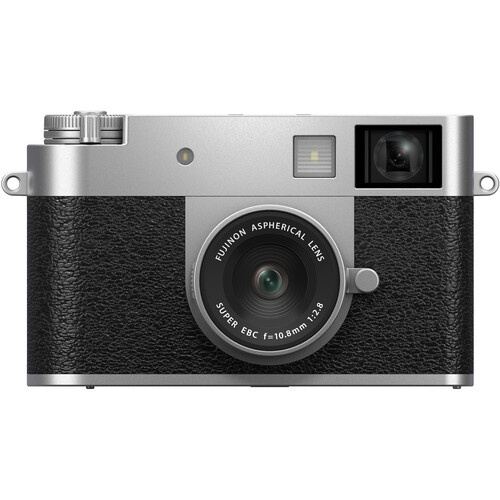 The Vibe: The camera TikTok has been begging for.
The Fujifilm X half is the first serious digital camera with a sensor mounted vertically for native 4:3 shooting in portrait orientation. You hold the camera normally, but it takes portrait-orientation shots instantly ready for socials. Released in June 2025, this $849 camera is designed from the ground up for vertical content creation, and it does things no other digital camera has dared to attempt.
The standout feature is Film Camera mode. You can lock the camera into a “roll” of 36, 54, or 72 shots. Once you start, the screen turns off and you cannot review your photos until the roll is finished. It forces you to stop chimping and start shooting. The Frame Advance Lever must be pulled after each shot, mimicking the mechanical satisfaction of advancing film. When you finish your roll, the camera automatically produces a contact sheet image complete with film strip borders to review all of your shots at a glance.
The 2-in-1 mode lets you shoot two half-frames side-by-side on a single digital file, creating diptychs that blend photos or videos. The 18 MP sensor produces 3:4 images at 3,648 x 4,864 pixels, and the fixed 10.8mm f/2.8 lens (32mm equivalent) delivers sharp results with excellent color science thanks to 13 Film Simulation modes including Reala Ace. It is the first camera that actually understands how we share photos today without feeling like a lifeless computer. I’m working on a review as we speak, and I love it.
2. Ricoh GR IV
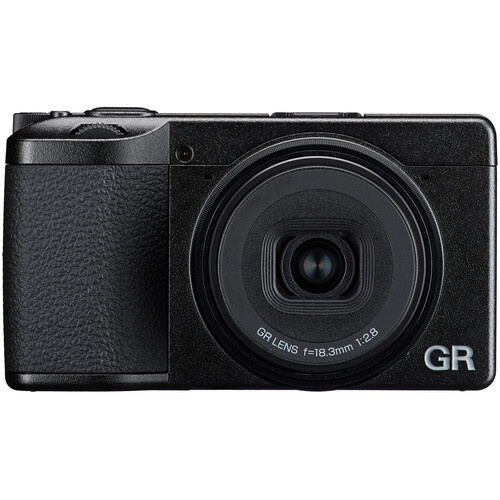 The Vibe: A stealth weapon for street photographers.
The Ricoh GR IV is the ultimate snap shooter, and its biggest trick is something phones cannot replicate. Snap Distance Priority mode lets you pre-set the focus distance to any of eight distances: 0.3m, 1m, 1.5m, 2m, 2.5m, 3.5m, 5m, or infinity. When you fully press the shutter button, it bypasses autofocus entirely and fires instantly at that preset distance with zero lag. This is pure street photography instinct captured in silicon.
At $1,497, the GR IV packs a 25.7 MP APS-C BSI CMOS sensor into a body smaller than a large phone. That sensor is the same size you would find in many larger cameras. The new 18.3mm f/2.8 GR lens (28mm equivalent) is sharper than ever, with improved contrast and edge performance. Six-stop image stabilization ensures handheld shots stay crisp even in low light.
The GR IV starts up fast and has competent autofocus when you need it, but the beauty of this camera is that you often do not need autofocus at all. Zone focusing, hyperfocal distance shooting, and snap focus give you complete control over how you capture the decisive moment. This is not a high-speed action camera built for burst shooting or sports tracking. It is a deliberate tool for street photography, where anticipation and positioning matter more than frames per second. It fits in a jacket pocket and delivers image quality that embarrasses cameras twice its size.
3. Pentax 17
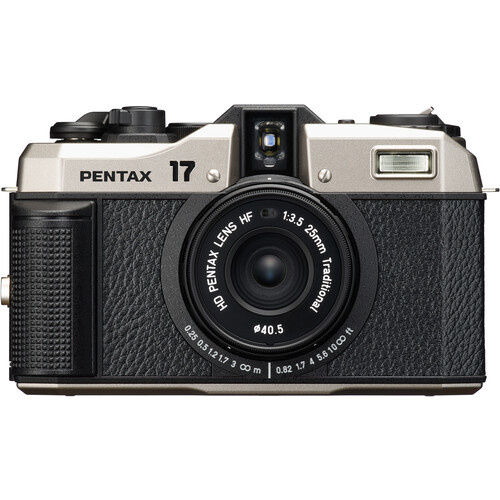 The Vibe: Pure, mechanical nostalgia.
The Pentax 17 is not a filter. It is not a digital gimmick. It is a half-frame film camera released in 2024 at $497. You get 72 shots per roll of 35mm film because each frame is half the size of a standard negative. When positioned normally, the camera captures vertical-format pictures identical to the familiar images you see on smartphones.
The zone focus system eliminates autofocus hunting entirely. You turn the lens ring to the mountain icon for landscapes, the person icon for portraits, or one of four other zones depending on your subject distance. The minimum focusing distance in macro mode is just 25 centimeters. The 25mm f/3.5 lens (37mm equivalent in full-frame terms) produces sharp images with excellent color rendition when paired with modern film stocks.
You cannot check your screen. You have to wait days to see your photos after development. This delayed gratification makes every good shot feel like a victory. The Pentax 17 has manual film winding with a satisfying lever action, exposure compensation via a physical dial, and seven shooting modes including a dedicated slow-speed sync for twilight photography. It is a rejection of instant gratification wrapped in gorgeous retro styling, and it forces you to slow down and think before you shoot.
4. Fujifilm X100VI
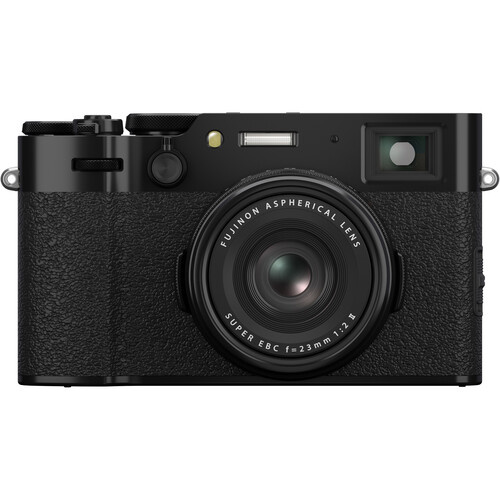 The Vibe: Jewelry that takes incredible photos.
The Fujifilm X100VI is the sixth iteration of Fujifilm’s iconic fixed-lens compact, and demand has been so intense that people are still waiting months for delivery. At $1,799, it commands a premium, but the reason is simple. This camera makes photography feel like an event.
The Advanced Hybrid Viewfinder is the centerpiece of the experience. You can look through optical glass to see the real world with a digital data overlay, or flip a lever to see a full electronic preview of your exposure. The 40.2 MP X-Trans CMOS 5 HR sensor pairs with the legendary 23mm f/2 lens to deliver edge-to-edge sharpness that feels tangible.
The 20 Film Simulation modes are not Instagram presets. They are color profiles based on actual chemical film stocks like Velvia, Reala Ace, and Classic Chrome baked into the raw file. The in-body stabilization provides up to 6 stops of compensation, and the camera shoots 6.2K video for those who need it. The X100VI has become so desirable that demand has consistently outstripped supply, with used copies often selling near or above retail price months after purchase.
5. Leica Q3
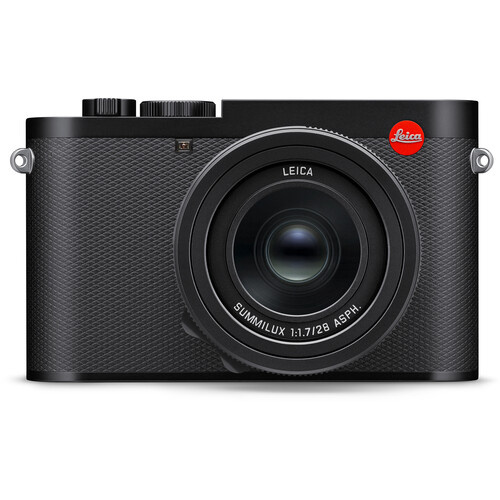 The Vibe: German engineering perfection.
The Leica Q3 is a $6,735 statement of intent. This compact camera has a 60 MP full-frame sensor, the same size as professional mirrorless cameras. The sensor is paired permanently to a Summilux 28mm f/1.7 ASPH lens that is highly respected for its sharpness.
The camera body is milled from magnesium and feels like a solid block of precision machinery. The Q3 shoots 8K video, offers triple resolution technology (60 MP, 36 MP, or 18 MP output from the full sensor), and has IP52 weather-sealing to protect against dust and splashes. The 5.76-million-dot OLED viewfinder is among the best electronic finders ever made, and the tilting touchscreen makes low-angle shots effortless.
Digital zoom presets simulate 35mm, 50mm, 75mm, and 90mm focal lengths using sensor crops, giving you flexibility without the bulk of interchangeable lenses. The Q3 is for photographers who want the best and are willing to pay for it. There are no compromises here, only excellence.
6. Leica D-Lux 8
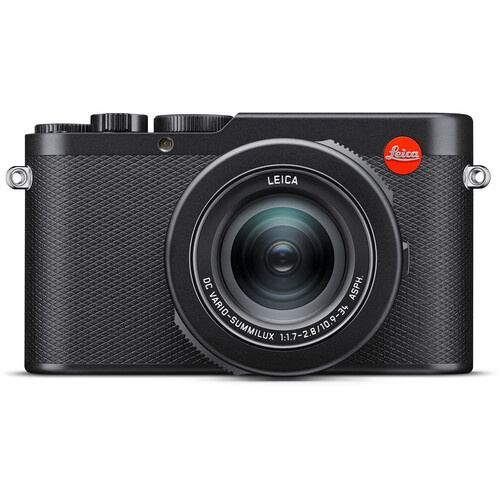 The Vibe: Minimalist luxury that fits in a jacket pocket.
Released in July 2024, the Leica D-Lux 8 brings Leica quality to a more accessible price point at $1,915. It strips away the complex menus of previous models for a pure, Q-inspired interface. The camera is built around a 17 MP Four Thirds-type sensor and a bright Leica DC Vario-Summilux 10.9-34mm f/1.7-2.8 lens (24-75mm equivalent). Unlike the Q3 digital crop, this has a true optical zoom lens, meaning you lose zero resolution when zooming.
The simplified UI makes the D-Lux 8 intuitive to operate. Shutter speed is controlled by a physical dial on top, aperture is set via a ring on the lens, and a custom control ring around the lens barrel gives you quick access to your most-used functions. The 2.36-million-dot OLED electronic viewfinder is bright and clear, and the 3-inch touchscreen makes menu navigation painless.
The camera includes a detachable flash unit in the box, encouraging that high-contrast, direct-flash aesthetic that is trending in fashion photography right now. The D-Lux 8 records 4K video at 30 fps and offers DNG raw support for serious post-processing. It delivers Leica quality at a more accessible price point than the Q-series, perfect for photographers who want refined tools without the flagship cost.
7. Sony RX100 VII
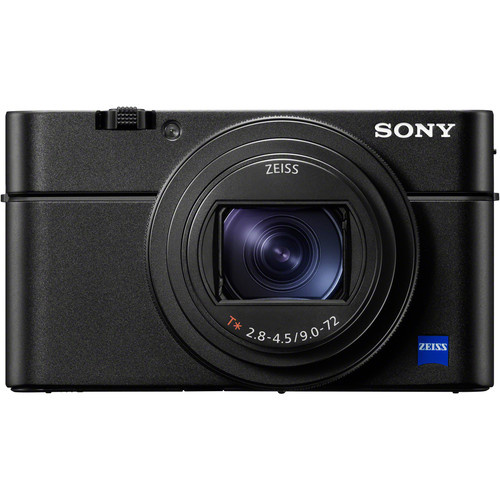 The Vibe: A supercomputer in your pocket.
The Sony RX100 VII is the seventh generation of Sony’s legendary pocket rocket, and it remains one of the most technically impressive cameras ever built. At $1,698, it packs a 24-200mm zoom lens into a body that fits in your jacket pocket.
The 20.1MP 1-inch stacked CMOS sensor is paired with a BIONZ X processor that enables ridiculous speed. The camera shoots 20 frames per second with blackout-free continuous autofocus, and it calculates autofocus and autoexposure 60 times per second. It can track a bird in flight better than many ILCs thanks to 357 phase-detection autofocus points covering 68% of the frame.
The pop-up OLED electronic viewfinder springs out of the body, giving you a bright 2.36-million-dot view when you need it and staying hidden when you do not. The camera shoots 4K video at 30 fps and 1080p at 120 fps for slow motion and has a microphone input for serious content creators. Four-stop optical image stabilization keeps shots steady at full telephoto, and the Real-time Tracking autofocus can lock onto subjects with AI-powered precision. This camera is proof that pocketable does not mean compromised.
8. OM System Tough TG-7
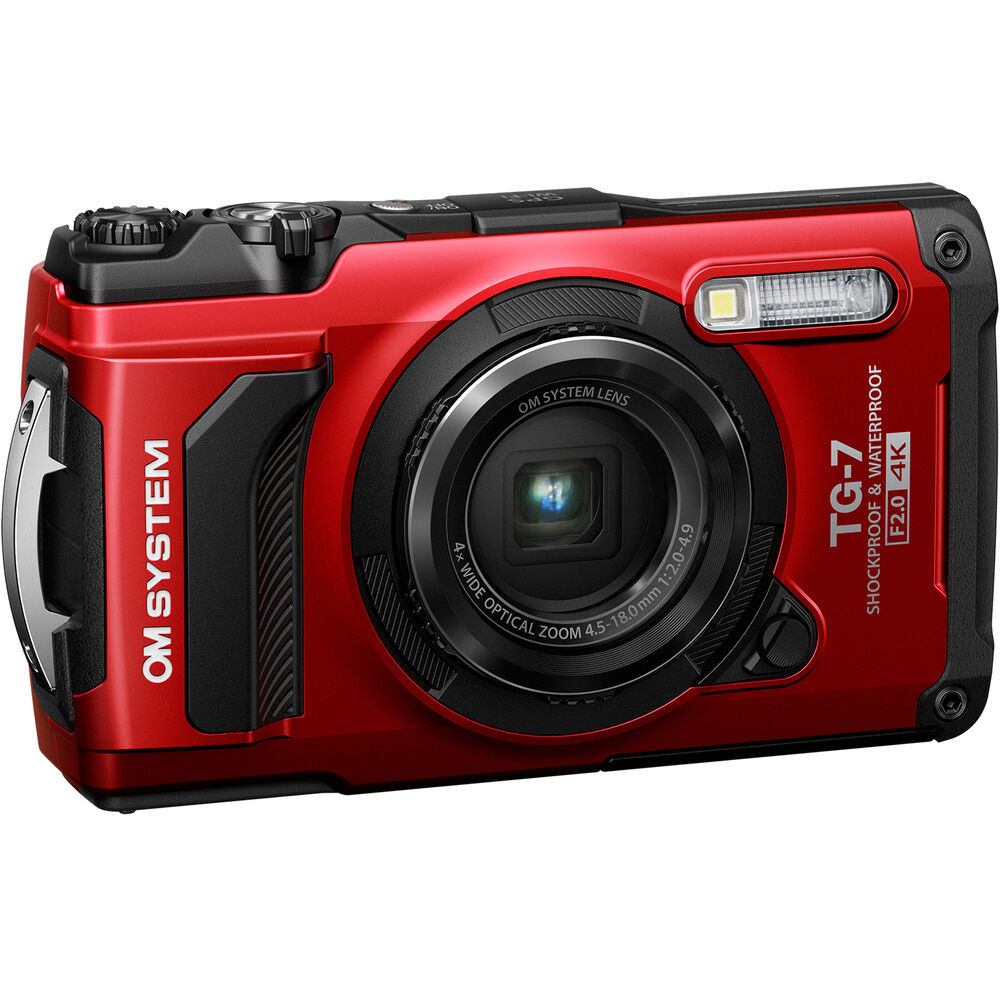 The Vibe: For places where your phone would die.
The OM System Tough TG-7 costs $515 and laughs at conditions that would destroy your smartphone. You can drop it 7 feet onto concrete, freeze it to 14°F, crush it under 220 pounds of pressure, or dive 50 feet underwater without a case. It is dustproof, shockproof, and completely indifferent to your fear.
The secret weapon is Microscope mode. The TG-7 can focus 1 centimeter from the lens, acting as a handheld microscope for bugs, snowflakes, and textures that phones simply cannot resolve. Switch to Microscope Control mode and you can zoom up to 44x magnification to capture details invisible to the naked eye. Focus stacking mode merges multiple images in-camera to create photos with incredible depth of field.
The 12 MP BSI CMOS sensor and f/2.0 lens deliver surprisingly good image quality for a rugged camera. The 25-100mm equivalent zoom gives you flexibility, and the five underwater shooting modes ensure accurate color balance whether you are at the surface or at depth. The TG-7 frees you to shoot in environments where your phone would be a liability.
9. Canon PowerShot G7 X Mark III
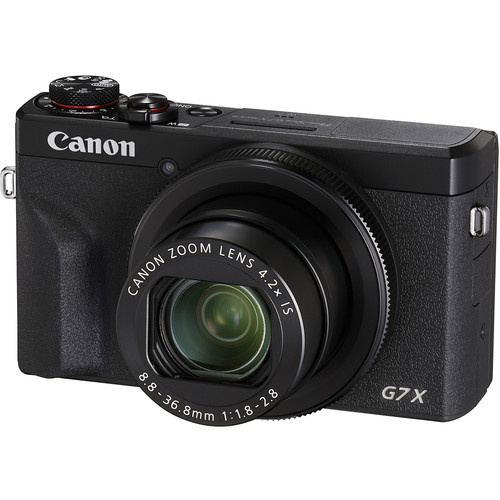 The Vibe: The reliable classic that fits in any pocket.
The Canon PowerShot G7 X Mark III was designed for content creators and costs $879. It uses a 20.1 MP 1-inch CMOS sensor paired with Canon’s DIGIC 8 processor. The sensor is physically much larger than what is in your phone, which means better dynamic range, the ability to recover shadows without noise, and natural low-light performance.
The built-in 24-100mm f/1.8-2.8 zoom lens is fast enough to create real optical background blur. The wide aperture at 24mm means you can shoot in dim environments without cranking ISO to unusable levels. The tactile control ring around the lens can be assigned to step zoom, ISO, aperture, or any function you choose, giving you that satisfying mechanical feedback.
The G7 X Mark III shoots 4K video at 30 fps with clean HDMI output, and it has a microphone input for better audio. The 180-degree tilting touchscreen makes vlogging effortless, and vertical video support ensures your content is ready for TikTok and Instagram without cropping. The camera starts up quickly and can shoot bursts at up to 8 fps with continuous autofocus to catch fleeting moments. It is the workhorse compact that delivers professional results without professional complexity.
10. Panasonic Lumix LX100 II
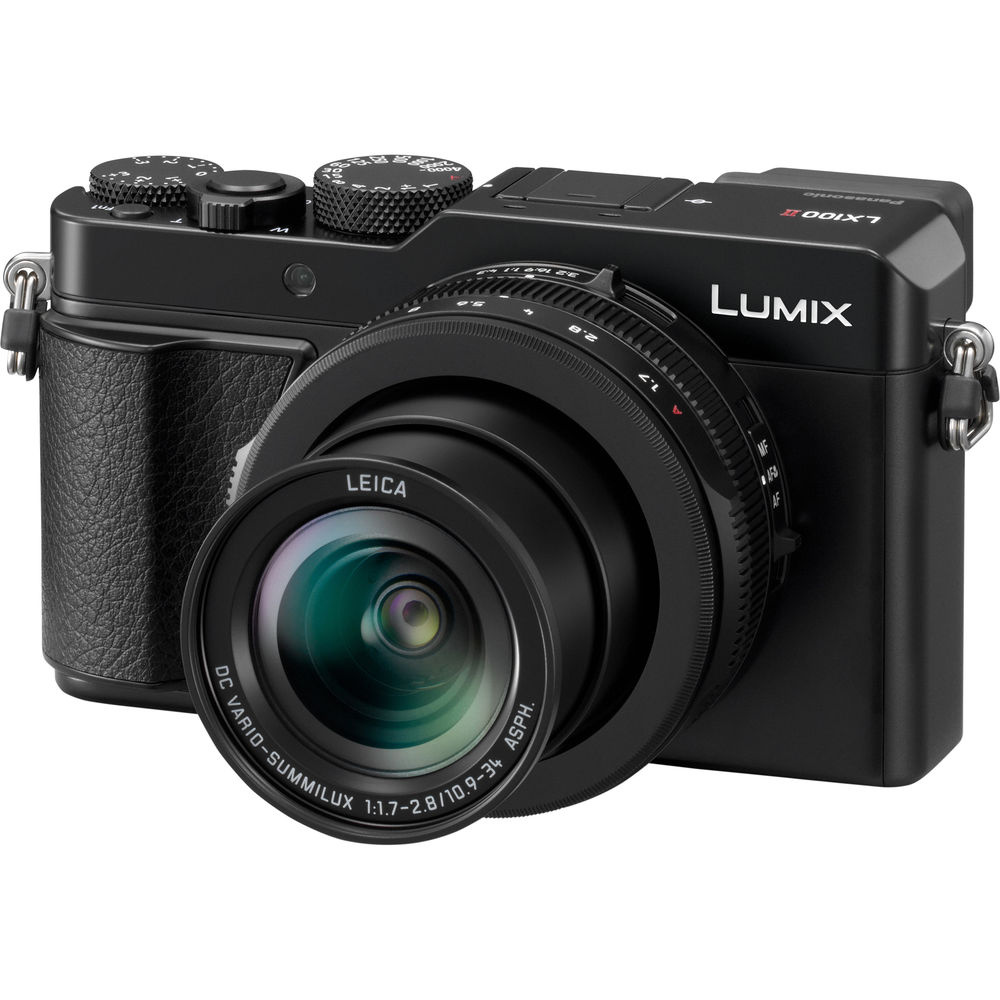 The Vibe: A modern classic designed for people who grew up shooting film.
The Panasonic Lumix LX100 II can be found on the used market and feels like a camera from a better era. It has no mode dial. Instead, it has a physical shutter speed dial on top and a physical aperture ring on the lens. You set exposure by feel. The camera also includes a physical exposure compensation dial, giving you direct control over the three pillars of exposure without ever entering a settings screen.
The unique multi-aspect switch on the lens barrel lets you instantly toggle between 4:3, 3:2, 16:9, and 1:1 aspect ratios. It squeezes a 17 MP Four Thirds sensor into a pocketable body, giving it excellent image quality for its size. The 24-75mm equivalent f/1.7-2.8 Leica lens is sharp and fast, with optical image stabilization to compensate for camera shake. The 2.76-million-dot electronic viewfinder is clear and bright, and the 1.24-million-dot touchscreen makes focusing and menu navigation effortless. For photographers who want tactile control and exceptional image quality in a compact package, the LX100 II is the answer.