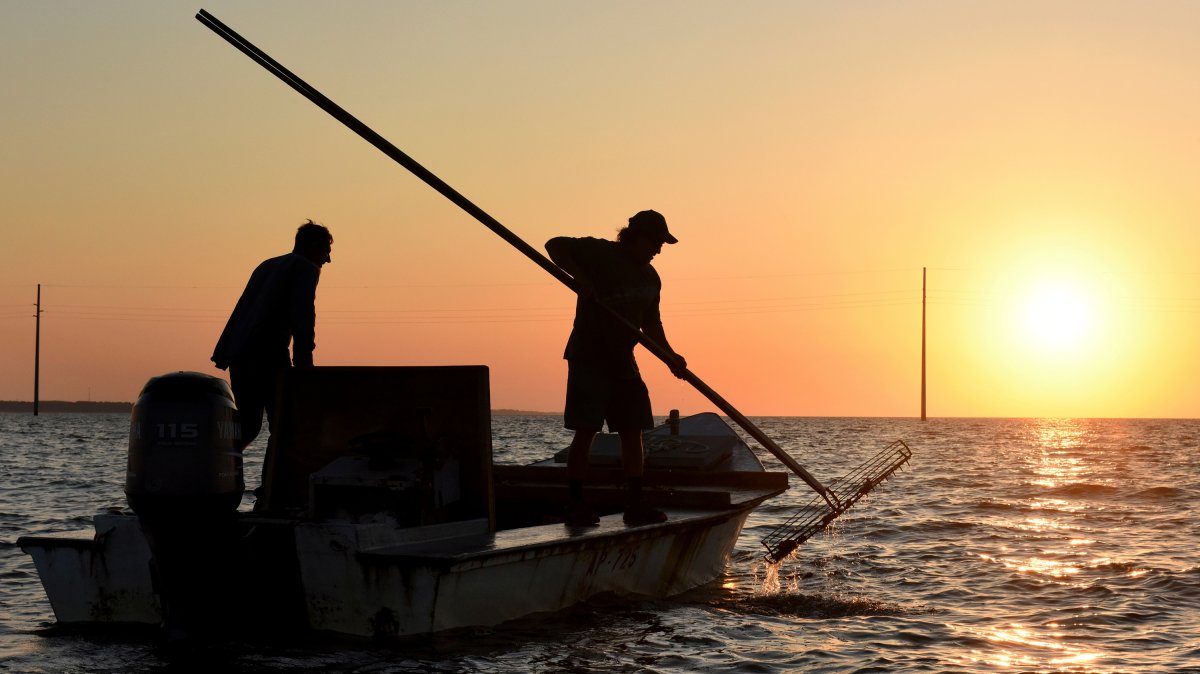
Oysters in Japan are dying en masse in parts of the country’s top production area, likely due to warmer sea temperatures, officials said Monday.
In some coastal areas surrounding the Seto Inland Sea in western Japan – an area that accounts for more than three-quarters of Japan’s farmed oyster production – around 90% of cultivated oysters are dead.
“I’ve never experienced this in my whole career,” Tatsuya Morio, who has farmed oysters for more than 20 years, told Agence France-Presse (AFP).
Shoichi Yokouchi, an official in the Hiroshima area, which borders the Seto Inland Sea, said he suspected “high water temperatures, together with other factors, are the culprit of oysters dying en masse.”
This year, average water temperatures along Hiroshima’s coast from July to October – an important period for oyster cultivation – were 1.5-1.9 degrees Celsius higher than the 1991-2020 average, according to prefecture data.
Sea temperatures are rising globally due to climate change.
“If higher temperatures remain for a few weeks, that weakens oysters and makes them more susceptible to viruses and bacteria,” said Yokouchi, head of the marine products division.
The mortality rate of harvested oysters is typically 30%-50%.
But interviews conducted by the fisheries agency in mid-November revealed rates of 60%-90% in the central-eastern part of Hiroshima Prefecture and normal to slightly elevated rates in the rest of the western part, the Ministry of Agriculture, Forestry and Fisheries (MAFF) said last week.
“Little rain in July this year, in addition to high water temperatures, led to a rise in salt concentration, damaging oysters,” said Shinichiro Toi, an official in charge of marine product technology research.
A MAFF official told AFP: “We are investigating the cause of the oyster deaths together with local governments.”
Farmer Morio told local broadcaster Hiroshima Home Television that even oysters thought to be more resilient to higher temperatures had been hit.
And in nearby Hyogo prefecture, oyster farmer Daiki Takeuchi said those that had survived “had grown poorly.”
They are “about half the size of the average,” the 33-year-old told AFP. “It’s difficult to sell them, to be honest.”
Meanwhile, oysters off the Sanriku coast in northern Japan, which account for about 17% of the country’s farmed oyster production, do not seem to be affected, the MAFF said.
The rate of ocean warming has more than doubled since 1993, according to the U.N.’s IPCC climate expert panel.
Average sea surface temperatures reached new records in 2023 and 2024.
Hong Kong, Taiwan, Singapore, Vietnam and Thailand are among the main importers of Japanese oysters.

The Daily Sabah Newsletter
Keep up to date with what’s happening in Turkey,
it’s region and the world.
SIGN ME UP
You can unsubscribe at any time. By signing up you are agreeing to our Terms of Use and Privacy Policy.
This site is protected by reCAPTCHA and the Google Privacy Policy and Terms of Service apply.