
RCR sculpts a dubai residence as a topographic network
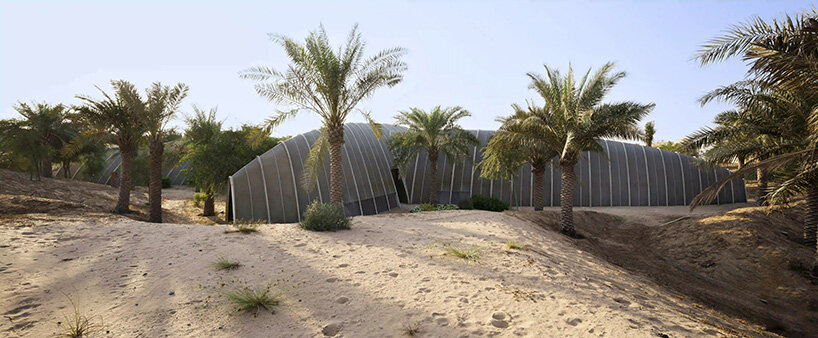
RCR Arquitectes shapes Alwah House, a 900-square-meter dwelling, as a cluster of curved, shaded volumes partially embedded into the desert on the outskirts of Dubai. The home turns to the natural logics of a flower and an oasis as its two main references. The architects carve a hollow in the sand to retain water and vegetation, creating a microclimate where light, wind, shade, and filtered views guide the spatial experience. From above, the house reads as a family of ribbed shells rising softly among palm groves, while inside, it becomes an exploration of non-orthogonal verticality and unexpected relationships.
Instead of presenting a singular facade, Alwah House is formed by a system of patios, passages, and enclosed chambers that fold around an internal oasis. The topography is gently manipulated to cradle the volumes, tempering heat and anchoring the architecture to the ground.
images courtesy of RCR Arquitectes
Alwah House holds water, shade, and life
A recessed garden centers RCR Arquitectes’ design and acts as a life-sustaining void. Vegetation grows around a reflective water surface, while the surrounding structures open selectively toward it with slanted apertures. The Spanish architects describe this central gesture as a melting pot where life comes into being, a controlled pocket of humidity and greenery that counters the arid surroundings. The resulting micro-oasis creates shade networks and softening temperatures around the living spaces.
Externally, the ribbed shells emerge from the sand like petals. Their alignment produces a series of shaded interstitial routes that behave almost like canyons, leading occupants from the harsh outer landscape into cooler, sheltered interiors. As the volumes overlap, light slips in through calibrated seams, casting thin, blade-like shadows onto the curved surfaces.
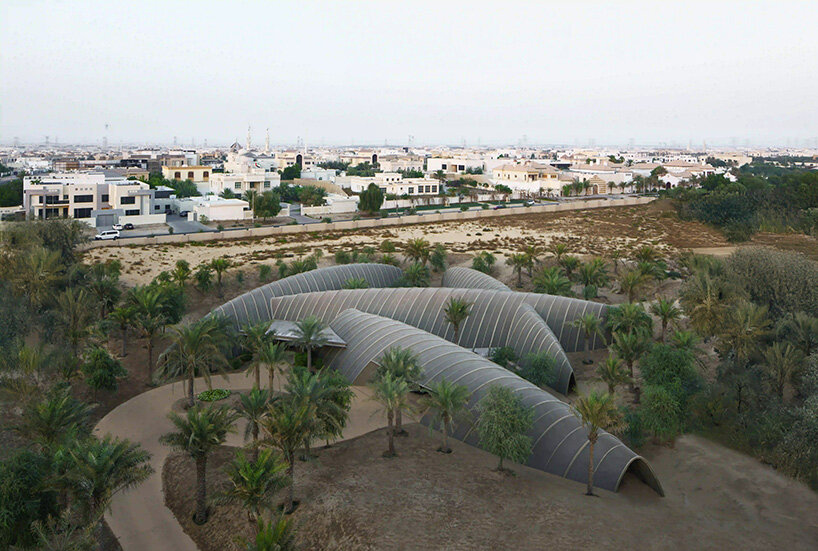
Alwah House is a cluster of ribbed, curved shells
Interiors shaped through non-orthogonal verticality
Inside, the house unfolds as a sequence of arched, leaning, and intersecting planes. RCR describes this interior world as ‘an exploration of non-orthogonal verticality with unexpected relationships.’ Arcs generate layered voids, angled sightlines, and moments where the geometry feels geological. Tall, tapering curves create pockets of compression and release, while long clerestory strips bring in reflected daylight that grazes the surfaces.
Rooms open diagonally, revealing fragments of the oasis or deeper pockets of interior space. Patios punctuate the plan, pulling air and light downward while producing outdoor rooms protected from direct sun. Pathways bend around these voids, sometimes narrowing into tight passages, other times expanding into courtyards and living halls. These shifts create a rhythm of refuge and exposure that echoes traditional desert architecture, albeit through a contemporary formal language.
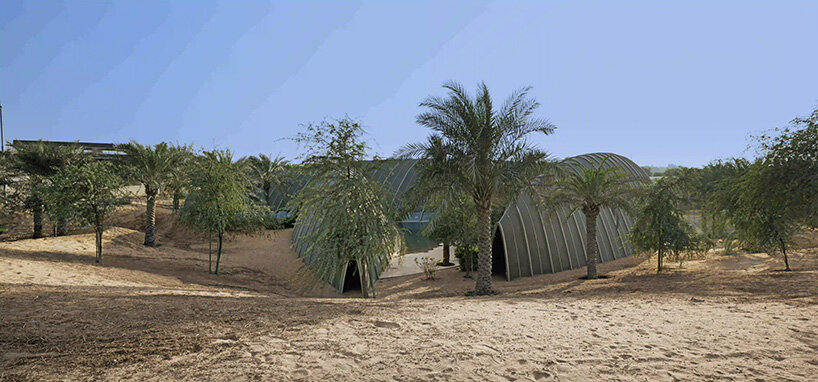
embedded in Dubai’s desert terrain
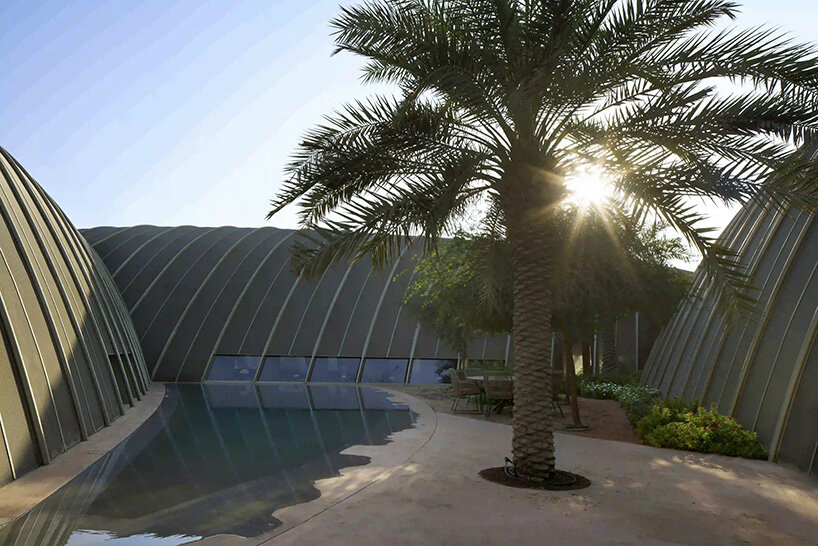
the curved rooflines rise subtly above the terrain
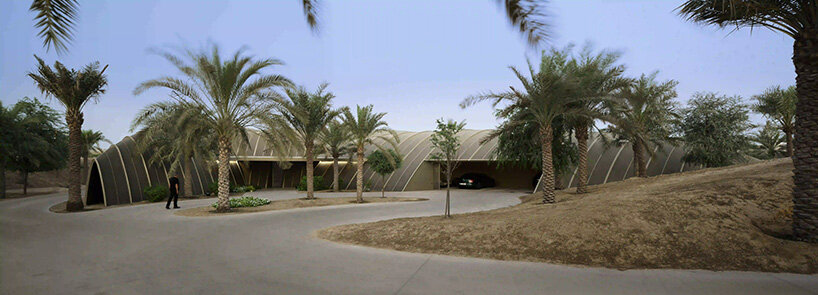
ribbed exterior shells cast shifting shadows throughout the day