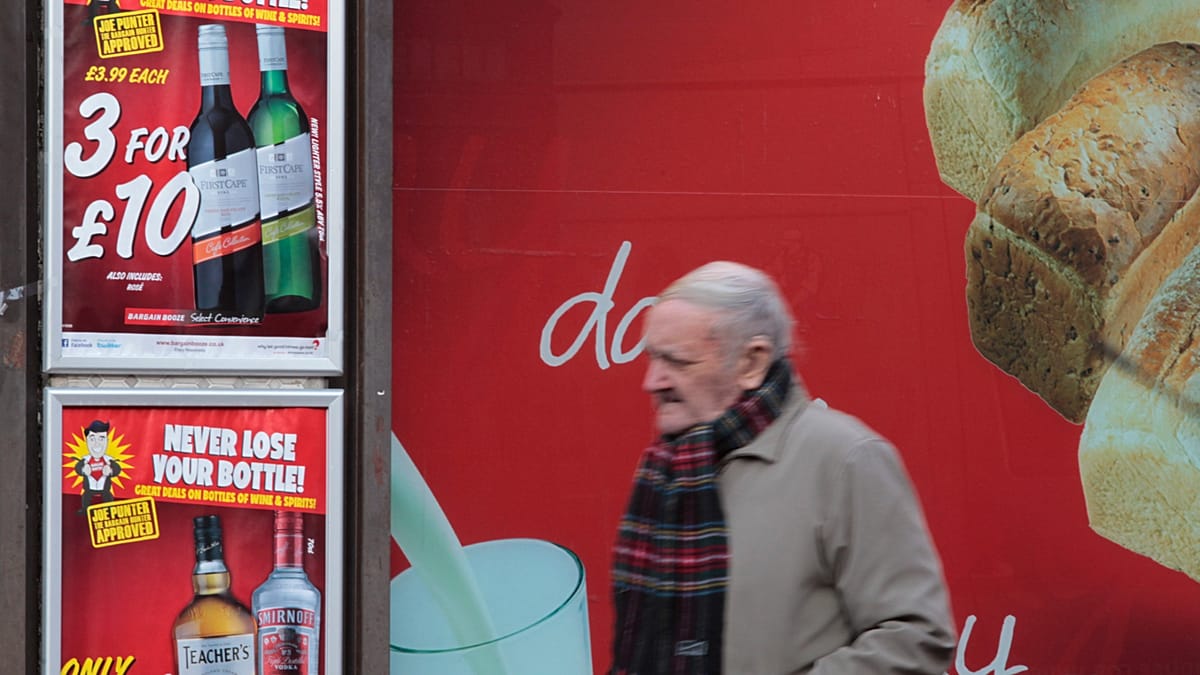
On average, €1.50 out of every €100 that households spend on goods and services in the EU goes to alcoholic drinks, according to Eurostat. Across countries, the share of alcoholic beverages in household spending nonetheless varies widely.
The price level index, which compares the price of the same basket of alcoholic drinks across Europe, is a good way to look at differences in the cost of alcohol. The EU average is set to 100, so if that basket costs €100 at the EU level, the index shows how much it would cost in each country.
A price level above 100 means a country is more expensive than the EU average. A score below 100 means it’s cheaper.
Most expensive alcohol in Nordic countries, Turkey, and Ireland
As of 2024, the most expensive country for alcohol is Iceland, when ranked alongside 36 European countries (EU members, candidates, and EFTA states). In Iceland, people pay €285 for drinks that cost €100 on average in the EU. This is 185% above the EU average.
Elsewhere in the rankings, the price of this alcohol basket is €226 in Norway, €210 in Finland and €203 in Turkey. This means alcoholic drinks cost more than twice as much as the EU average. Ireland, at €198, is also very close to that level.
The three most expensive countries for alcohol prices are all in the Nordic region. The other two Nordic countries also sit above the EU average: Sweden (€146) and Denmark (€125).
Cheapest alcohol in Italy, Germany and Austria
The cheapest alcohol prices are recorded in Italy, Germany, and Austria. The price of alcoholic drinks costing €100 in the EU is just €84 in Italy. That means alcoholic drink prices are 16% below the EU average.
Alcohol prices are €87 in Germany and €90 in Austria. In Spain, people pay €91 for the same basket of drinks. This means alcohol is generally cheaper in the EU’s ‘Big Four’ economies than the EU average. Only France is above the average at €102 — and that’s just 2% higher.
Income is not included
Income or earnings are not included in price comparisons, meaning the ranking does not take wages or other measures of personal income into account.
“There is an important distinction between the price of alcohol, and the affordability of alcohol,” Professor Colin Angus from the University of Sheffield told Euronews Business.
A country with low alcohol prices but low disposable incomes may still have low affordability, and the opposite can also be true.
“Tax is a key factor in driving [price] differences…Higher alcohol taxes are one of the most important drivers of higher alcohol prices in some European countries, most notably those in Northern Europe,” added Angus.
He noted that in the Northern European regions such as Scandinavia, Ireland and the UK, higher tax rates are generally a response to high levels of alcohol consumption and alcohol-related harm.
In 2020, the last year the UK was part of the comparison, its index was 139 while the EU average was 100.
“Most Mediterranean countries have much lower levels of alcohol consumption and harm nowadays and correspondingly less need for higher tax rates to disincentivise heavy drinking,” he added.
Dr Jakob Manthey from the University of Hamburg also emphasised that higher excise tax rates on certain alcoholic beverages are the key driver of differences in alcohol prices.
For example, in 2020, the five countries in the WHO European Region with the highest share of alcohol taxes of beer retail price were Finland, Turkey, Norway, Estonia, and Iceland. The tax shares ranged between 28% and 39% and the tax shares are larger for spirits (can be 50% or more). In low-taxation countries, however, the tax share is 10% or less.
Raising taxes increases government revenue
“These data show that a lot of the retail price can be determined by excise taxes,” Manthey told Euronews Business.
He pointed out that when taxes are raised, this is not only linked to reduction in consumption. “Raising taxes also increases the government tax revenue,” he added.
Colin Angus also explained that another important factor in setting rates of alcohol taxation appears to be alcohol production, at least for wine. Across Europe, countries that produce wine in significant volumes almost exclusively have no, or very low, tax rates on wine. On the other hand, non-wine-producing countries tend to tax wine more highly.