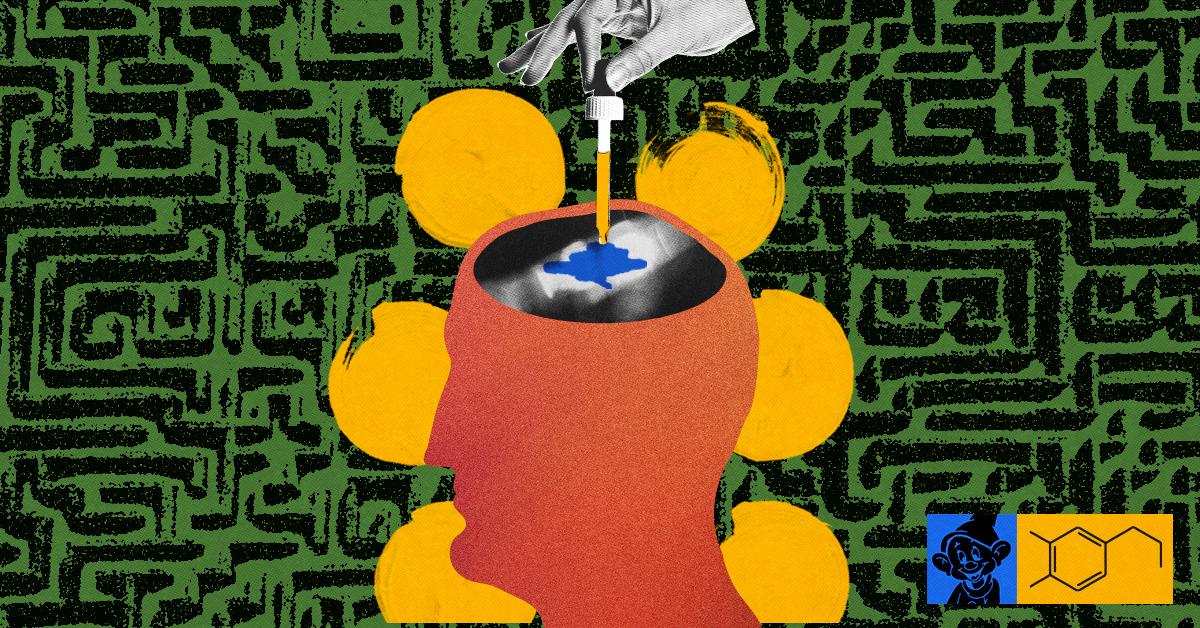
People love to talk about the weather. It’s a safe topic to fill gaps in conversation or segway into the unapproachable. But for all the time I’ve spent talking about the weather, I didn’t spend much time thinking about how it impacts me — until the last few years, because I started talking to a therapist.
My first therapist, Alecia, lived in a different state, so we met virtually. Each session, she started off by asking, “How’s it going? What’s it like there in Rochester this week?” I didn’t get it. Who cared what the weather was like — we had real things to talk about. Eventually I asked her why, and she asked if I had ever heard of Seasonal Affective Disorder, AKA seasonal depression.
“Of course, but I don’t have that,” I said, “I’m definitely not depressed.” (So declares every minorly or majorly depressed person ever.)
It turns out depression falls on a sliding scale and is deeply intertwined with your environment. My emotions, and many people’s, are tied to the seasons and to the sun. Spring and summer are forever associated with energy and light, while fall and winter link to darkness and desolation. Earlier this fall, a friend showed me a TikTok video by Gabrielle Coffy about winter planning and making a “Dopamine Menu,” suggesting we do the same — a list of things to help survive the grey days of winter.
The National Alliance on Mental Illness (NAMI), is the country’s largest grassroots mental health initiative, and offers a wealth of resources for those battling major depressive disorder with a seasonal pattern (formerly known as seasonal affective depressive disorder, or SADD).
According to the website, “the key to an accurate diagnosis of this condition is recognizing its pattern. Symptoms usually begin in October/November and subside in March/April. Some people begin to experience a ‘slump’ as early as August, while others remain well until January. Regardless of the time of onset, most people don’t feel fully ‘back to normal’ until early May.” NAMI also notes that prevalence increases among people living in higher/northern latitudes, younger people and women.
So, what’s the cure? NAMI offers a short list: exercise more toward the end of summer; get into therapy around September; start your lightbox in October; plan a vacation to a sunny spot in January.
A dopamine menu!
Below is my (localized) version, with options for at-home and outside. So, consider this a jumping off point for making your own dopamine menu — along with insight from a few pros:
MAKE ART
At home: paper rings
For this task, you’ll need paper — the more colorful, the better — clear tape, scissors, a writing utensil and some whimsy. Cut as many 3” x 6” strips of paper as you see fit. On each, write something from your heart: a wish, a moment of pride, something you want to let go. Form a ring with the paper, and seal it in place with tape. As you fill out more strips, thread pieces of paper through each other to form a chain. Soon you’ll have a colorful decoration, or, at the very least, a physical manifestation of your thoughts.
Outside: visit an art gallery or museum
The Memorial Art Gallery is currently hosting ‘Frontiers of Impressionism,’ which focuses on the balance between light and dark, playing with both physical and metaphorical shadows. “There’s an entire corner of the exhibit that’s dedicated to interacting with the different concepts of impressionism … from young kids to adults, (everyone) can play with color, shape, light,” said MAG marketing and PR specialist Paige Engard.
TRY NEW FOOD + DRINKS
At home: “Chopped”
Your favorite reality TV show, but at home! Raid the fridge and pantry and pull out five things you’ve been meaning to play around with or use up. Don’t look at a recipe, just follow your gut and make something new. Cooking feeds your body, yes, but your soul, too.
Outside: try a new coffee shop
You deserve a little treat, and sometimes it’s easier to reflect when you’re in an engaging environment. Coffee shops here vary in terms of design and offerings, but you can almost always find an array of plants, cozy lighting, local art and the opportunity to lock in and either create or learn.
MOVE YOUR BODY
At home: walk around your neighborhood at dawn or twilight
Bundle up, bring a drink (and a camera, if you’ve got one). Look at how light interacts with the place you call home. There is such a strong connection between mental and physical health — the body fuels the mind and the mind fuels the body in an endless cycle. Engaging in physical activity at any level is so good for your brain, so why not do a little bit of exploration and meditation?
Outside: take a class
Dance, yoga, fencing, jiujitsu, pole dancing, swimming — Rochester is absolutely flush with opportunities to move your body in different ways. Some of my favorite classes have been at Tru Yoga on South Avenue, Aerial Arts of Rochester on University Avenue and The Floor Dance Company on Monroe Avenue.
CREATE COMMUNITY
At home: write a letter
Yes, by hand! Pen a note to someone that brings light into your life. Tell them why. Tell them how they’ve changed you for the better. Tell them about your life, your dreams and your goals for the coming months. Make a plan to spend time together soon.
Outside: take a mini road trip
Genesee Country Village & Museum (GCVM) in Mumford holds several wintertime events that bring attendees together around the warmth of a hearth, candle-lit paths over snow covered grounds and into Yuletide traditions of yesteryear. In the winter months, the museum encourages guests to come cozy and ready to learn — this season’s special events include afternoon teatimes, breakfast with Saint Nick and narrative Yuletide in the Country tours. “Paths are surrounded by candlelit lanterns to honor the time period and curate the scene,” said VP of visitor services Kelly Burns. “You won’t see any (digital) screens once you pass through the tollhouse and step back into history.”
Take a moment to connect with the seasons and with yourself, and bring some light into your life this winter. You are not alone.
For more information about NAMI, visit namiroc.org, email info@namiroc.org or call 585-423-1593. If you or someone you know is struggling with mental health or suicidal thoughts, call 1-800-950-6264 or dial 988 for 24/7 assistance.
Related