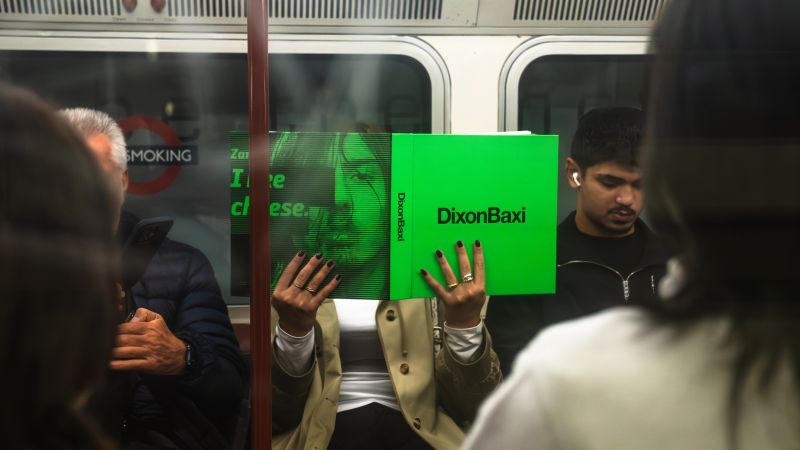
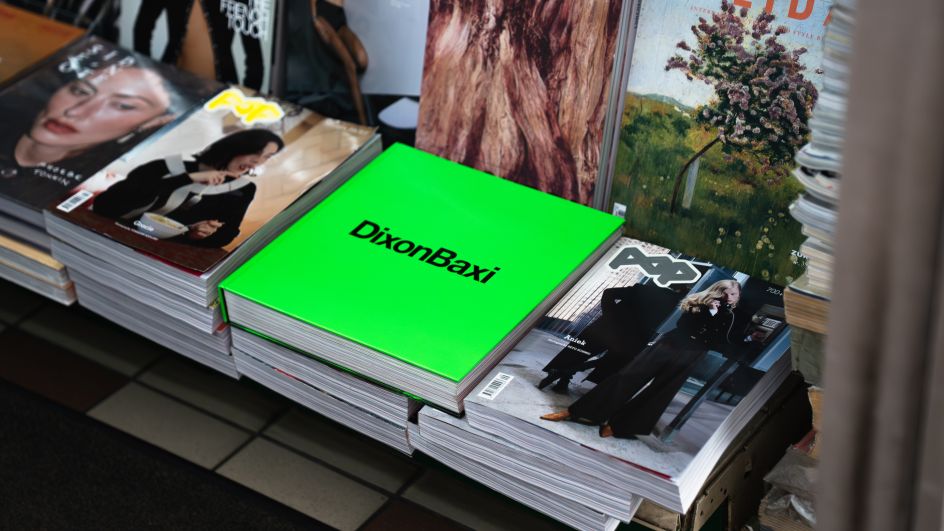
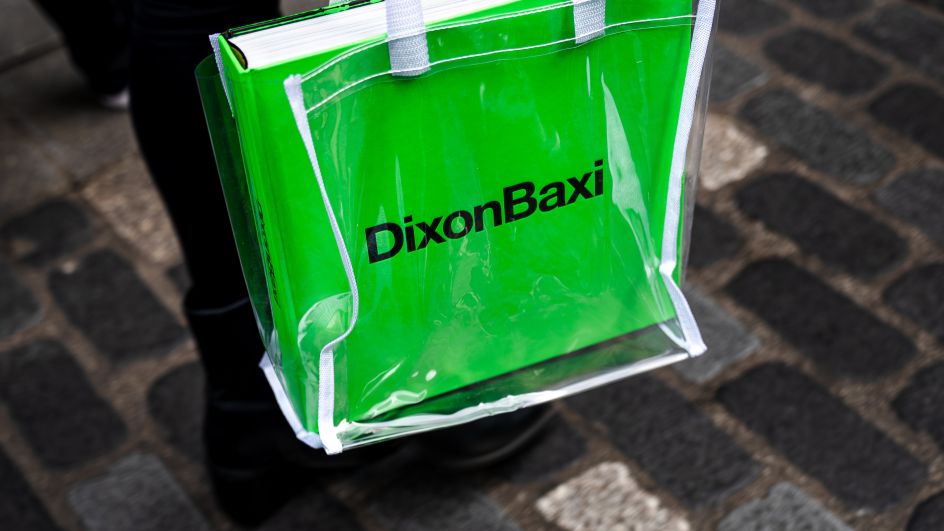
The first thing you notice about DixonBaxi’s REMIX is the colour. It’s a big green square that arrived like a UFO on my coffee table, and it’s become a constant source of intrigue for house guests. You simply can’t ignore it, and that was the point, according to Aporva Baxi and Simon Dixon, co-founders of the studio.
“What we wanted was for people to be able to see it, whatever the distance,” says Simon.
I know you’re probably thinking that all design books and monographs are huge and not easy to ignore, but even the shape of REMIX sets it apart. It’s actually 305 × 305 mm – the exact footprint of a 12-inch record sleeve. It is, in every sense, a big unit.
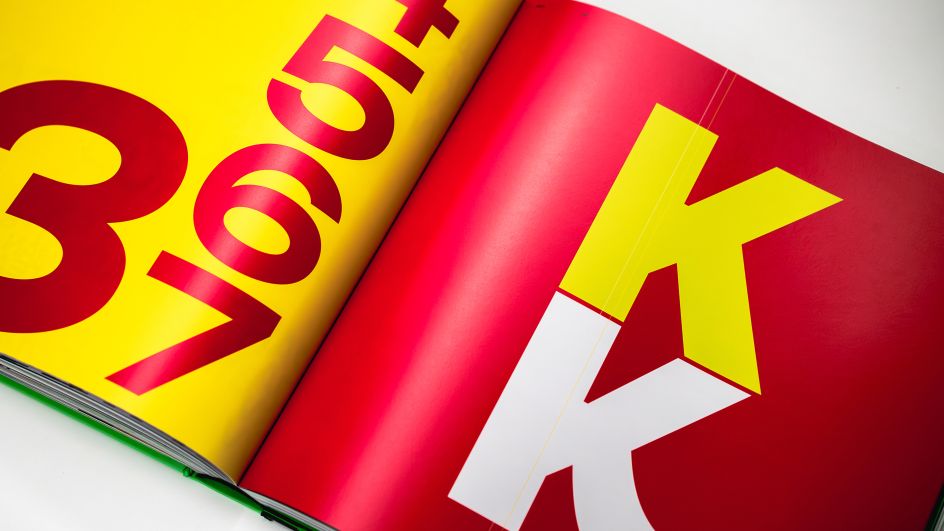
“In the old school days when we used to design record covers, there was a thing called a gate folder, so what it does is it becomes like a wide screen image as opposed to 12 inch,” Simon explains. That cinematic feeling is important because REMIX isn’t large just for the sake of it. It’s designed to swallow you up and immerse you in their process, no matter which page you land on.
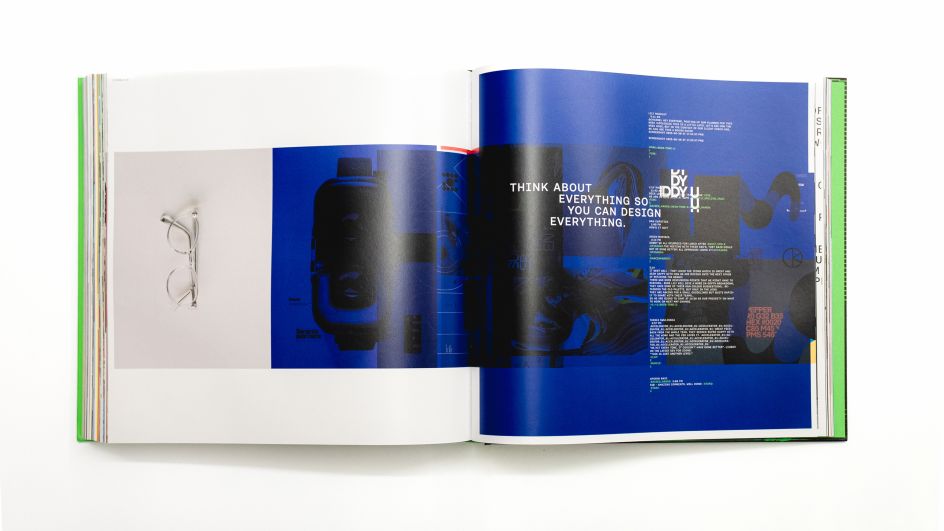
Aporva adds, “The size of it really allowed us to capture the spirit and energy of the works, making it feel immersive. It means that the layered images can draw you in even more.”
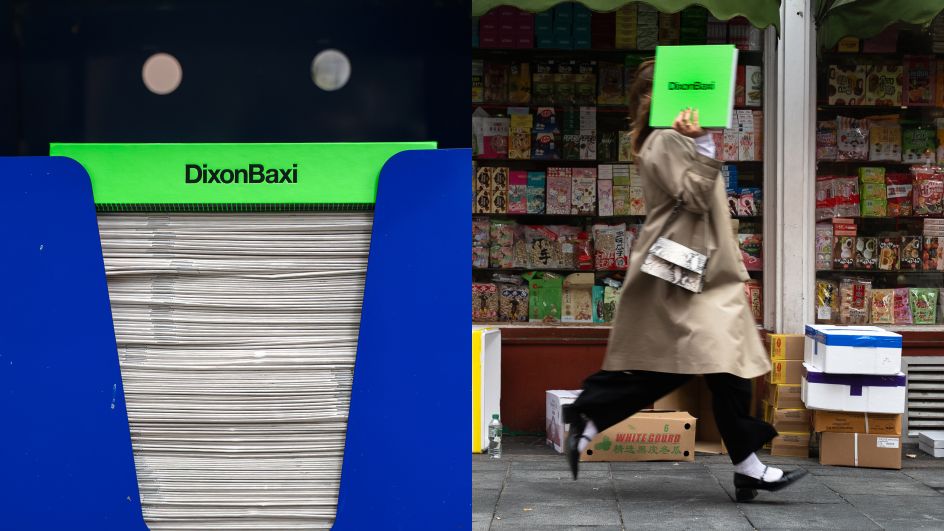

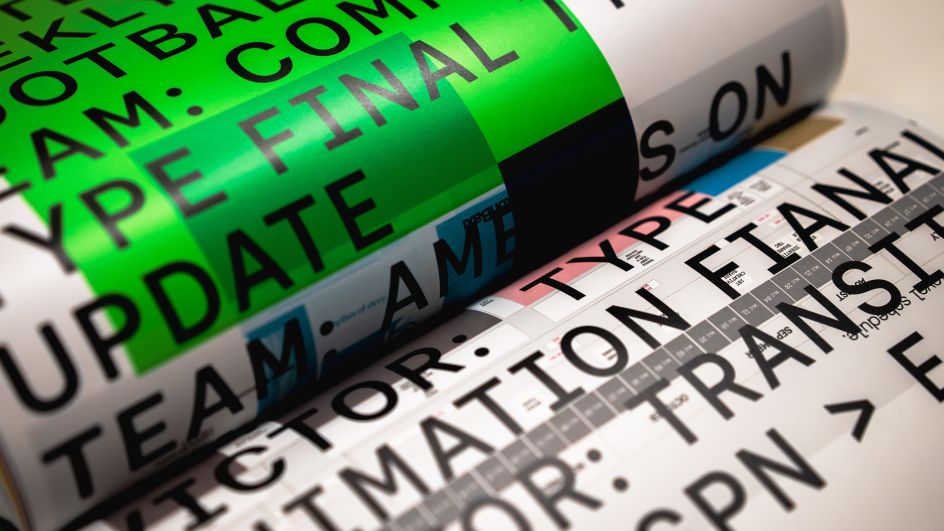
What also sets REMIX apart is that you can’t simply read it. You have to manoeuvre it, drag it closer, turn it 90 degrees, hold pages open with a forearm while you lean across to decode a Slack screenshot or a scribbled aphorism. It’s physically demanding, which adds another layer of delight to the experience.
“It is heavy,” Simon laughs. At 4.33 kg, he isn’t exaggerating. “You know, we like the idea that once you put it down, you can kind of stay there for a bit, because with most coffee table books, you don’t really revisit them very often. They’re just things.”
REMIX is described as part retrospective, part manifesto, part studio diary. Across 500 pages, it traces roughly 18 months of DixonBaxi’s output, whether it’s live projects, reimagined work from across their 24-year history, unseen experiments, raw notes, Slack chats, receipts, travel photos, or in-jokes. Some of it you might recognise from their portfolio, but lots of it you won’t.
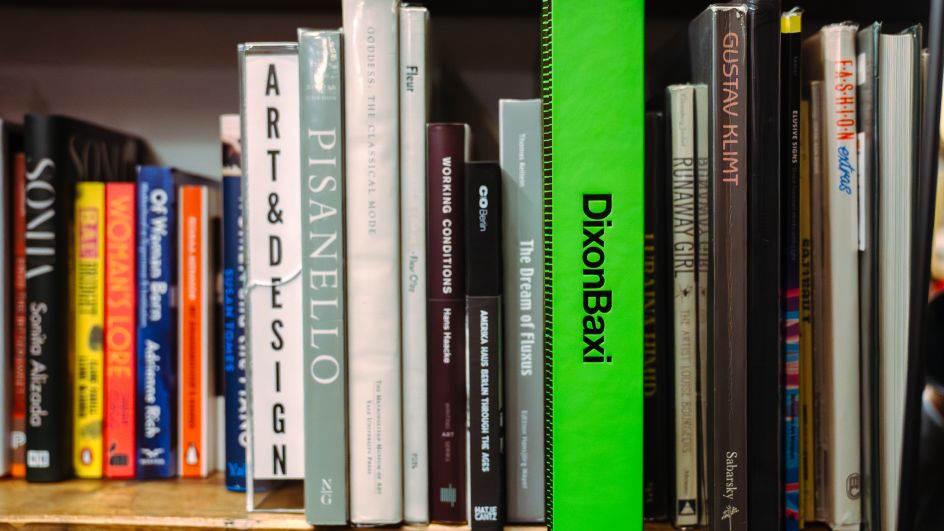
“The market for design books is full of perfect case studies and really functional ‘how to’ books,” says Simon. “But actually, if you’re a professional creator, you just sometimes need to create – so the idea is to say to people, it’s just okay to make things. You don’t need a brief from anyone, and you don’t need permission from anyone to do anything.”
You can kind of see that tension between process and performance throughout REMIX. DixonBaxi is a studio used to operating at an elite level for global brands, so you could forgive them for doing a glossy monograph and leaving it at that. Instead, they’ve chosen to publish the bit in the middle – the messy bit – just before things click into place.
“Rather than specifically being about the studio, it’s about the work in the studio,” Simon explains. “So on any given day, work is on the wall as well as on the screens, or it’s on tables.
“The reason for that is when you look at work, and it’s all spread out, you see things contextually. You don’t get to see any happy accidents or much of the process on a single Figma frame.”
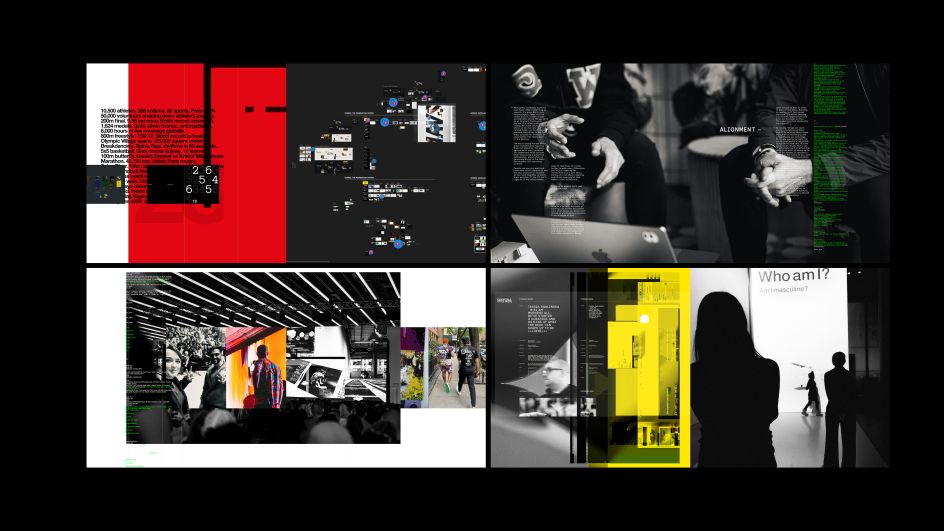
That’s why DixonBaxi favoured this overlapping, seemingly chaotic style throughout the book. Flicking through it, you’ll see that a health-tech exploration sits next to a sports identity; notes from a trip to Mexico slide underneath screenshots from a talk in LA; mundane Slack lines – “receipts please” – pop up between bold typographic experiments.
“That’s the day-to-day,” Aporva says. “It’s the fabric of how creativity gets made.”
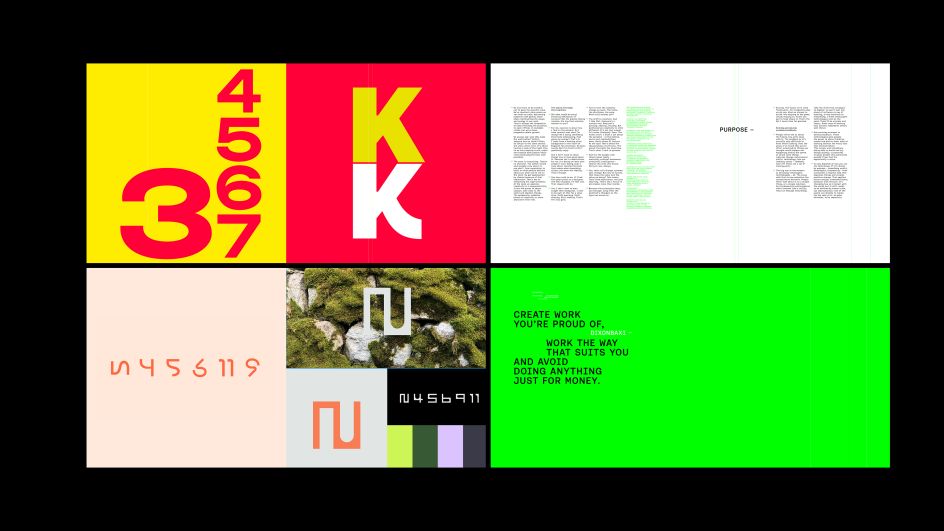

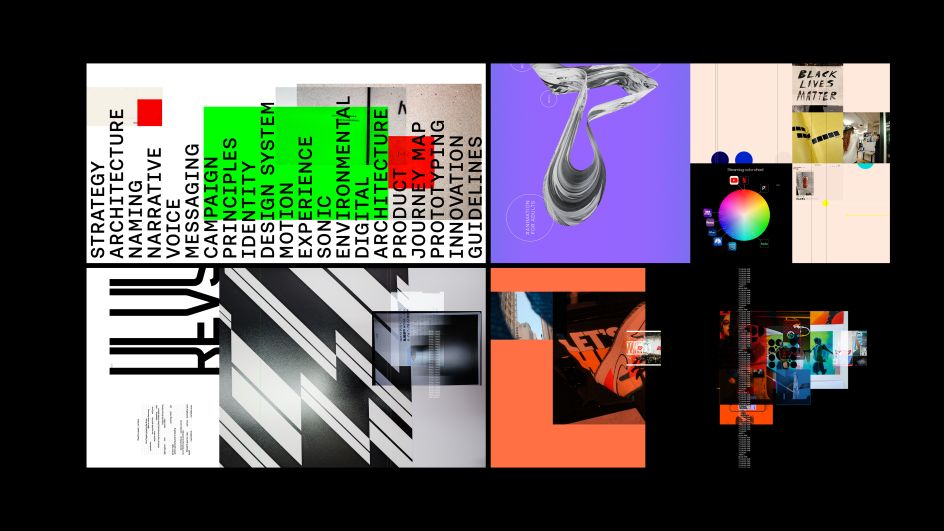
The studio’s Superfutures practice, which sees everyone – not just designers – reimagine past projects without the pressure of a brief, also threads through the book.
“We make lots of things which are really spontaneous, and we make them without the pressure of client briefs and things,” Simon explains. “And it’s not just designers, it’s writers and strategists and producers and operational teams. So when we’re doing superfutures, everybody makes something.”
At one point during the project, British Land (a client of theirs) gave them a floor in Broadgate, London, to lay out over a thousand spreads generated by Superfutures and the wider studio. That macro view helped shape the final book.
“It was very liberating, but also just heartening to see everyone participate in that,” Aporva says. The final object, he adds, is “a collective, collaborative, and orchestrated remix of all of that.”

If that all sounds a bit intense, REMIX has a lightness to it, too. It doesn’t take itself overly seriously, and there was definitely a sense of joy in making it.
“The idea behind it is, you start early in your career and all you want to do is make things,” says Simon. “There’s a joy to that – it’s hard to describe – and you get in this flow state where you’re just making things.”
As senior leaders, he and Aporva don’t often get to sit in that flow state themselves any more, so the book gave them an excuse.
Simon adds: “Occasionally, on projects like this, it gives us the ability to get inside the work – to see it, feel it, see what we like, what we don’t like.
“We’re kind of interacting with all of the team’s work, which is really good… and because it’s just for us, we can do what we want, and it turned out like this.”

For a studio with a global client list, there is also a conscious effort to make REMIX accessible beyond people who can afford a hefty design object. Alongside the hardback, there is a digital version that reshuffles each time you visit, re-pairing spreads into new combinations. Aporva describes it as “a living document that changes as you interact with it.”
The digital experience means someone in Lagos or Mexico City can explore the work on their phone, even if the physical edition – limited to 2,500 copies – never reaches their shelves.
There are also student discounts, and every college or university that gets in touch receives a copy for its library.
When I mention that the book would likely be the perfect read for someone with ADHD, thanks to its abstract format, Aporva and Simon agree.
“A lot of creative people process the world slightly differently,” they say. “And that’s what our minds are like. Sometimes they’re organised, sometimes they’re not.”
REMIX feels like being dropped into that headspace for a while, with its colourful intensity and organised chaos. It’s also strangely reassuring because, behind the high-gloss case studies and keynote decks, the work of a studio like DixonBaxi is still built on the same thing that drives a teenager with a sketchbook or a motion designer playing around on a Sunday afternoon.
It’s built on the idea of making things, over and over again – not just because a client asked, but because you wanted to see what might happen if you did.