
Listen to this article
Estimated 3 minutes
The audio version of this article is generated by text-to-speech, a technology based on artificial intelligence.
A recent cold snap pushed Hydro-Québec’s network near its limit, forcing the utility to issue two rare alerts as it scrambled to meet the surge in demand for power.
The unseasonably chilly start to December across southern Quebec drove up consumption just as turbines at several hydroelectric stations were undergoing maintenance.
Hydro-Québec issued two internal “Level 2” alerts on Dec. 3 and Dec. 5, which meant the public utility had to tap into its reserves to ensure all customers would have power. Overnight lows in Montreal on those days dropped to -12 C and -17 C, respectively.
The story was first reported by Radio-Canada and later confirmed by Hydro-Québec.
The utility did not deny the alerts were issued for the first time since February 2023, but spokesperson Lynn St-Laurent maintained the utility is “in full control of the situation.”
Level 2 alerts are used to “co-ordinate our operations when power balances tighten,” St-Laurent said in an interview.
She said Hydro-Québec has access to additional reserves it could tap into and assured the public it is prepared for the cold periods ahead.
“We will be completely ready for the winter months, particularly January and February, when we get to those very cold temperatures,” she said.
Avoided rolling blackouts
Consumption peaks reached approximately 38,000 megawatts in recent days, a figure St-Laurent called “exceptional” for this time of year. The five-year average for early December is closer to 29,000 megawatts.
To manage the strain on the network, Hydro-Québec relied on tools like Hilo (a smart home energy management program), dynamic pricing and agreements with business clients. Some ski resorts, such as Mont Saint-Bruno, for example, delayed opening lifts in the morning in exchange for credits on their electricity bills.
A Level 3 alert could have resulted in rolling blackouts, said François Bouffard, an associate professor of engineering at McGill University who follows the public utility closely.
“This is where Hydro-Québec doesn’t want to get to,” Bouffard told CBC.
Bouffard said the alerts issued in early December are indicative of the challenges facing the public utility in the years ahead. Demand for Quebec’s cheap hydropower is expected to soar over the next few decades.
“It’s going to get tighter and tighter and tighter,” he said of the demand during peak periods.
“Eventually, what we’re going to need to start doing is either build more power capacity or again, get a lot smarter about how we use electricity, either through building retrofits or a better organization of how people consume electricity.”
St-Laurent said Hydro-Québec has a plan in place to generate more electricity, citing recent refurbishment and wind projects.
WATCH | A deal that led to the biggest project in Quebec history — and a conflicted legacy: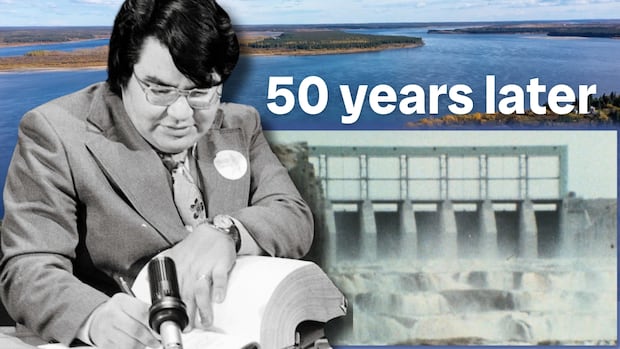
How one deal led to the biggest project in Quebec history — but left a conflicted legacy
When the province wanted to build one of the world’s largest hydroelectric projects, a court challenge by Cree and Inuit leaders led to the James Bay and Northern Quebec Agreement, a deal which has changed the lives of many who live in northern Quebec and still has its opponents today.
This story is largely based on reporting by Radio-Canada’s Félix Lebel.