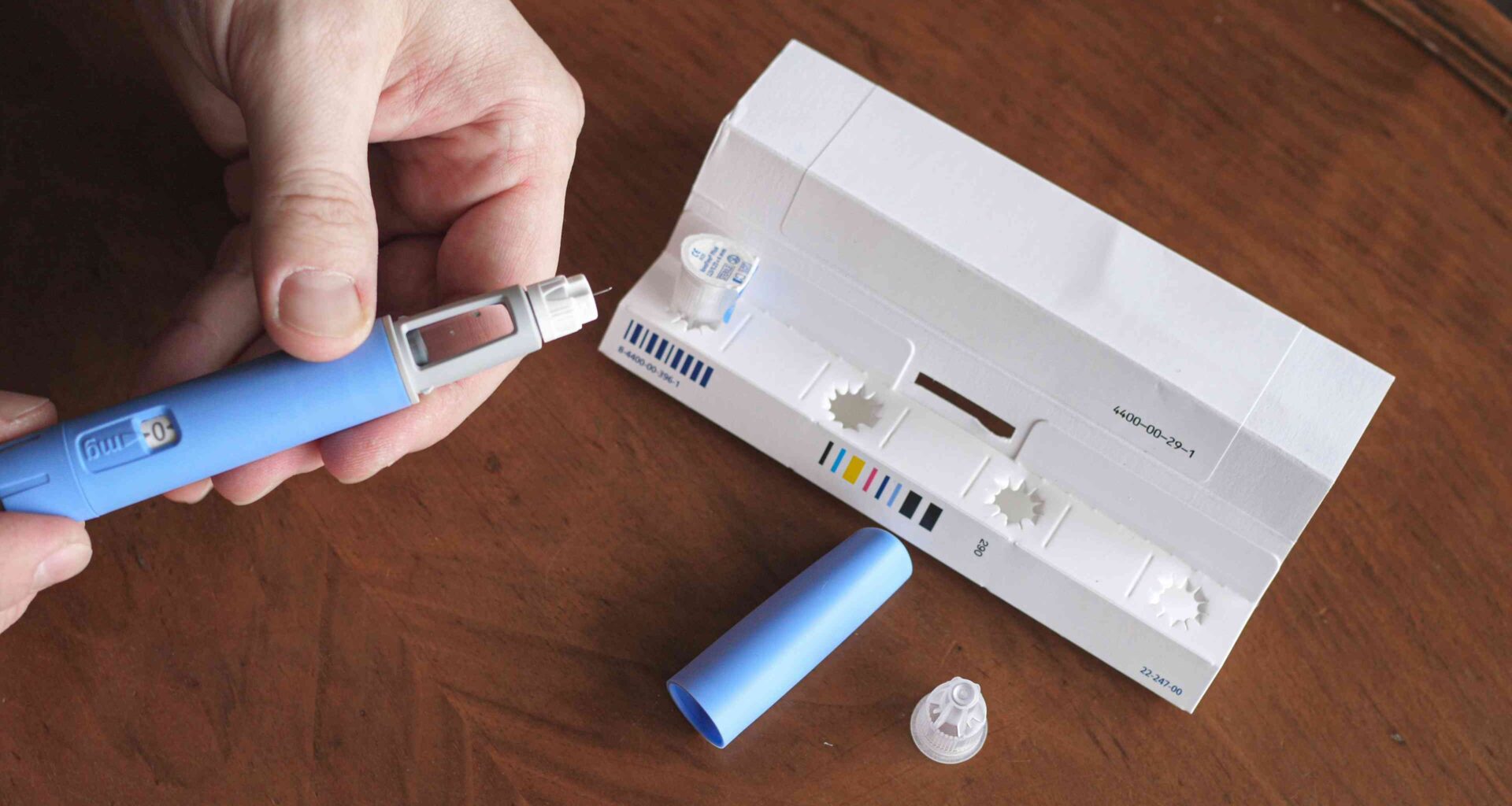
Semaglutide overdoses increased drastically in the United States between 2022 and 2023. Compounded versions of medications like Wegovy and Ozempic likely caused most cases.
There are several reasons why semaglutide overdoses might happen.
These drugs act as appetite suppressants. They slow the rate at which food moves through your digestive tract, making you feel full longer. Too much of this effect can negatively impact your body.
“When someone takes too much semaglutide, these effects can be more pronounced, leading to more significant nausea, vomiting, abdominal pain, or diarrhea,” Kaitlyn Brown, PharmD, clinical managing director at America’s Poison Centers, told Health.
High Doses
Novo Nordisk, the company that makes semaglutide, has recommendations for taking the drug safely. They suggest a step-up approach, in which you start with a smaller dose and gradually increase it.
This can decrease side effects, namely digestive effects like nausea, vomiting, and abdominal pain, which are more likely if you start with a high dose.
However, several factors push people to skip this step-up approach, likely contributing to the rise in reported overdoses, according to Andrew Kraftson, MD, director of the Weight Navigation Program at Michigan Medicine.
Not all insurance companies cover semaglutide for weight loss. When covered, you typically need to prove you’ve lost a certain portion of your weight within 3-6 months, depending on the insurer.
If the person fails to meet this benchmark, it’s considered a “treatment failure,” and insurance may pull coverage.
According to Dr. Kraftson, this pressure can prompt people using semaglutide to jump to higher doses more quickly than recommended.
“If you only have three months to meet 5% of the weight loss goal, and that first 0.25 milligram dose is really a safety dose rather than a weight loss dose, people are going to want to go up to the 0.5 milligram dose right away,” Dr. Kraftson told Health.
Self-made deadlines, such as losing weight for a wedding, can also have the same effect.
Widespread Shortages
Widespread shortages are also likely to lead to some instances of semaglutide.
In his experience, Dr. Kraftson said people often call pharmacies to ask whether they have Wegovy or Ozempic in stock. The pharmacies only offer a higher dose than what’s recommended at the start of a person’s weight-loss plan.
“I get messages every day saying something like, ‘this pharmacy has 2.5 mg, can you just prescribe me that?’ when they haven’t ever been on anything,” said Dr. Kraftson.
The voluntarily reported poison control data does not include whether a person overdosed while taking a compounded semaglutide or the brand-name drugs.
Compounded Drugs
Juliana Simonetti, MD, co-director of the Comprehensive Weight Management Program at the University of Utah, said many of these overdoses happen when people seek out compounded semaglutide.
Dr. Kraftson explained that compounded versions of the semaglutide are likely responsible for many of the overdoses.
“It’s so important to see a clinician that is specialized in this area versus getting semaglutide online or at medspas,” Dr. Simonetti told Health. “They are not taking into account the other health problems a person may have.”
Compounded drugs often use semaglutide salts, which are a different active ingredient than what is in the FDA-approved drugs.
A report detailed three compounded semaglutide overdoses. Toxicologists at the Utah Poison Control Center in Salt Lake City found that two of the three people took 10 times the amount of semaglutide than the dose indicated.
Overdosing on semaglutide can result in a few serious side effects.
In the short term, taking too much semaglutide can cause severe dehydration due to vomiting and diarrhea. This can cause acute kidney failure that is usually reversible if a person gets proper care and hydration, said Dr. Simonetti.
Prolonged dehydration can cause irreversible kidney damage. In this case, Dr. Kraftson emphasized the need for immediate medical care. If you cannot keep down food or liquids, you’ll likely need to get fluids through an IV.
In rare cases, a person who has overdosed may have extremely low blood sugar, which can be life-threatening, said Brown.
Since semaglutide has a long half-life—the amount of time it takes for the drug to leave a person’s system—it usually takes more than a week for symptoms to go away, said Dr. Simonetti.
Another concern Dr. Simonetti has is muscle loss. When a person loses weight, it isn’t just fat they’re losing; they also lose muscle mass. This can be particularly dangerous for older adults who may already struggle to maintain muscle mass.
It also becomes easier to fracture bones.
“There are all those issues that come along with getting medication without going to a provider that knows how to prescribe the medication,” said Dr. Simonetti.