 PA Media

More than four in every 10 pupils in Scotland are listed as having an additional support need
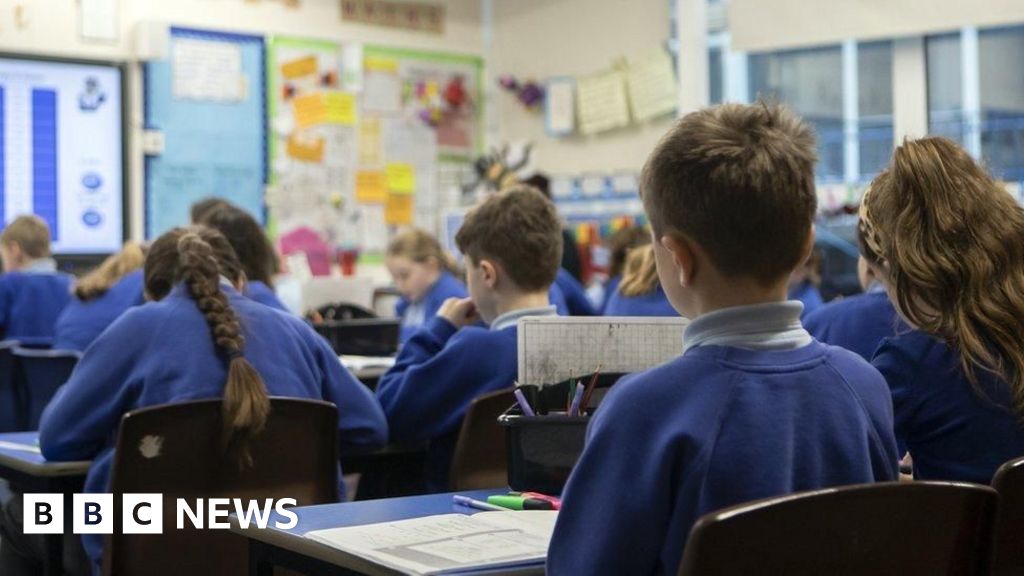
A record proportion of pupils in Scottish schools – nearly 300,000 in total – are now classed as having an additional support need (ASN).
Latest annual figures reveal that 43% of students are categorised as ASN, up 2.5 percentage points from last year, continuing an upward trend that began in 2009.
Other figures reveal a small decrease in school absences and, for the first time in three years, there has been a rise in teacher numbers.
Education secretary Jenny Gilruth said it was encouraging to see better attendance levels and that both literacy and numeracy were improving.
Why are pupils needing extra support?
The latest annual figures show the total number of children in Scotland with ASN now stands at 299,445.
Officials caution that a change in recording methods over the years and greater awareness of pupils’ needs may have amplified the figures.
The most common single reason listed was “social, emotional or behavioural difficulty”.
More than 77,400 children fell into this category with boys representing about two thirds of the total.
Various forms of learning difficulty or disability including dyslexia accounted for about 112,000 of the overall figure.
Autistic spectrum disorder affected more than 41,000 pupils while nearly 32,000 children were experiencing “family issues”.
Having English as a second language was also a major listing, affecting more than 61,000 children. Some children with ASN will be listed in more than one category.
Nearly a third of pupils regularly miss lessons
Overall attendance rate in 2024/25 was 91% – a modest improvement on the previous year (90.3%) – but absence is still a bigger problem than in the years before Covid when attendance was typically around 93%.
Attendance remains worse for pupils from the poorest backgrounds – just 87.6% for the lowest socio-economic groups compared to 94% for the least deprived.
And nearly a third of pupils were absent for 10% or more of all school sessions – known as persistent absence.
The figures show that 28.5% of pupils missed at least the equivalent of 19 full days. This is lower than the 31.4% recorded last year, but still higher than pre-Covid levels.
The statistics also confirm that the school roll is falling sharply at primary level – down by more than 7,000 – which has helped deliver a small increase in teacher-pupil ratios and slightly smaller average class sizes.
On average a primary school class now has 23.1 pupils, down from 23.3.
At secondary level, pupil numbers continue to climb – up by 431. Class size data is not collected as it varies across lessons.
 PA Media
Jenny Gilruth welcomed a modest improvement in attendance and the rise in teacher numbers
The government published a significant number of statistics on Tuesday morning, including data related to numeracy and literacy.
Both had seen improvements which Ms Gilruth welcomed.
She said: “Attainment levels are at record highs in literacy and numeracy following Scottish government investment of £1.75bn in the Scottish Attainment Challenge over the past decade – aimed at improving outcomes for children and young people impacted by poverty.”
Ms Gilruth added that it was further evidence of the “strong recovery” seen in schools since the pandemic.
The education secretary also welcomed the rise in the total number of teachers in primary and secondary, up by 63 to 53,475.
She said: “The rise in teacher numbers reflects our investment in the workforce, which means that Scotland continues to have the lowest pupil-teacher ratio and the best paid teachers in the UK.”
But she accepted that more needed to be done to get numbers back to 2023 levels – 54,033 – promised by the first minister.
‘I physically have to carry her into the building’
Grace, aged seven, was diagnosed with autism two years ago.
Her mum Rebecca says she has struggled getting her into school because she is put off by loud noises in the busy classroom, and suffers meltdowns as well as problems with her sleep.
In primary one, Grace was supported several days a week in a special small “nurture class” but it was removed the following year and her attendance began to slide.
“It was downhill from there,” said Rebecca.
“I couldn’t get her to school because she knew she wasn’t going to have that time outside the class and the thought of spending all day trying to hold it all together was too much for her.”
Grace refused to get dressed and resisted leaving the house, and the situation escalated throughout primary two, with Grace going to school less and less.

Rebecca described the difficulties she faced getting her daughter Grace into school
Her attendance for that year was just 74% – meaning she missed more than a quarter of primary two.
“I couldn’t get her in a full week,” said Rebecca. “And on the days I did manage to get her through the door, I was finding that when she was coming out of school her fingers were bleeding.
“She was hurting herself because her anxiety became so bad.”
Now in primary three, she attends a new social communication group, similar to nurture, three days a week to help with managing her emotions.
But on the days with no ASN group, the school run is still a struggle for Rebecca, who has two younger children to juggle as well.
“The closer we get to school, the worse she feels, and one of her things is running away. If she gets away from me, she can run into traffic; it’s fight or flight for her.
“I physically have to carry her into the building and she will be crying.”
She has complained several times to her council about the lack of support for Grace, and says she’s been left in the dark about plans for the future.
East Ayrshire Council said it was unable to discuss an individual child’s situation but said a child’s needs would be continually reviewed to see if different support was required.
‘Complex link’ between attendance and ASN
Dr Carole Campbell, head of inclusion for Glasgow City Council, says the link between ASN and poor attendance is a complex one but it can have long-term implications.
“If needs aren’t met then the situation is likely to get progressively worse,” she said.
“You will see the impact on things like attendance and mental health.
“But wider than that, on life outcomes for children and young people once they leave the education system, so the effects are far-reaching into the future.”

Carole Campbell says the link between additional needs and attendance is complex
Dr Campbell said attendance often became an issue for children with greater support needs, but not in every case.
“ASN in its broadest sense will contribute to the risk of poor attendance – but there are many ASN children who attend school exceptionally well and enjoy the school routine,” she said.
Dr Campbell said the Covid pandemic had a significant impact on school attendance because it broke the routines for children and families.
“Some children flourished in the home environment and enjoyed home learning much more,” she said.
“I think there was also an impact on people’s attitudes towards school, and the odd day off here and there.
“I think all of these things combine in the attendance statistics we see. The good news is that we can continue to work on this and we are having some success.”