
Listen to this article
Estimated 4 minutes
The audio version of this article is generated by text-to-speech, a technology based on artificial intelligence.
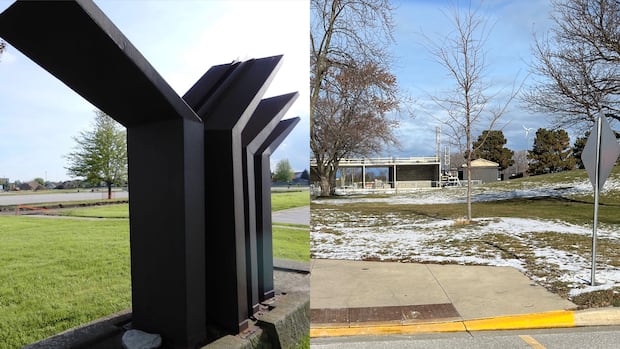
In 1972, an influential abstract artist was commissioned to build a sculpture for Lambton College in Sarnia, Ont.
But due to what is being called a construction mishap, that longstanding and public connection to mid-century Canadian art history is now gone.
The metal sculpture, called Sign No. 9, was created by Walter Yarwood, a founding member of the 1950s Canadian abstract art group Painters Eleven (P11). Yarwood, who was born in Toronto and died in Hamilton in 1996 at age 79, is credited with popularizing the art style across the country.
In August, amid the construction of a new student residence, a subcontractor “irreparably damaged and inadvertently removed” Sign No. 9, according to a joint statement from Lambton College and Tilbury Properties, the developer in charge of the construction.
“We acknowledge the importance this work held for the Yarwood family, Lambton College and the broader community,” the statement said.
Although the sculpture was outside the construction zone, the excavation contractor “mistakenly” believed it to be included in the scope of the demolition, college spokesperson Lauren Ward said. All parties made extensive efforts to locate the sculpture at the facility to which it was taken, she added, but they were unable to recover it.
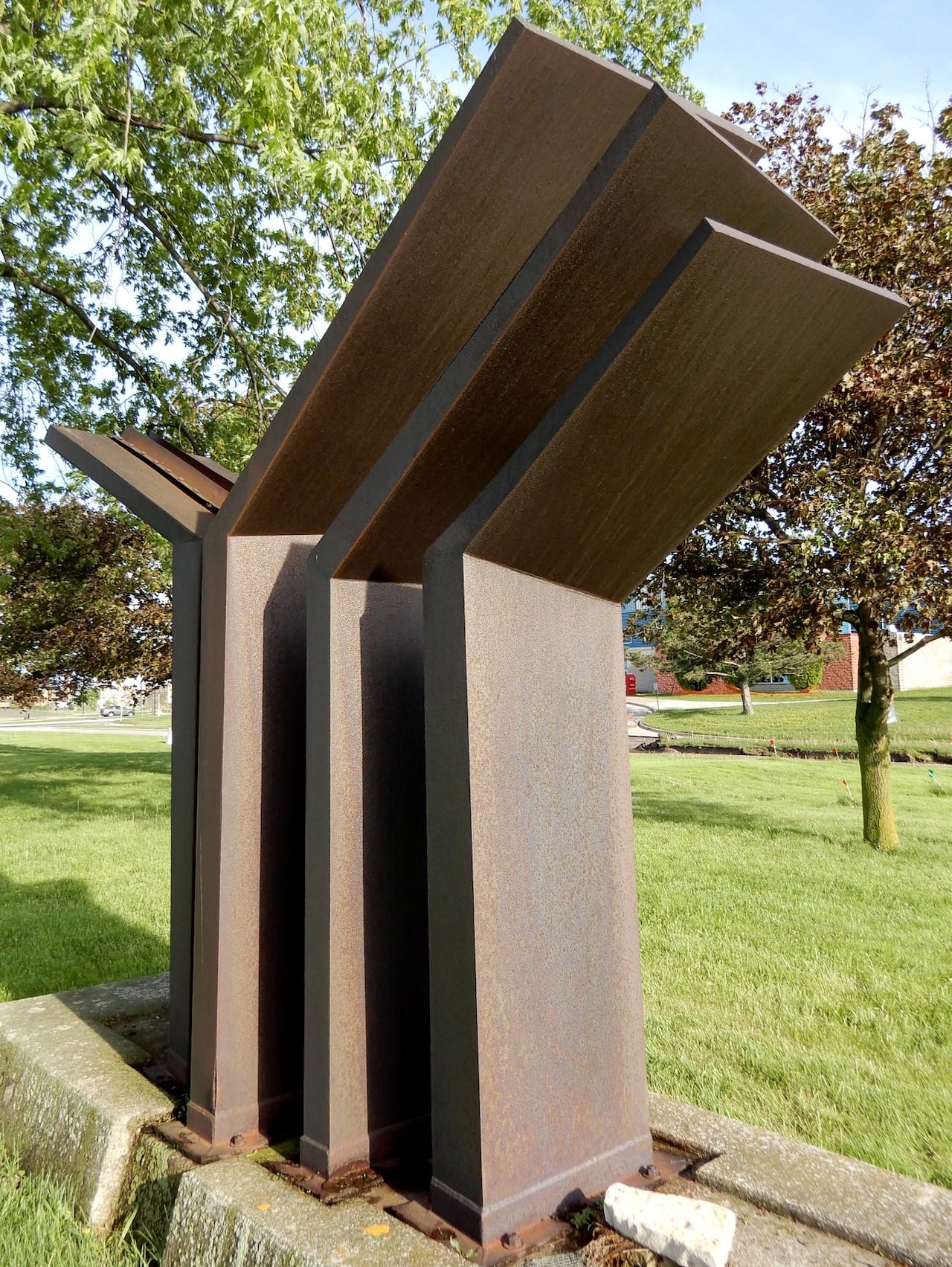 Sign No. 9, commissioned in 1972, was a ‘great piece of modern sculpture,’ says Chip Yarwood, one of the artist’s children. (Sarnia Historical Society/Facebook )
This is not the first time Lambton College has been the subject of controversy in the art world.
In 2005, the college tore down a cedar sculpture by Haydn Davies, a Welsh-born Canadian artist who died in 2008. A lawsuit between Davies’s family and the college was settled out of court the following year.
Both Lambton College and the developer have reached out to Yarwood’s family, Ward said, and they are working with them to remedy the situation “in a meaningful way.”
“It was a great piece of modern sculpture,” said Chip Yarwood, the youngest of the artist’s five children. “My father created it, welded it — it was all made by hand. It’s a real shame to see it go.”
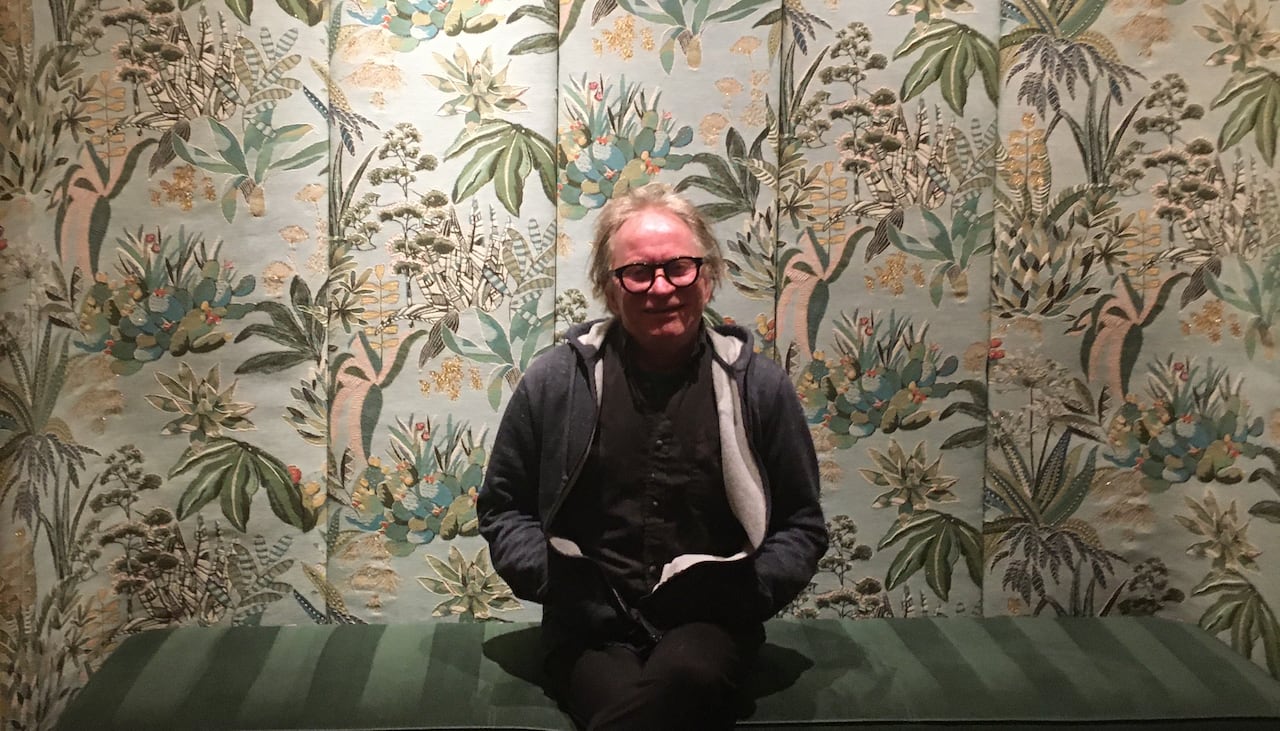 Chip Yarwood, the youngest of Walter Yarwood’s five children, says he is working with the college to get more of his father’s work into the public domain. (Submitted by Chip Yarwood)
Chip said he’s now working with the college with the goal of getting more of his father’s work into the public domain. This could involve restoring works in disrepair or getting some pieces out of private collections, and then donating them to public institutions, he added.
The college has been agreeable with that goal, he said, but he is still working out the details.
“It’s important that his works don’t just disappear and it’s important for me, as family, to keep his legacy alive.”
Artists promoted ‘idea of modernism’
It took some time for abstract art to gain acceptance in Canada, even though the movement was already underway in other countries, according to Ihor Holubizky, a former art professor and curator who met Yarwood as a teenager and was later employed as his studio assistant.
It was Yarwood and the other Painters Eleven artists who elevated that style in Canada and gained mainstream recognition for it.
“They felt that, as a group, they could promote this idea of modernism that was appearing internationally,” said Holubizky.
After meeting Yarwood, Holubizky earned his PhD in art history, taught at McMaster University and the Ontario College of Art and Design, and curated collections at various galleries in Canada and Australia.
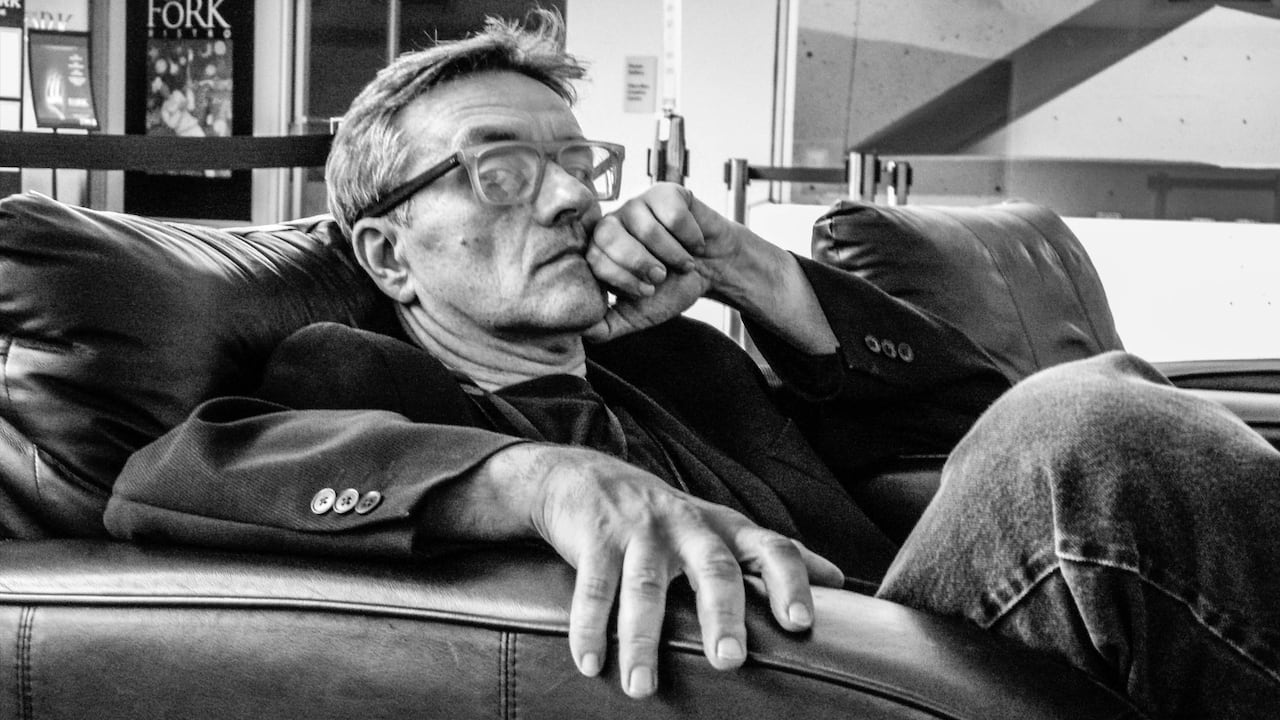 As a teen, Ihor Holubizky met Walter Yarwood, who later employed him as a studio assistant. Holubizky went on to obtain his PhD in art history, teach at McMaster University and the Ontario College of Art and Design, and curate collections at various galleries in Canada and Australia. (Submitted by Ihor Holubizky)
As one of the least well known of the group, Walter Yarwood is not a household name — he worked quietly and earnestly, Holubizky said. But his publicly commissioned works can be seen across Canada.
In Ontario, they include sculptures at the University of Toronto, York University and the provincial government’s MacDonald Block Complex. His sculpture work can also be found at the Winnipeg Airport and the University of Montreal.
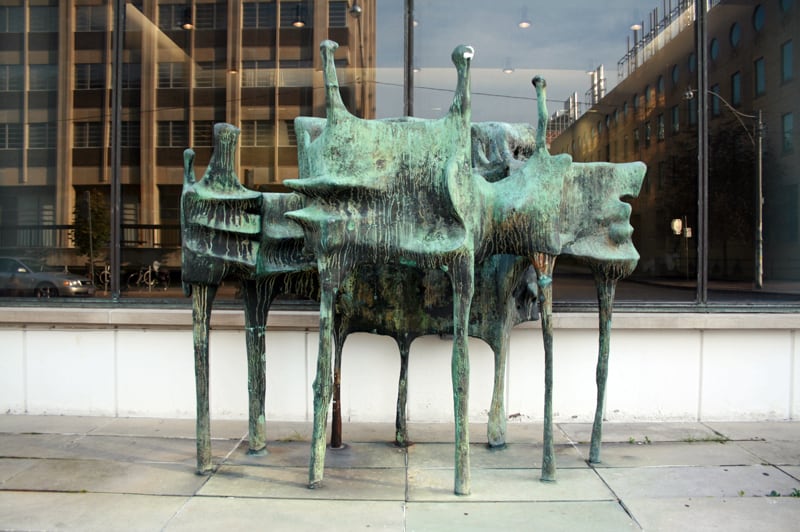 Yarwood’s public works include his Cedars sculpture at the University of Toronto. (Shaun Merritt/Flickr)
Smaller sculptures, as well as some of his paintings, are on display at art galleries, including the Robert McLaughlin Gallery in Oshawa, Ont., that houses the largest Painters Eleven collection in Canada.
What happened to Yarwood’s piece at Lambton College was unfortunate, Holubizky said, adding it removes a “connective thread to this past” for the next generation.
“There are so few of the sculptures around,” he said. “So it’s ‘out of sight, out of mind,’ and I do like the idea of the next generations bringing their own thoughts, not necessarily liking [the work], but having fresh ideas about it.”