Donegal is among the counties facing significant demographic pressure, even as its population continues to grow.
That’s according to a new report from the GAA’s National Demographics Committee.
The review, published last Thursday, warns that falling numbers of young children pose a growing threat to the sustainability of club structures across the county.
Central to the concern is a sharp drop in the county’s youngest age groups. Donegal has recorded a 15.8% decline in children aged 0–5 relative to the 6–11 cohort between Census 2021 and 2022—one of the steepest reductions nationwide. This represents 2,254 fewer young children and signals a shrinking pipeline of future players, while also placing strain on rural schools that traditionally feed local clubs.
Despite this, Donegal’s overall population has grown modestly to 167,084, though the increase lags behind the national average.
Much of that growth is driven not by birth rate but by inward migration, reinforcing the county’s ageing profile and continuing the trend of young people leaving for education and employment.
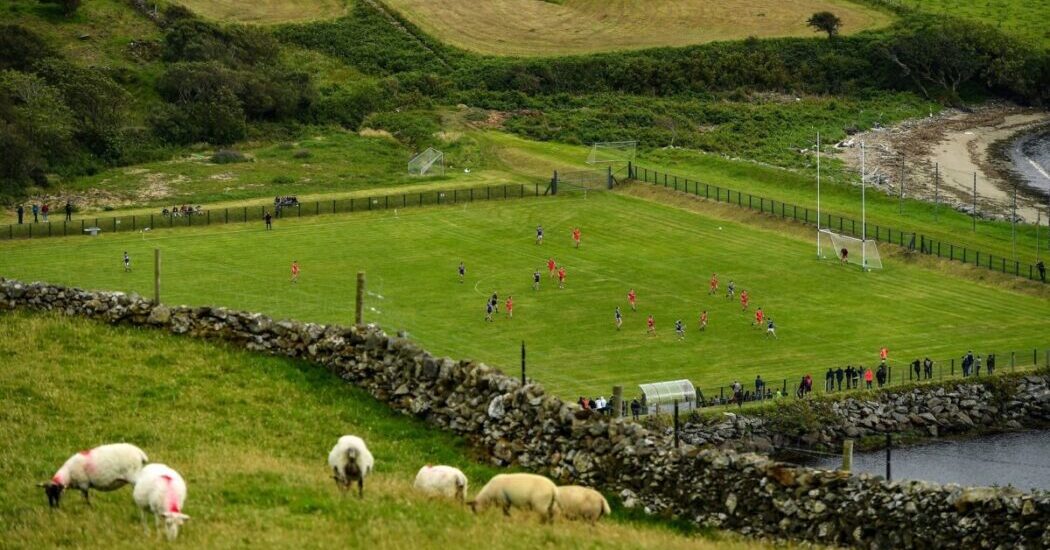
These patterns are mirrored in the county’s GAA landscape. While many clubs face recruitment challenges typical of rural areas, Donegal also contains one very large club with more than 1,200 members—placing it in a category normally associated with urban centres such as Dublin, Cork, and Galway. The contrast highlights the county’s uneven population distribution: isolated rural communities losing numbers while larger population hubs maintain or grow their membership.
The report cautions that if demographic trends continue, some rural clubs could face existential threats. Fewer young families in sparsely populated areas may force clubs to share resources, combine teams, or adopt alternative competition formats. Similar adaptations are already visible in other rural counties grappling with depopulation.
Nevertheless, the report underlines Donegal’s enduring strengths: strong cultural identity, deep-rooted community involvement, and committed volunteers. With targeted support and strategic planning, it argues, clubs can adapt to changing realities and continue to anchor local communities.
Recommendations
Among the recommendations is targeted support for existing and emerging clubs, particularly those struggling to field full teams. The GAA has also highlighted startling national statistics: 25.5% of all children aged five and under are concentrated in just 50 clubs. Over half of that cohort lives in Dublin, Belfast, Down, Kildare, Galway, and Cork. One in three people in Ireland now lives in Dublin or within an hour of it, yet only 18% of GAA clubs operate in that area.
“In that area there’s a population of three million,” GAA President Jarlath Burns told RTÉ Sport. “There’s only 18% of our clubs there, 25% of our members, and that indicates to us that the map of Ireland and the map of our clubs doesn’t align.”
To address the imbalance, a new Club Support Unit will be established at national and provincial level to assist with club management and long-term viability. Central Council has also approved two motions for next year’s Annual Congress—one to ease rules around maintaining and growing clubs, and another to permit championships with fewer than 15 players, such as 11-a-side, for clubs unable to field full teams.
Donegal GAA at demographic crossroads despite population rise was last modified: December 9th, 2025 by Staff Writer
Tags: