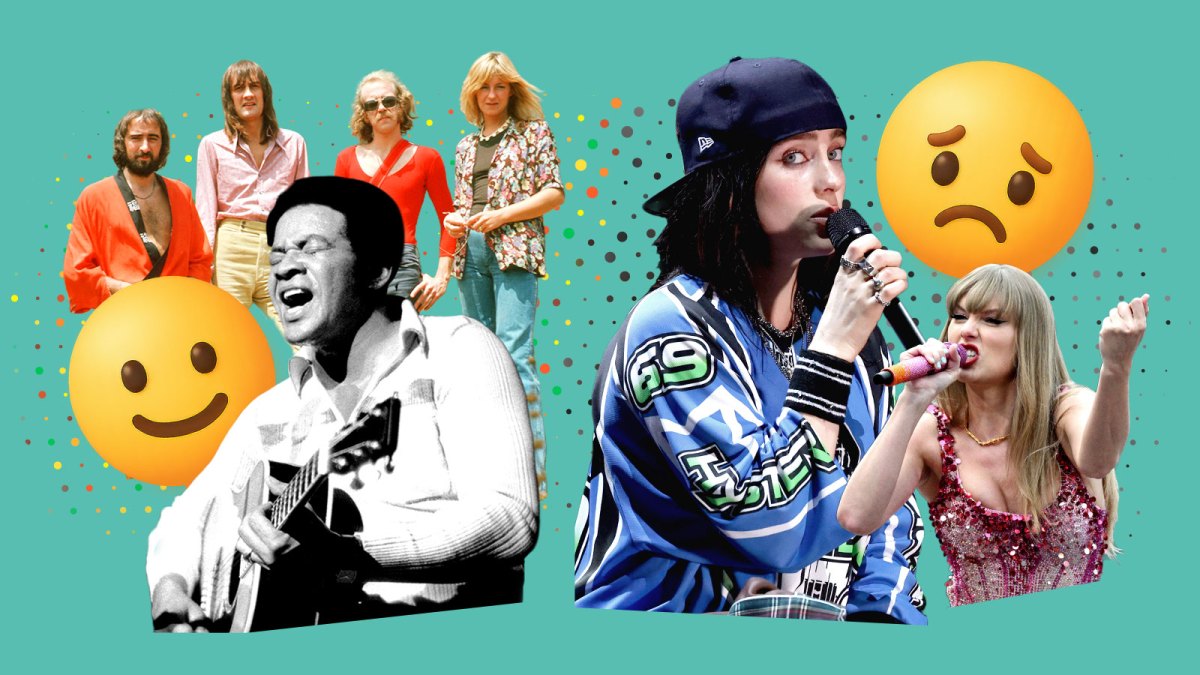
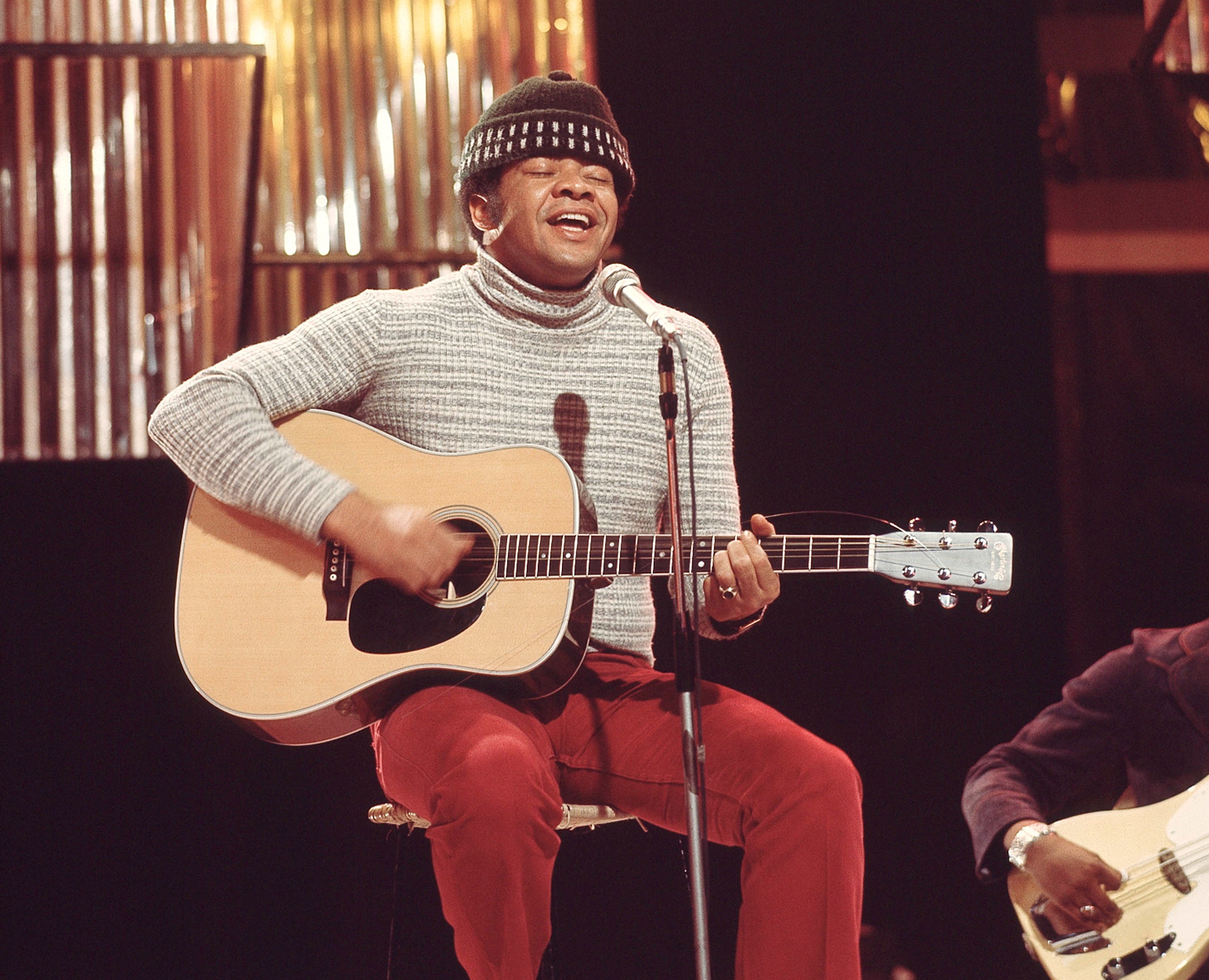
In 1977, Bill Withers lifted hearts with one of the great love songs, declaring, “When I look at you, the world’s alright with me.” By 2021, Billie Eilish was offering a chillier verdict on a recent relationship: “You clearly weren’t aware that you made me miserable.”
A new study suggests this shift in tone mirrors a broader, half-century drift toward sadder, more angst-ridden and less sophisticated pop lyrics.

Billie Eilish performed in Canada last year. Bill Withers, below, played in London in 1972
KEVIN MAZUR/GETTY IMAGES FOR LIVE NATION
MICHAEL PUTLAND/GETTY IMAGES
Researchers from the University of Vienna analysed more than 20,000 songs that appeared on America’s Billboard Hot 100 between 1973 and 2023. Their conclusion: songwriters may always have written about broken hearts and ennui but, on average, the emotional mood music of the charts has darkened significantly over the past 50 years.
Negativity has risen, optimism has become scarcer and lyrical complexity has ebbed. Meanwhile, vocabulary linked to stress has surged.
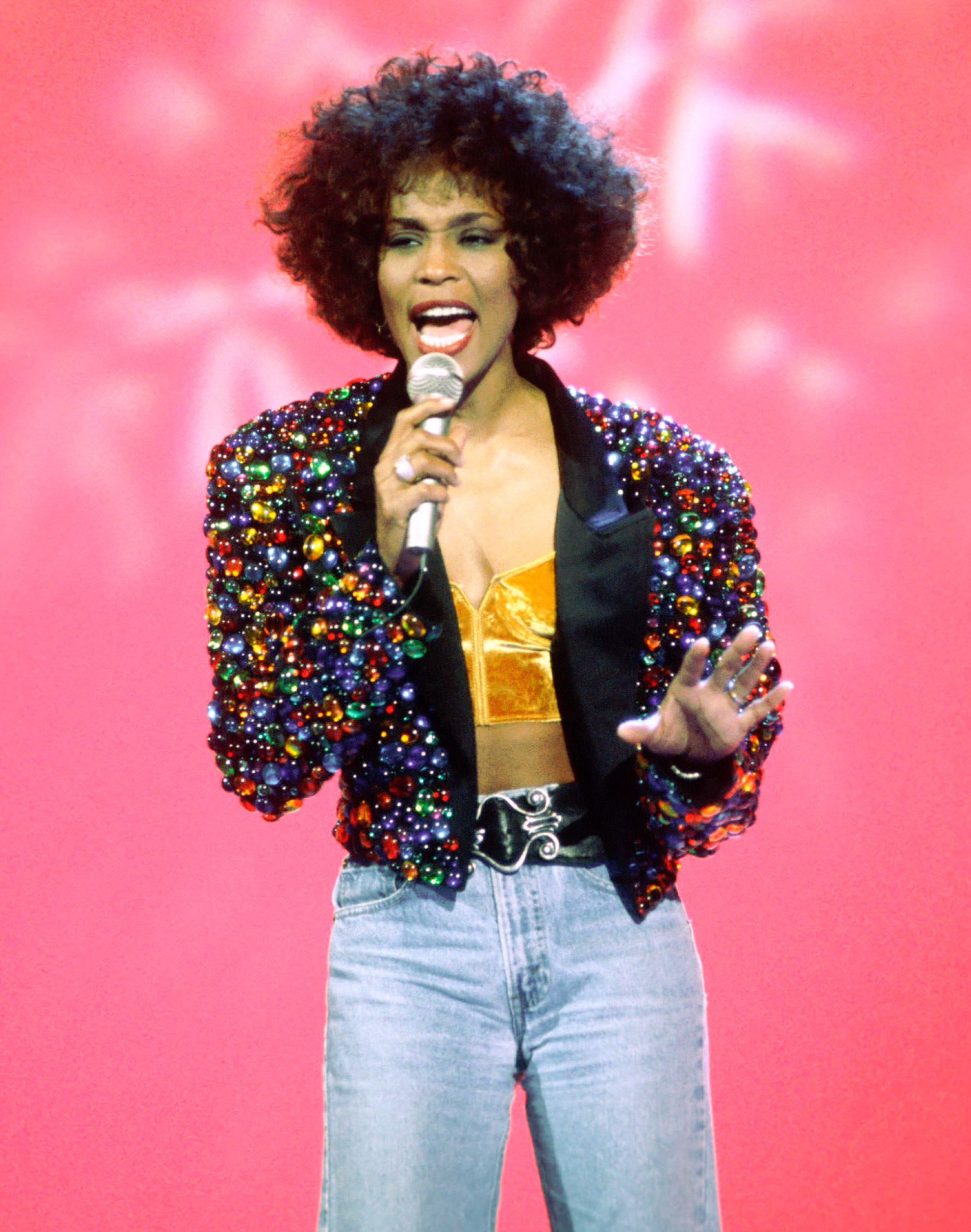
Whitney Houston was one of the best-selling singers of the Eighties and Nineties
REX
Where once Whitney Houston gleefully belted out “I wanna dance with somebody who loves me”, more recent hits have tended toward self-scrutiny and unease: Olivia Rodrigo confessing, “I’m so insecure”, or Adele lamenting: “I feel like my life is flashing by/And all I can do is watch and cry.”
The results also suggest that lyrics have also, on average, become less complex. Rihanna’s Work — “work, work, work, work, work,” goes the chorus — may epitomise this new era of pop minimalism.
Researchers scrutinised the lyrics in three ways. One analysis counted how often words linked to stress — such as “pressure”, “fight” or “alone” — appeared. Another measured whether the overall sentiment of a lyric leaned positive or negative. A third involved feeding the lyrics into a compression algorithm. If a song compressed easily, it was judged to have simpler, more repetitive language.
Dr Mauricio Martins of the University of Vienna, the study’s senior author, said: “Our findings describe broad statistical patterns across thousands of songs, not the disappearance of joyful, hopeful, or sophisticated music. At any point in time, the charts still contain a mix, from very positive to very negative and from very simple to highly complex.”
Overall, the results show a decades-long descent into gloomier, more neurotic and less complicated pop songs. But there have been moments when the trend has been reversed. One came in 2016: after decades of becoming simpler, chart lyrics grew more complex during President Trump’s first term in the Oval Office.

Taylor Swift entertained crowds in the Netherlands last year
SPLASH
The reasons are unclear, but the shift was measurable. Taylor Swift may have been part of the trend. Long a master of the clean-cut country-pop lyricism, the songwriter began to venture into sharper political commentary. “I’m so sick of running as fast as I can,” she wrote in one song released in 2019. “Wondering if I’d get there quicker if I was a man.”
The researchers expected that national traumas, such as the 9/11 attacks and the emergence of Covid-19, would push listeners toward darker, cathartic songs. Instead, they saw the opposite. After each of those events, lyrics in the charts became a little less stressed and more positive.

Dua Lipa played in New Zealand earlier this year
DAVE SIMPSON/GETTY IMAGES
Following 9/11, Christina Aguilera’s “You are beautiful, no matter what they say” appears to have captured a collective mood.” During the early months of the pandemic, Dua Lipa’s buoyant “You want me, I want you, baby” was blasted across living rooms repurposed as dance floors.
Pop, in other words, has grown gloomier — until the world gets gloomy enough on its own.