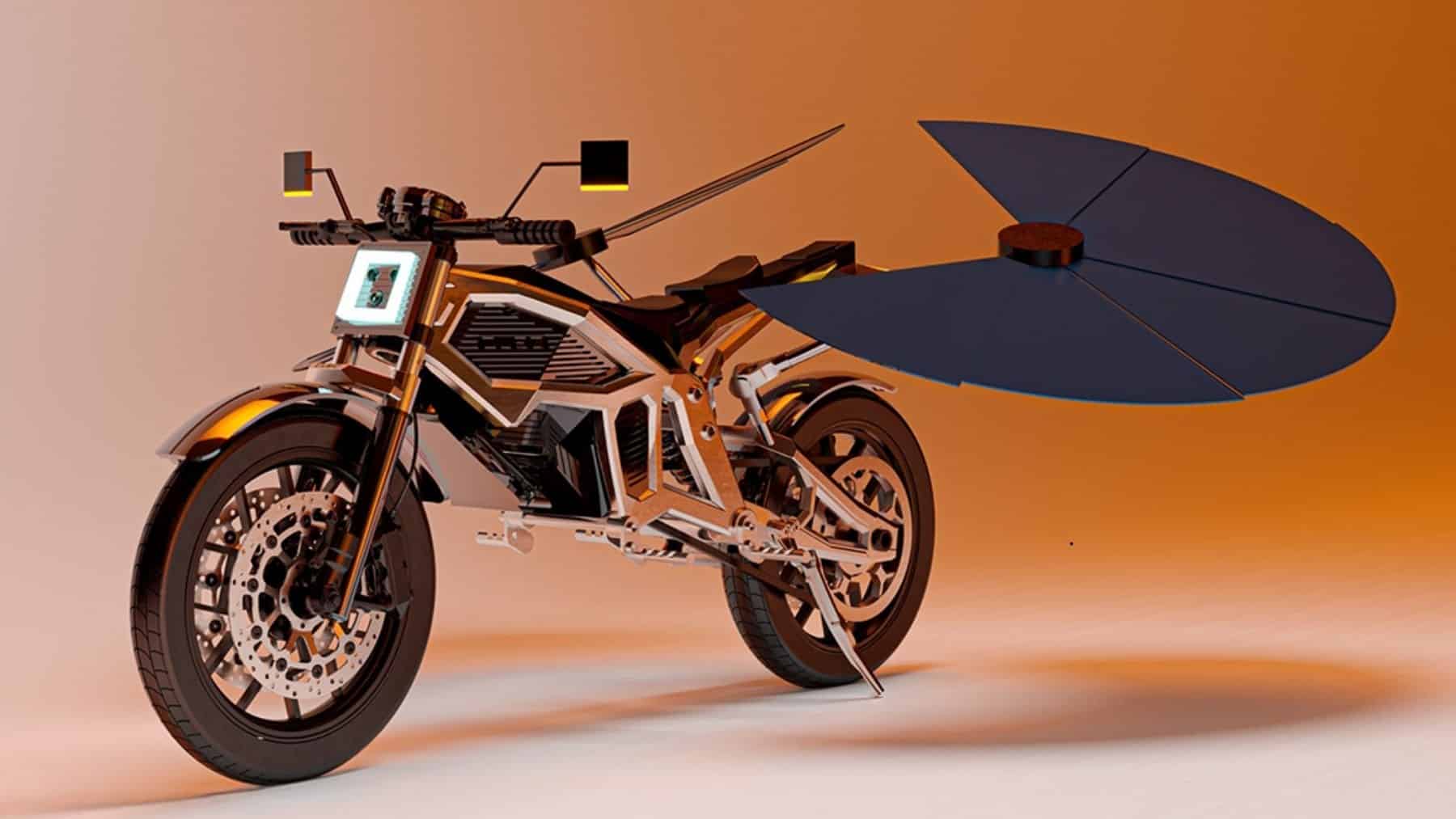
Solar power is a very smart way to generate energy from a renewable source that will never run out. While solar-powered vehicles are still in their infancy, recent increases in production and design have resulted in promising concepts for the future of transportation. This first-ever motorcycle with solar wings could put other alternatively powered vehicles to shame if it reaches production.
Solar power as a breakaway from the industry
In today’s world, the transportation industry is largely restricted by fuel economy and the infrastructure that has been developed. Even sustainably powered vehicles, although a lot better than traditional gas-reliant models, are limited to commercial charging networks and other monetized infrastructure, never allowing full independence from the industry. That is all about to change with the rise of solar-powered mobility that aims to offer the biggest breakaway from traditional transport that the world has ever seen.
Solar power draws energy from the sun to generate electricity, therefore eliminating the need for batteries that come from a less sustainable source, but it can rely solely on this renewable energy. For a car or a bike to run off solar power it would mean both a completely independent drive with no need for infrastructure or fuel, but also would be a whole lot more sustainable for the environment.
To get the ball rolling with this kind of technology, an innovative Sardinia-based architecture firm called Mask Architects has produced an incredible concept motorcycle with retractable photovoltaic wings to generate power for its movements. Called SOLARIS®, this will be the first fully solar-powered autonomous motorcycle that the world has ever seen.
The world’s first motorcycle with solar wings
Europe has been focused on solar power with various solar projects, and this motorcycle one from Sardinia is truly amazing. Founder Öznur Pınar Çer and Danilo Petta of Mask Architects have designed the SOLARIS® as a way to change the future of transportation. To start, they used a biomimetic approach to base their design on the anatomy of a leopard with a forward-leaning stance, a muscular frame, and a stretched front geometry that works in much the same mechanical manner that the animal would.
The wings, however, are not based on such an animal, but add a technological system, so unique, it has never been done before. The photovoltaic wing panels that are stored beneath the rider’s seat can unfold in a circular manner that is able to absorb far more energy than a traditional flat panel. This panel, along with an intelligent energy management system, allows the bike to become its own charging station, with no reliance on infrastructure from anywhere else.
What does this mean for the future of transportation?
Although still only a concept, this design will vastly improve the sustainability of the mobility industry vastly, should it reach mass production. According to Mask Architects:
“SOLARIS® is more than a vehicle—it is an environmental intervention. Operating exclusively on solar power, it eliminates CO₂ emissions, reduces noise pollution and demonstrates a decentralized model of clean mobility. By removing the need for fuel or charging stations, SOLARIS® brings renewable transportation to remote regions, developing communities, protected natural areas and countries with fragile infrastructure. It becomes a catalyst for social, economic and ecological transformation, enabling mobility where it has never been accessible before.”
Solar energy seems to be the next big move for sustainable transport, breaking down social and economic barriers that other forms of fuel have only upheld. Although other nations have moved on from solar power as a viable option, this Sardinian company is showing the world that solar power is only just beginning. Mask Architects is quite literally rewriting the economics of mobility, and the future of solar power is bright.