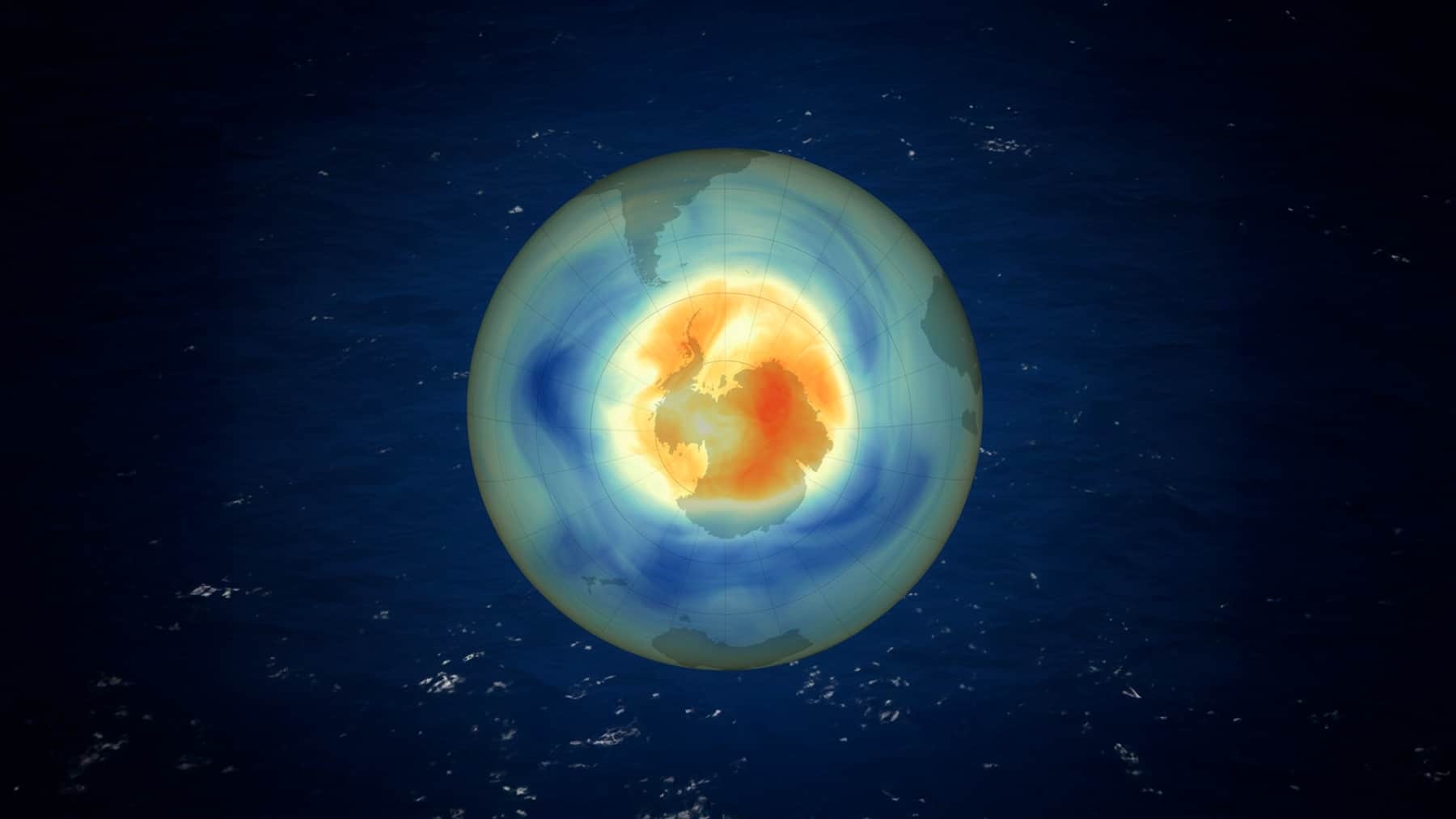
In the past decade, researchers have observed the outer layer of our stratosphere. This is where the ozone layer of our planet is, and in the past years, a region of its expanse has undergone depletion. However, in the past few weeks, scientists discovered this depletion to undergo a reversal, closing the hole that had once exposed Earth to UV dangers.
Decades of damage have been observed in the ozone layer
Above our atmospheric stratosphere, there is a thin layer called the Ozone Layer. It is a protective shield that plays the essential role of blocking ultraviolet (UV) radiation from reaching the surface of our planet. Without this shield, Earth could experience an overexposure that could lead to critical conditions like skin cancer or a deplorable ecosystem.
For decades, scientists have made a conscious effort to observe this layer. This observation became more prominent within the 20th century as industrialization appeared to be reaching a peak. They observed how the rise of man-made chemicals, especially chlorofluorocarbons (CFCs), depletes and creates holes in this ozone layer.
They observed how these CFCs caused a large thinning of the ozone layer. In response, scientists have developed protocols to control this depletion. However, these measures have struggled to effect any change, given how much carbon emissions come from mechanical activities or volcanic eruptions. As of 2024, we have observed 40 billion tonnes of carbon emitted.
Scientists discover a reversal in ozone depletion this year
In 2019, scientists observed that the depleting ozone layer was undergoing an immense expanse. According to data from the Copernicus Atmosphere Monitoring Service (CAMS), the hole had continued to grow drastically through the last five years, with its maximum size being 26.1 million km² in 2023.
However, this year, scientists from NASA and NOAA have received some of the most encouraging news since 2019. Apparently, this hole had begun to undergo reduction through mid-August this year. As of September, this hole has reduced from 20 million km² to 15 million km², which is approximately the size of Antarctica, like this supermassive black hole racing towards space.
When ranked with the major ozone depletion, this is the smallest depletion hole since 1992. By November, this hole was observed to undergo a drastic reduction. Interestingly, according to CAM, as of December 1, this depletion has completely closed off. This would be the first time in years that scientists would record a low deficit in ozone depletion.
Scientists warn that zone closure may be temporary
Despite the excitement of this news, scientists have remained unwavering in this research pursuit. Therefore, they have issued warnings concerning various factors that could reopen this ozone closure. Some of them included carbon emissions, stratospheric winds, and other ozone-depleting substances (ODS).
Global resolve to prevent another ozone depletion
The goodness from this year’s ozone activity is only a testament to the intentional measures taken to curb this depletion globally. For example, the Montreal Protocol restrictions on ODS helped reduce the discharge of harmful carbon chemicals. If initiatives like this continue, scientists are hopeful that our ozone layer could be restored completely.
This year’s depletion milestone is worth all forms of excitement. However, to maintain it, scientists are pleading for global participation. From their end, scientists are promising a more rigorous monitoring and control of ODS materials. In turn, scientists expect us to reduce activities and habits that contribute to depletion.
Nonetheless, the closure observed this year should remain a reference point. In the coming years, scientists have shared optimism to maintain and increase the narrowness of its closure. Hopefully, Earth will be able to regain its ozone layer status from the 1970s. Until then, scientists expect full-on cooperation from every single one of us, just like this black hole collision observed by NASA, spreading across space.