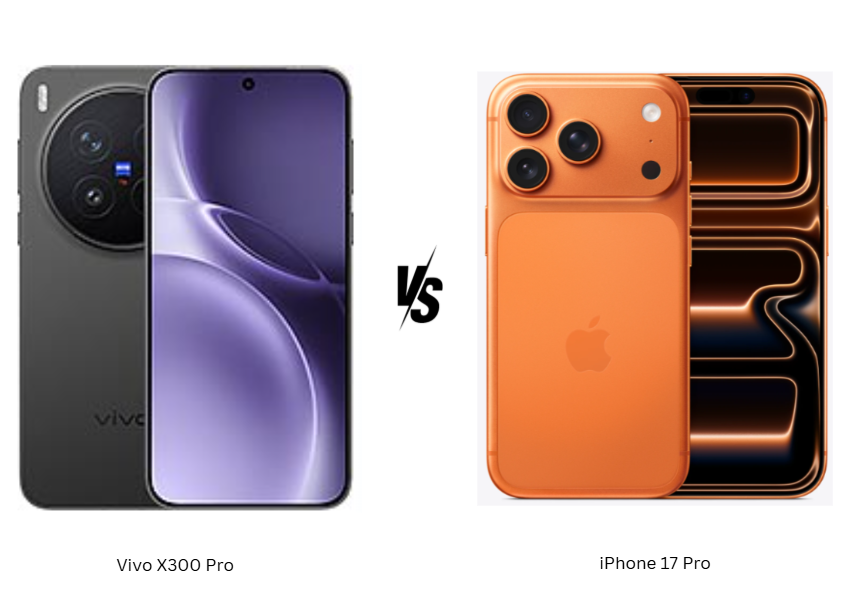
Vivo X300 Pro and iPhone 17 Pro represent two very different visions of a modern flagship, making this comparison essential for buyers choosing between maximum hardware value and long-term ecosystem reliability. Power users, mobile creators, and camera enthusiasts will naturally gravitate toward one side, while those invested in seamless software and premium stability may prefer the other. Understanding how these devices differ helps buyers decide which flagship truly aligns with their priorities.
1. Design and Display
Build and Feel
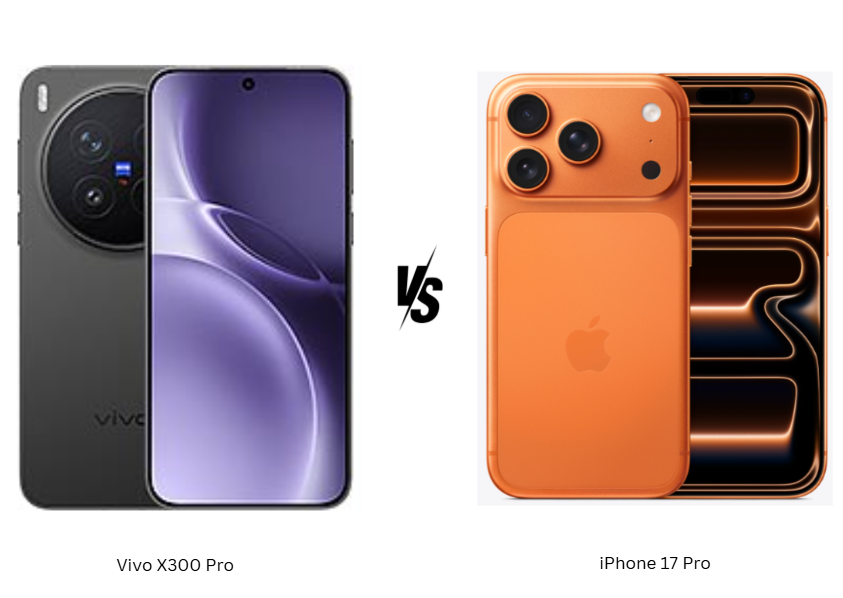
Both phones lean heavily into premium materials, but they deliver different personalities. The Vivo X300 Pro feels more futuristic with its armor glass finish and subtle curves, giving it a refined, camera-centric identity. The iPhone 17 Pro, on the other hand, maintains Apple’s minimalist confidence with its Ceramic Shield build and polished aluminum frame. Apple’s tighter ecosystem integration gives its design a sense of familiarity that many buyers trust, while Vivo’s hardware-first design approach appeals to enthusiasts who value cutting-edge protection and extras like an IR blaster.
Display Quality
Vivo’s LTPO AMOLED panel pushes brightness and color depth significantly further, making HDR content look especially vibrant and immersive. The ultra-high PWM and Dolby Vision support also appeal to users sensitive to flicker or who demand professional-grade color accuracy. Apple’s Super Retina XDR display is slightly smaller but extremely balanced, offering reliable tuning, strong HDR handling, and outstanding outdoor visibility. Its anti-reflective coating adds a layer of practicality that feels noticeably premium.
Verdict
Vivo wins on sheer display specs and visual punch, while the iPhone delivers a more controlled, polished experience with better reflectivity handling.
2. Specifications
Performance
The Dimensity 9500 turns the Vivo X300 Pro into a raw performance machine, especially with graphics-heavy tasks and multitasking. It feels tuned for power users and videographers who need sustained output. Apple’s A19 Pro offers superior efficiency and short-burst performance, excelling in workflows like real-time rendering, ProRes video, and complex app switching. iOS optimization gives the 17 Pro a level of smoothness that often feels more consistent under everyday workloads.
Battery and Charging
Vivo’s larger silicon-carbon battery and 90W charging deliver excellent longevity with rapid recharging that noticeably reduces downtime. Wireless speeds are equally practical, and reverse charging helps it function as an accessory power hub. Apple prioritizes thermal control and longevity, offering moderate battery endurance with safer charging profiles. MagSafe remains convenient, though slower, and wired speeds are respectable but not industry-leading.
Verdict
For power and endurance, Vivo leads. For efficiency and long-term reliability, the iPhone holds the advantage.
3. Camera
Main and Secondary Lenses
The Vivo X300 Pro is clearly engineered for photography enthusiasts. Its 200MP periscope lens with a large sensor gives it a major advantage in zoom, producing cleaner, more detailed telephoto shots, especially in low light. Zeiss tuning and custom LUTs give images a cinematic character that feels more professional. The iPhone 17 Pro counters with excellent color science, reliable dynamic range, and stronger video processing, especially in ProRes, Apple Log 2, and spatial video. Its LiDAR system improves autofocus and depth mapping, making AR experiences smoother.
Selfie Camera
Vivo’s 50MP autofocus selfie camera produces crisp shots with excellent detail, appealing to vloggers and content creators who rely on front-facing quality. The iPhone’s 18MP module has a wider field of view and stronger consistency in mixed lighting, especially when combined with Dolby Vision video and spatial audio.
Verdict
Vivo dominates in zoom and detail, while the iPhone wins for video creators and those needing superior computational tuning.
4. Pricing
With the Vivo X300 Pro priced around $800, it delivers exceptional value, particularly for users who prioritize camera versatility, battery life, and high-end display tech. It feels like a flagship built for enthusiasts who want maximum hardware for their money.
The iPhone 17 Pro, starting at $1100, commands a premium based on software longevity, ecosystem integration, and superior pro-grade video tools. For users deeply tied to Apple services, the higher cost often feels justified. For everyone else, the Vivo offers dramatically better price-to-performance.
Disclaimer:
Prices are approximate and may vary based on country, region, and applicable taxes.
5. Conclusion
Vivo stands out with Zeiss optics, high-end LUT support, ultrasonic fingerprint scanning, and optional satellite connectivity, giving it a toolset tailored for creators and tech-savvy users. Its display and battery system also feel more advanced.
The iPhone 17 Pro excels in ecosystem coherence, spatial video, UWB Gen2, and industry-leading pro video formats. Emergency SOS via satellite and secure Face ID give it a strong reliability factor that many premium buyers appreciate.
Verdict
Choose the Vivo X300 Pro for value, camera versatility, and cutting-edge hardware. Choose the iPhone 17 Pro for ecosystem benefits, video creation, and long-term software stability. Both are elite flagships, but the Vivo offers more for the money.
Read More: