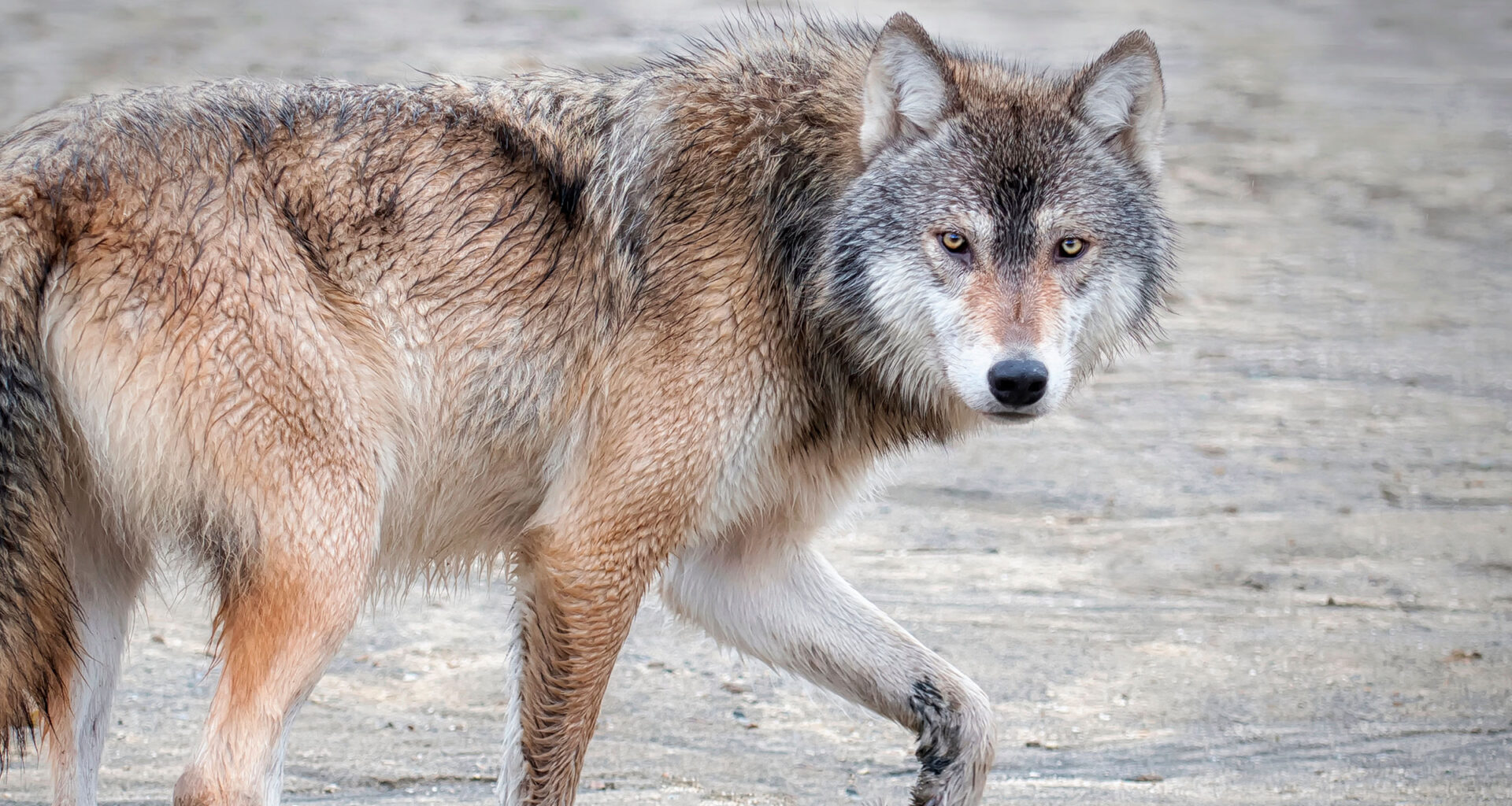
In the summer of 2013, two Alexander Archipelago wolves (Canis lupus ligoni), a subspecies of gray wolf, swam across a narrow channel to reach Pleasant Island, Alaska, a 50 square kilometer (19 square mile) rock jutting out of the stormy Gulf of Alaska. Wolves hadn’t previously lived on Pleasant Island, and they quickly ran roughshod over the island’s deer population. Within a few years, the wolves blossomed to a family of 13, and the deer, in turn, were entirely wiped out.
As the deer declined, Gretchen Roffler, a biologist with the Alaska Department of Fish and Game, wondered about the wolves’ fate. Would they abandon the island and swim back to the mainland, some 3 kilometers (2 miles) away? Or would they stay and starve to death? As it turned out, they did neither. Instead, the wolves adapted to island life in an unexpected way: They started eating sea otters.
‘’They’ve learned how to kill them,” Roffler says. By collecting and analyzing samples of wolf fur and scat, Roffler and her colleagues showed that sea otters now constitute a very large part of their diet. “From 60 to 70 percent,’’ she says. The remainder is made up of salmon and other fish, as well as birds, such as ducks and bald eagles. The occasional harbor seal and Steller sea lion also make the menu.
In a rapidly changing world, predators adapting to new kinds of prey is, in many ways, a sign of adaptability and resilience. But unfortunately for Pleasant Island’s wolf population, something dangerous was lurking in their new otter-heavy diet.
In 2020, one of Pleasant Island’s wolves—the pack’s reproductive female—suddenly stopped moving. Roffler and her colleagues headed out to investigate, tracking the signal from the wolf’s GPS collar. They discovered the wolf’s emaciated corpse lying beneath a tree. Keen to get to the bottom of her death, Roffler and her team analyzed the wolf’s tissue. Their research revealed something unexpected: the highest level of the toxic heavy metal mercury ever recorded in a wolf.
The discovery triggered a broader investigation; Roffler and her colleagues looked for traces of mercury in fur and scat samples they had collected between 2020 and 2023 both from wolves living on Pleasant Island and the Alaskan mainland. The recently published results show that Pleasant Island’s wolves suffer mercury contamination at concentrations 278 times higher than wolves in Alaska’s interior. The data clearly shows that as wolves increased their consumption of sea otters, the mercury levels in their bodies soared, reaching levels similar to those sometimes found in polar bears—animals with some of the highest concentrations of mercury.
The study, says Roffler, is a “red flag that shows that we should be investigating what the sources of mercury are in this particular system.” While none of the wolves died specifically from mercury toxicity—not even the reproductive female—high mercury levels can cause a range of health effects, including damage to the liver and kidneys. “In general, exposure to methylated mercury has effects on reproduction, body condition, and behavior in terrestrial mammals,” says Roffler.
But where is all this mercury coming from? Roffler’s not sure, but she suspects it has to do with the many melting glaciers ringing the Gulf of Alaska. As glaciers melt, Roffler says, mercury trapped in the ice or scoured from the bedrock gets flushed into the sea. The mercury moves up the food chain, becoming more and more concentrated before it reaches the sea otters, which accumulate it in their bodies over the course of their lives.