In the tiny Welsh village of Bettws, a charming bungalow has just come up for sale.
The period property is tucked away down a cobbled country lane and occupies a huge plot of land, enjoying scenic views of the valley which winds its way down to Bridgend.
For just £250,000, the three-bedroom home should be a steal, but there’s one hidden feature that has been prompting most prospective buyers to have second thoughts: it is infested with knotweed.
‘That bungalow is just the tip of the iceberg’, staff at a nearby auto-business tell the Mail, ‘we’re riddled here.’
Knotweed is an invasive species of plant that has become the scourge of homeowners due to it being able to spread rapidly and in large quantities even damaging foundations of peoples homes.
The Japanese weed is widespread throughout areas of South Wales since being introduced by a local gardener in the former industrial village of Caerau and it is estimated it costs around £1.7 billion across the United Kingdom each year as the plants are incredibly hard to control.
Betws is just one of the villages feeling the strain and bad feeling in the area, which has been dubbed ‘the valley of the knotweed’ by some, is rife.
Neil Williams lives on the frontline of a huge patch of the plant which he claims has been left to grow wild by a local landowner.
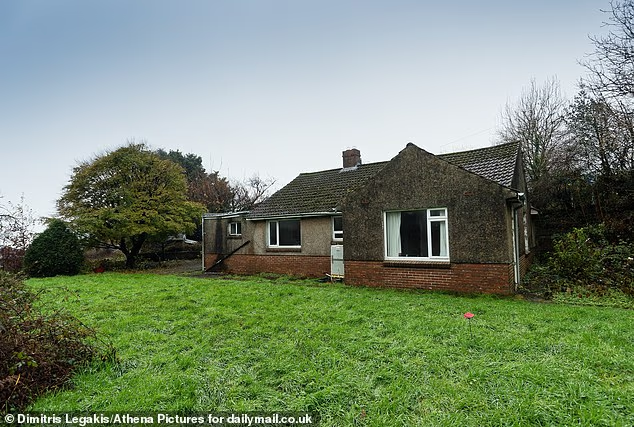
In the tiny Welsh village of Betws, a charming bungalow has just come up for sale which hides a big problem
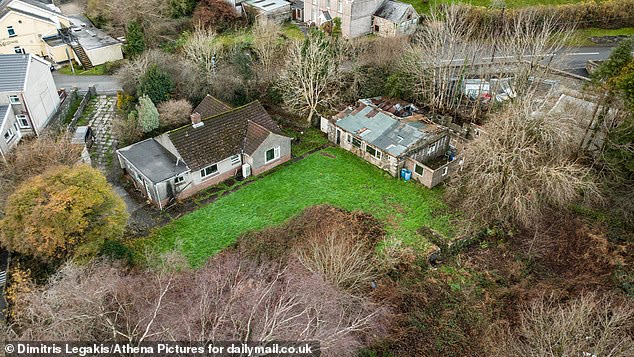
Because the house, and many others in the village, are surrounded by invasive Japanese knotweed
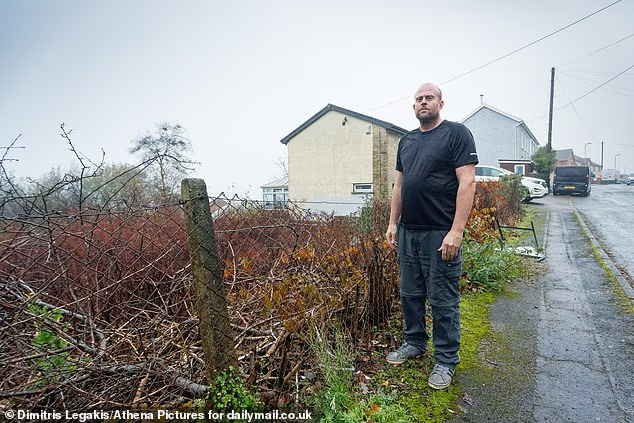
Neil Williams lives on the frontline of a huge patch of the plant which he claims has been left to grow wild by a local landowner
For years now, he has watched as the shoots of the hated weed grow ever closer to his home of 40 years and been forced to take aggressive action to slow its progress ranging from digging up the roots to poisoning the plants at source.
He has brought his concerns to the local council however he claims they have refused to tell him who owns the land so he can ask for compensation.
‘All the fields around here are filled with it, we are surrounded by it.
‘It’s coming in my garden, coming onto my land, coming into my neighbours land – it’s crazy.
‘When my mother passed I had the house valued, and the price you could ask for it has dropped significantly, it is around £340,000 and they basically said I might not be able to sell it in a few years, even if they wanted to.
‘The council has said it is not their problem.’
Neil claims he and his neighbours have now lost count of how much they have spent controlling the plant themselves and the problems are mounting up.
He showed the Mail his own version of no-mans-land, a small trench filled with the burnt and twisted remains of knotweed roots that made the mistake of coming to close to his property.
He continued: ‘I have treated it myself but it keeps on coming back.
‘That field has become a dumping ground and its caused my house to have rats, I’ve had to have pest control round.’
On the other side of the field, Neil will soon have a host of new neighbours in the form of a block of luxury flats which are under construction.
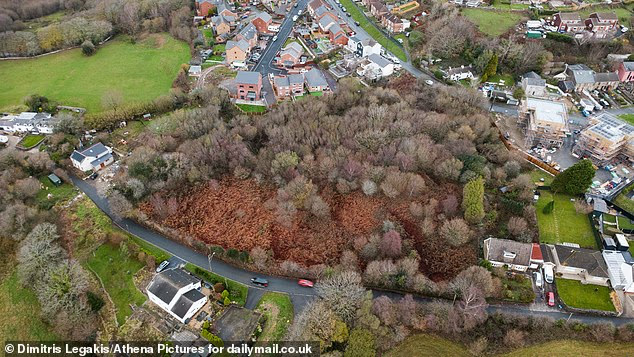
An aerial image showing the scale of the knotweed infestation in the field close to Neil’s home
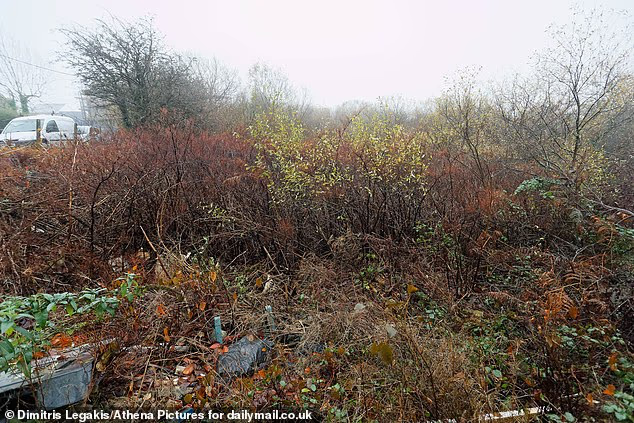
Neil has watched the forest of weeds creep ever closer to his property and taken action

He showed the Mail his own version of no-mans-land, a small trench filled with the burnt and twisted remains of knotweed roots
Castell Group, the developer behind them, was forced to dig out many of the roots before beginning construction, with their plans referencing ‘extensive areas of Japanese knotweed growing within boundary vegetation.’
What CAN homeowners do to protect themselves against knotweed?
Emily Grant, Director of invasive plant specialists Environet, said: ‘One of the most frustrating aspects of the law around Japanese knotweed is that there’s very little you can do about an infestation on neighbouring a land – at least not until it actually encroaches onto your property.
‘Most land in the UK is owned, so the best first step is to contact the Land Registry. You should be able to find and view the title summary for free, and for just a few pounds you can obtain details of the owner. Once you know who to contact, write to them outlining the situation and requesting they take steps to mitigate the risk to your property. If they fail to act and knotweed does encroach, you would then have grounds to pursue a legal claim.
‘In the meantime, there are ways to reduce the risk. I would recommend herbicide-treating any knotweed growth already on the property and installing a knotweed-proof root barrier along the boundary. This would need to be done by professionals who can provide an insurance-backed guarantee meaning the property could be bought and sold, although the value is likely to still be diminished because the knotweed remains close by and may still deter prospective buyers.’
‘They spent thousands sorting it’ said Neil, ‘most people around here have.’
Further along Neil’s road, a house has just been sold for over £300,000.
A neighbour, who preferred to stay anonymous, told the Mail they too had forked out thousands to make the back garden presentable enough to be placed on the market.
‘They had to install a whole new patio and properly dig out the roots. We have had similar issues.
‘The problem is nobody knows how far the roots have spread underneath the ground and by the time you do realise the damage is often done.
‘It is miserable.’
, the results were bleak, showing the area completely surrounded on all sides by the hated species.
When the Mail put the location of the tiny Welsh village into the well known Knotweed tracker from Environet, the results were bleak, showing the area completely surrounded on all sides by the hated species.
Up the road in the local pub, residents revealed that the previous owner of the bungalow was a man named Perry, who tried in vane to tackle the scourge of the plant in the latter years of his life to no avail.
His neighbour, Lynn, told the Mail she was aware of Perry’s infestation but couldn’t believe that she too would have any issues.
‘That’s just Lynn’, one of the regulars tells us, ‘if he had it, she’ll have it – we’ve all probably got it.’
The landlady of The Oddfellow Arms, Melanie, remembers Perry popping in for a drink after a hard day treating it.
She said: ‘Perry’s house is good value for the land, but it probably won’t sell for that price.

Well known knotweed tracker Environetuk shows the area completely surrounded on all sides by the hated species

Due to years of inaction, anger against the landowner and local council is growing
‘My sister couldn’t get rid of hers. It comes from the fields, we’re surrounded by fields here.
‘She has just bought a new place so hopefully that will put an end to it.
‘You can’t concrete over it, it will just come through over time, to properly get rid of it you need to dig down over two meters in most cases.’
Emily Grant, Director of invasive plant specialists Environet, said: ‘One of the most frustrating aspects of the law around Japanese knotweed is that there’s very little you can do about an infestation on neighbouring a land – at least not until it actually encroaches onto your property.
‘Most land in the UK is owned, so the best first step is to contact the Land Registry. You should be able to find and view the title summary for free, and for just a few pounds you can obtain details of the owner. Once you know who to contact, write to them outlining the situation and requesting they take steps to mitigate the risk to your property. If they fail to act and knotweed does encroach, you would then have grounds to pursue a legal claim.
‘In the meantime, there are ways to reduce the risk. I would recommend herbicide-treating any knotweed growth already on the property and installing a knotweed-proof root barrier along the boundary.
‘This would need to be done by professionals who can provide an insurance-backed guarantee meaning the property could be bought and sold, although the value is likely to still be diminished because the knotweed remains close by and may still deter prospective buyers.’
A Bridgend County Borough Council spokesperson said: ‘Under the Environmental Protection Act 1990, it remains the responsibility of individual landowners to control invasive non-native species such as Japanese Knotweed on their land, and to prevent them from spreading or encroaching onto neighbouring land.
‘Bridgend County Borough Council takes its own responsibilities as a landowner seriously and follows best practice in accordance with government advice.
‘We have an Invasive Non-Native Policy and dedicated staff in place who work alongside partner councils and organisations to focus efforts on controlling and preventing the spread of invasive species across South Wales, and have launched a herbicide treatment programme for knotweed located on all council-maintained land.
‘Advice on dealing with Japanese Knotweed and other invasive non-native species can be found at www.bridgend.gov.uk’