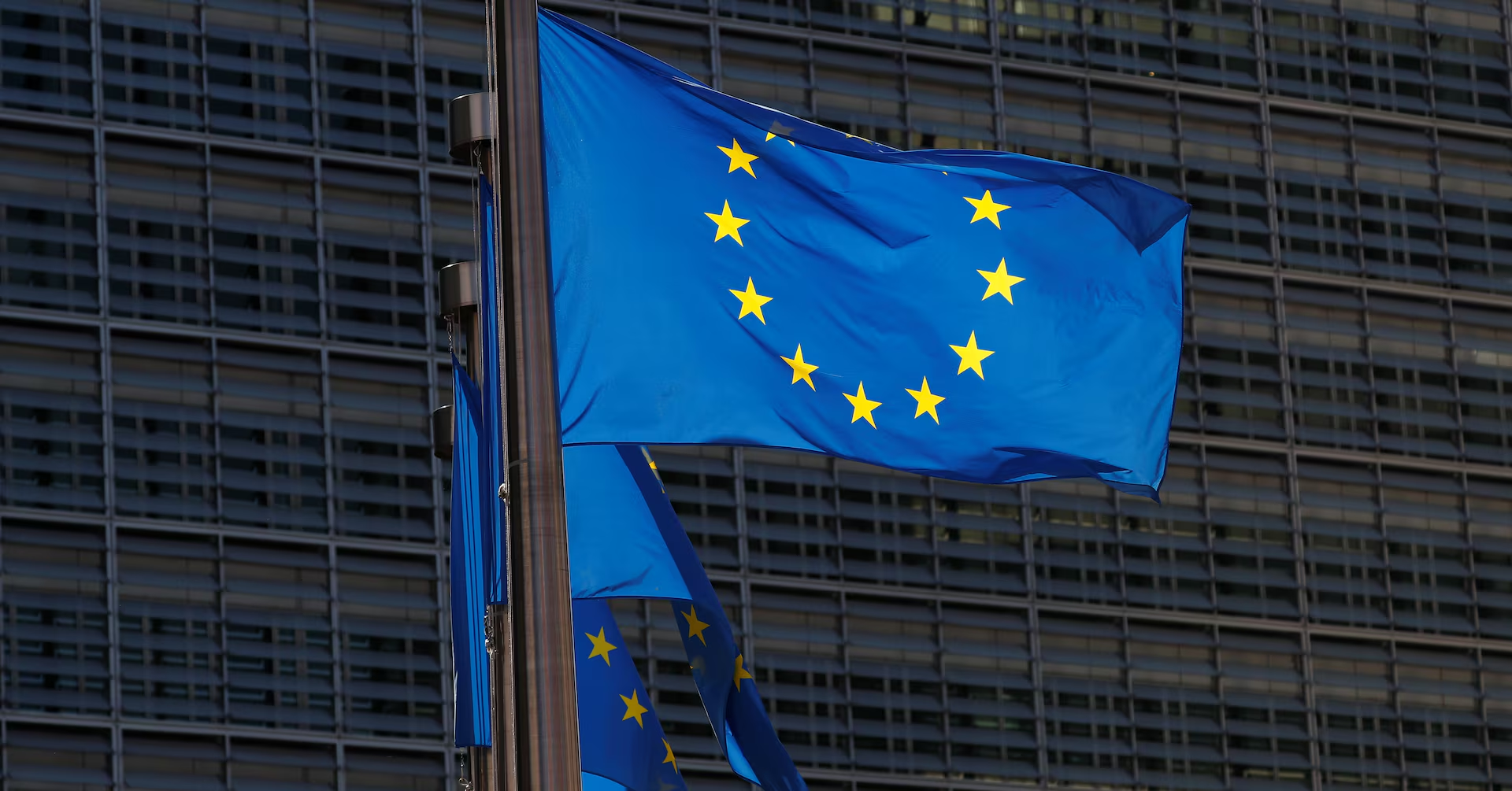
Item 1 of 2 European flags flatter outside the EU commission headquarters in Brussels, Belgium, September 20, 2019. REUTERS/Francois Lenoir/File Photo
[1/2]European flags flatter outside the EU commission headquarters in Brussels, Belgium, September 20, 2019. REUTERS/Francois Lenoir/File Photo Purchase Licensing Rights, opens new tab
- EU climate goal among world’s most ambitious
- Hard-fought compromise amid pushback in some countries
- Deal requires 85% emissions cut from EU industries by 2040
- EU to buy foreign carbon credits to cover 5% of goal
Dec 10 (Reuters) – The European Union agreed on Wednesday to set a legally binding climate target to reduce greenhouse gas emissions by 90% from 1990 levels by 2040, and buy foreign carbon credits to cover 5% of the emissions cuts, goals that fell short of its original plan.
Negotiators from EU countries and the European Parliament reached the deal in the early hours of Wednesday, they confirmed in separate statements.
Sign up here.
In practice, the target will require an 85% emissions reduction from European industries, and payment to developing countries via carbon credits to cut emissions on Europe’s behalf to make up the rest.
The goal goes beyond most other major economies’ emissions-cutting pledges, including China’s. Still, it fell short of that recommended by the EU’s climate science advisers and was weaker than Brussels’ original plan for the goal, reflecting disagreement between EU governments over the speed and cost of their green agenda.
“The target delivers on the need for climate action while safeguarding our competitiveness and security,” said Danish climate minister Lars Aagaard, who negotiated the deal on behalf of EU governments.
The EU also agreed to consider the option in future to use international carbon credits to meet a further 5% of its 2040 emissions reductions – potentially further softening the domestic efforts required.
The target, which is designed to keep Europe on track for its pledge to have net-zero emissions by 2050, represented a political compromise after months of negotiations.
Countries including Poland, Slovakia and Hungary had opposed deeper CO2 cuts as too strenuous for industries struggling with high energy costs, cheaper Chinese imports and U.S. tariffs.
Other EU members, including the Netherlands, Spain and Sweden, cited worsening extreme weather events and the need to catch up with China in manufacturing green technology as reasons to set a high target.
To win over opponents, the EU also agreed to delay the launch of a politically sensitive carbon price for fuel by one year, to 2028.
The Parliament and EU countries must each approve the target for it to become law – usually a formality that waves through pre-agreed deals.
Reporting by Kate Abnett and Disha Mishra; Editing by Chris Reese, Christopher Cushing and Muralikumar Anantharaman
Our Standards: The Thomson Reuters Trust Principles., opens new tab