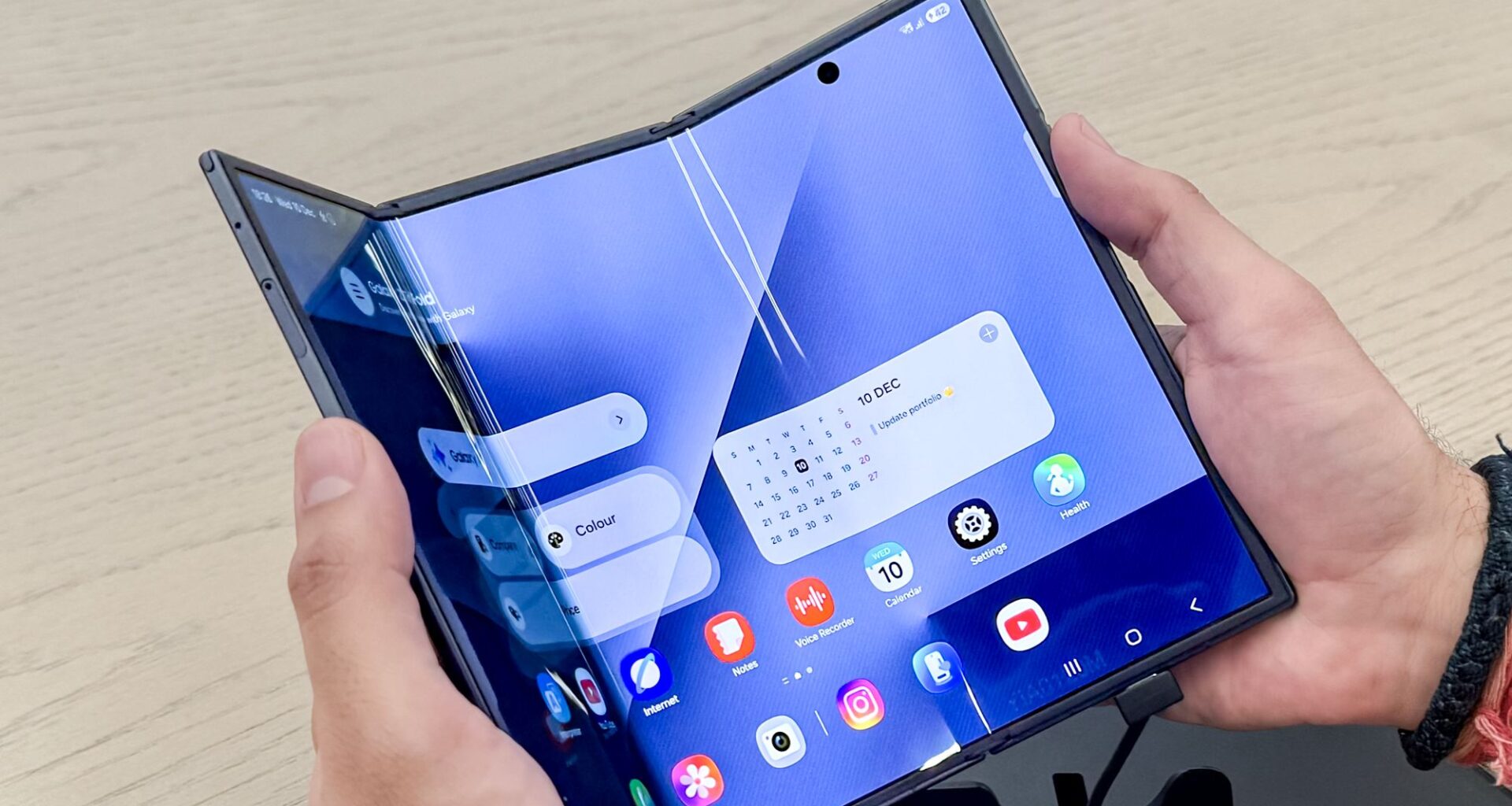
After years of rumors, Samsung finally announced the Galaxy Z TriFold on December 1. But while the world’s desperate for details on this remarkable phone, it’s hard to get a hold of.
The TriFold is only on sale in Korea at the time of writing, and while the company has announced plans to bring the foldable device to the U.S., UAE, Singapore, Taiwan, and China by Q1 2026, that could still mean months of waiting before we get proper reviews of the phone.
While Samsung isn’t the first to do this — Huawei launched its Mate XT last year — the Galaxy Z TriFold is set to become the first ‘globally available’ trifolding phone. This makes the launch potentially more exciting.
You may like
I recently went hands-on with the Galaxy Z TriFold at the Dubai Mall. While I couldn’t test the cameras, performance, or battery (we’ll save those for the full review), I still managed to get a good grasp of how the phone feels to use, and where Samsung could improve the design in future generations.
So here’s everything I liked (and didn’t like) after my brief interaction with the Samsung Galaxy Z TriFold.
Sturdier than expected
(Image credit: Tom’s Guide / Sanuj Bhatia)
A common concern with all foldable phones is durability. Moving hinges, a soft screen that physically folds and unfolds, the thinness of the unfolded phone and several other factors can make users cautious while handling these devices.
The Galaxy Z TriFold, however, feels quite well-built. Before picking it up, I expected it to feel fragile, but the moment I held it, those thoughts quickly went away.
(Image credit: Tom’s Guide / Sanuj Bhatia)
Samsung says it has used durable materials like ceramic-glass fiber–reinforced polymer, Corning Gorilla Glass Ceramic 2, and Advanced Armor Aluminum across different parts of the Galaxy Z TriFold, and it shows as soon as you pick it up. The phone feels solid, giving you confidence to use it without constantly worrying about dropping it.
When I tried the Huawei Mate XT, the screen felt a bit flimsy for such an expensive smartphone. Having that sense of sturdiness on a trifolding phone feels pretty important, and fortunately, Samsung seems to have nailed it.
(Image credit: Tom’s Guide / Sanuj Bhatia)
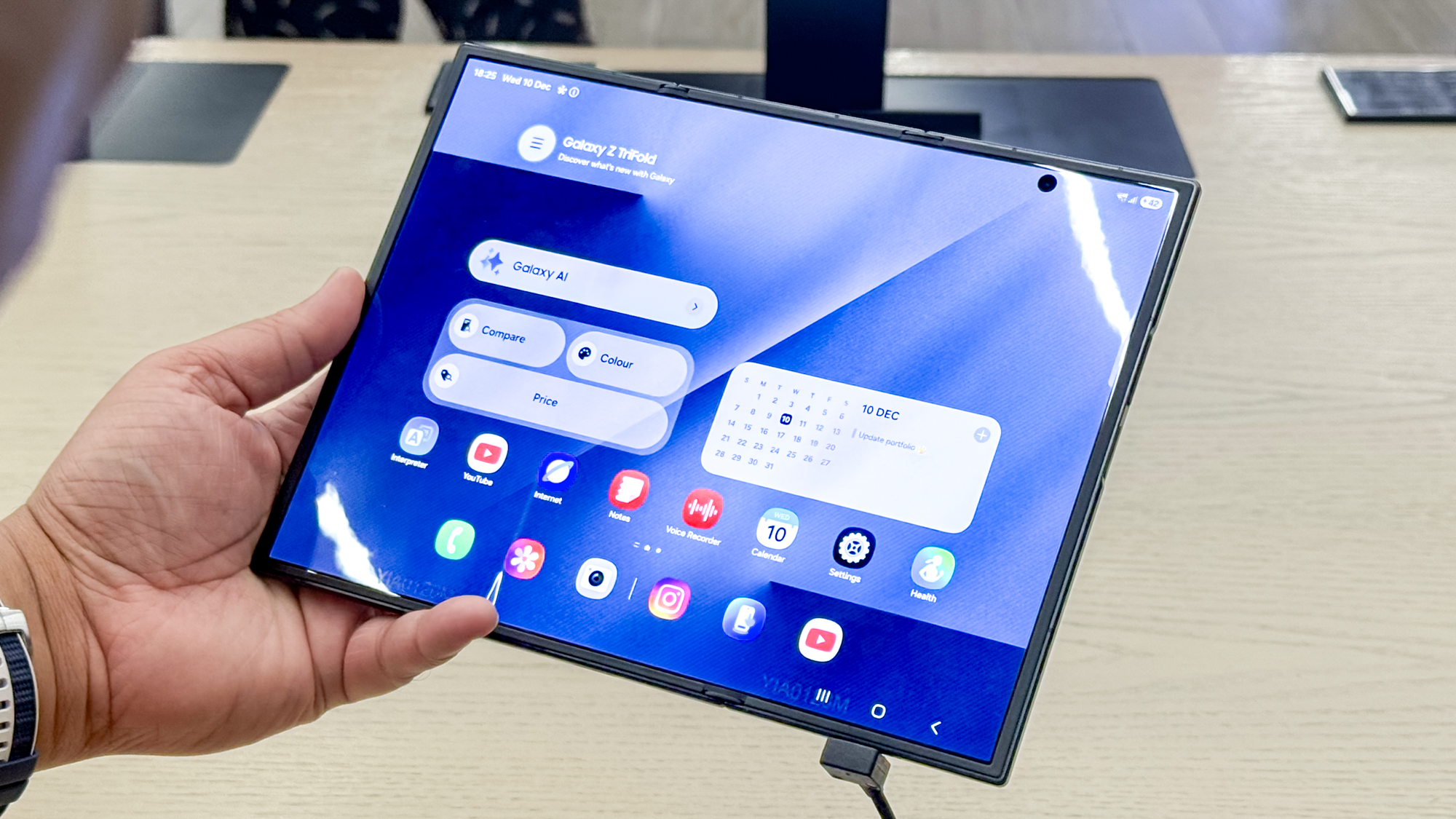
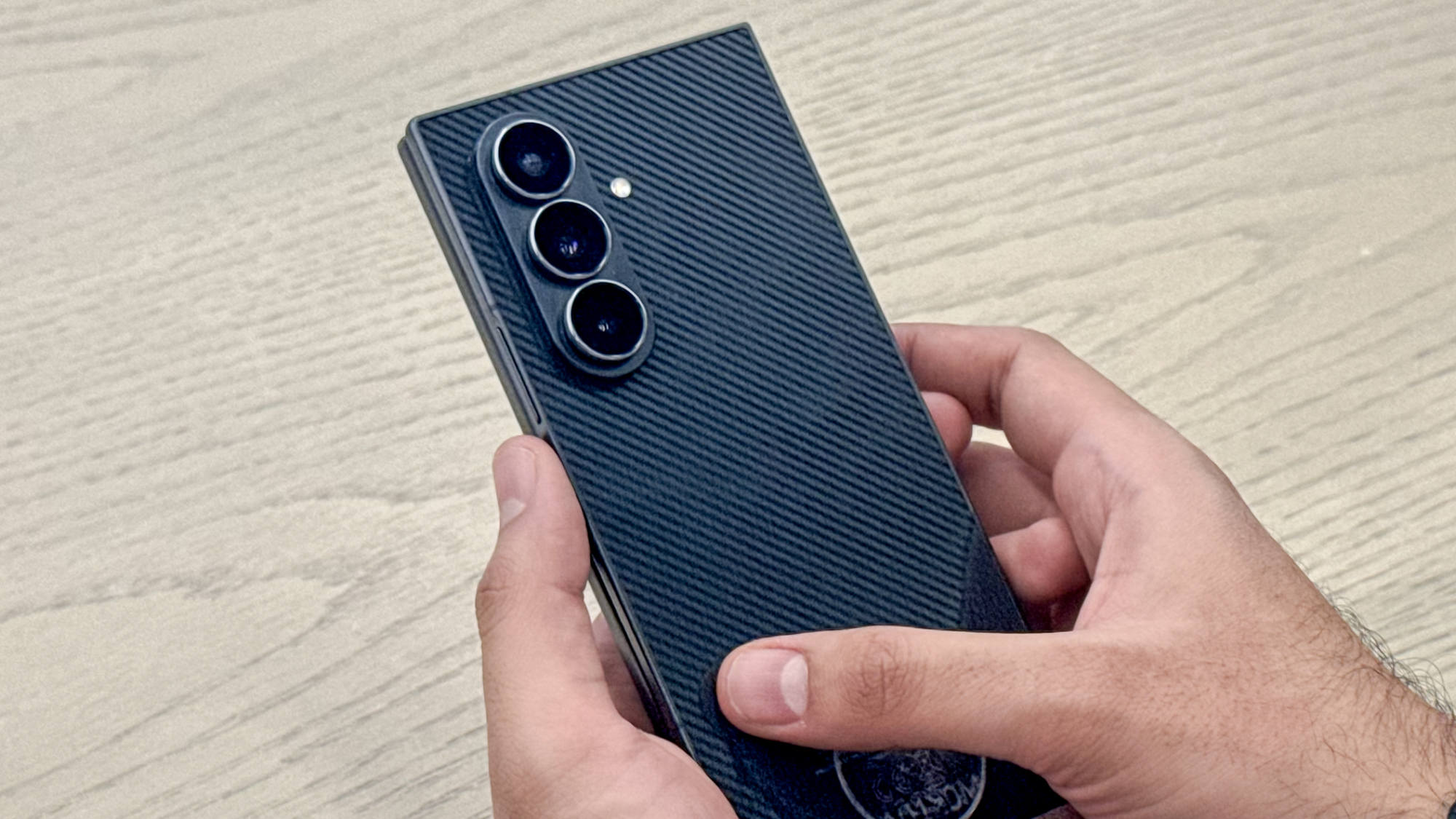
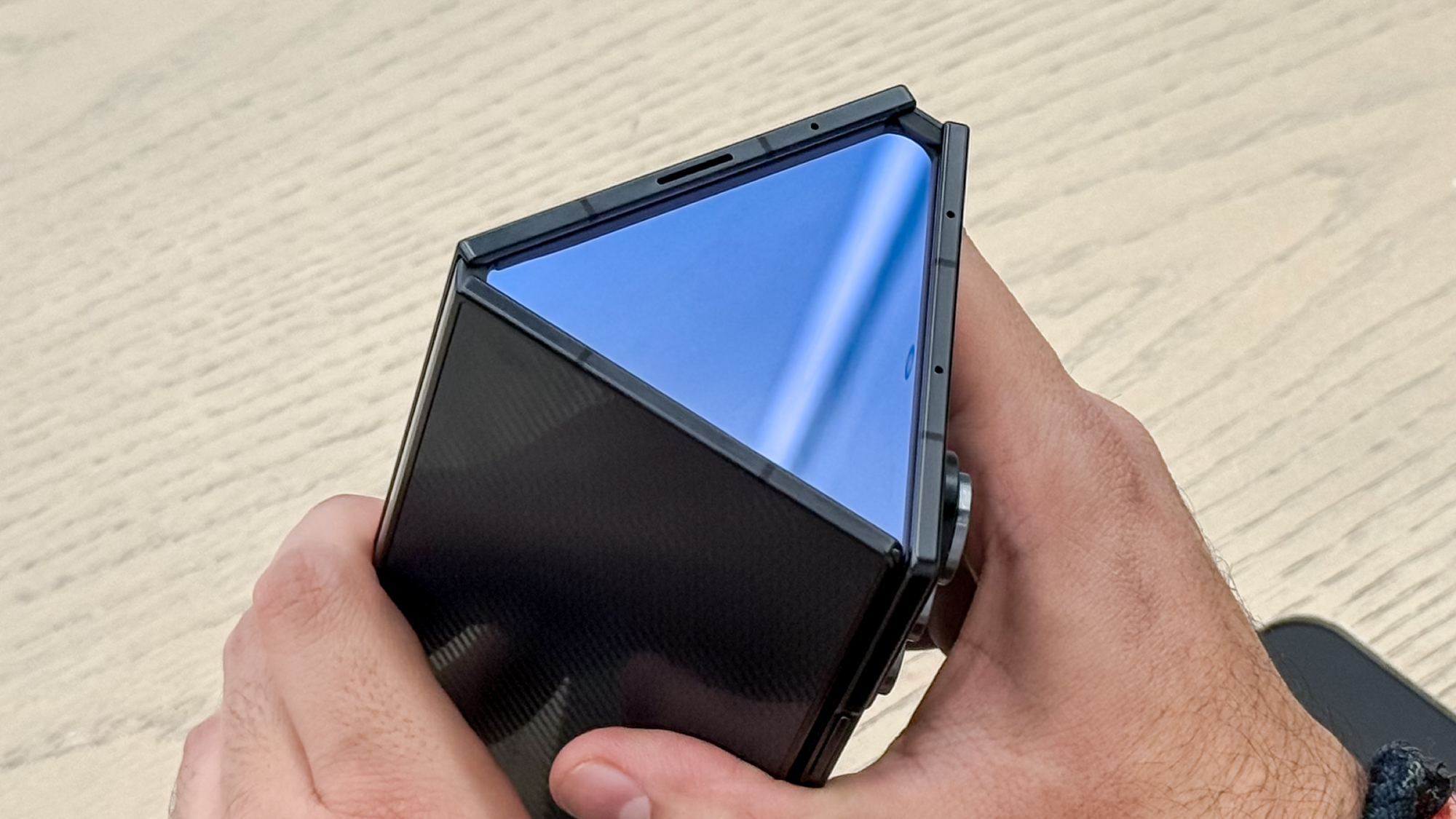
The phone features a 6.5-inch cover display – the same one used on the Galaxy Z Fold 7. Turn the phone around and open the two side panels, and you reveal a big 10-inch AMOLED inner display.
You may like
(Image credit: Tom’s Guide / Sanuj Bhatia)
In terms of thickness, the Galaxy Z TriFold is exactly the same as the Galaxy Z Fold 7 when unfolded, measuring just 4.2mm (0.17 inches). When fully folded, the device measures 12.9mm (0.51 inches) thick, which is understandable given the added screen real estate, even if it’s 50% thicker than typical smartphones like the Galaxy S25 Ultra.
What you do notice, though, is the weight. The Galaxy Z TriFold is quite hefty at about 309 grams (10.9 ounces), and it feels heavier compared to traditional slab smartphones like the S25 Ultra (218 grams, 7.7 ounces) and iPhone 17 Pro Max (233 grams, 8.22 ounces).
Even compared to other book-style foldables the Galaxy Z TrFold is quite hefty. The Galaxy Z Fold 7 is only 215 grams (7.6 ouces) and the Pixel 10 Pro Fold is 258 grams (9.1 ounches). If you imagine carrying an iPhone 17 Pro with a MagSafe power bank permanently attached to the back, that’s close to how the device feels in hand.
(Image credit: Tom’s Guide / Sanuj Bhatia)
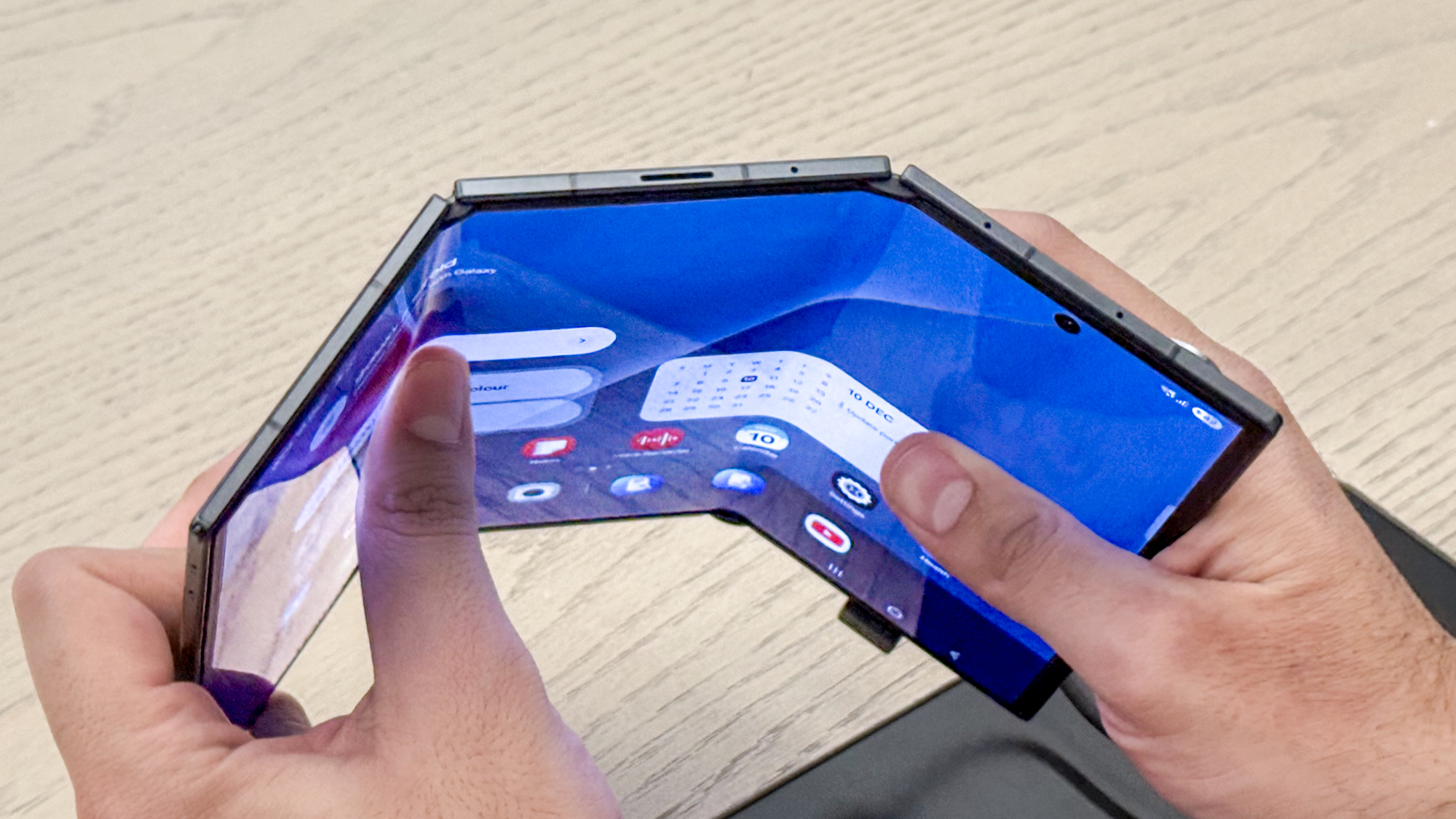
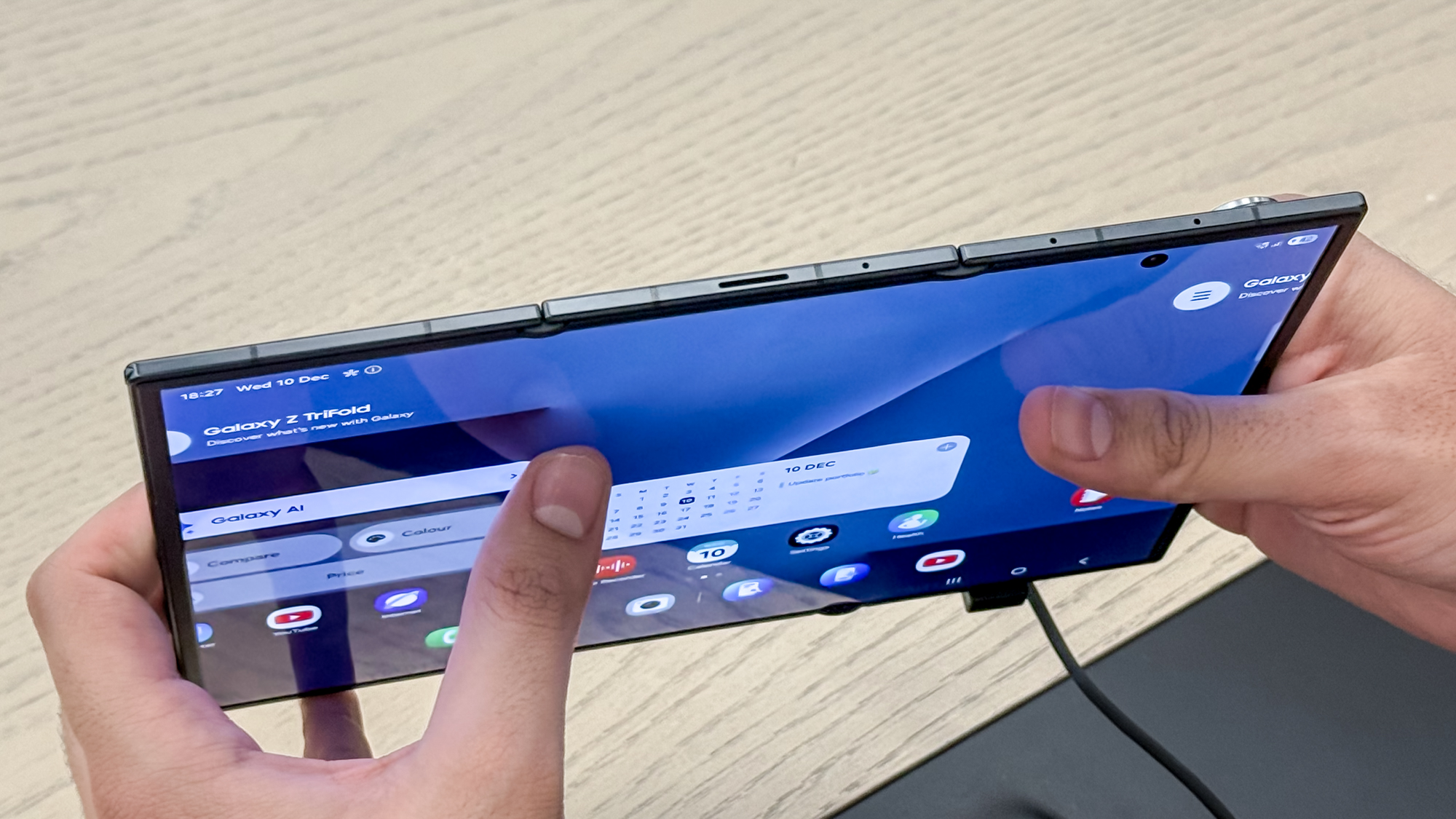
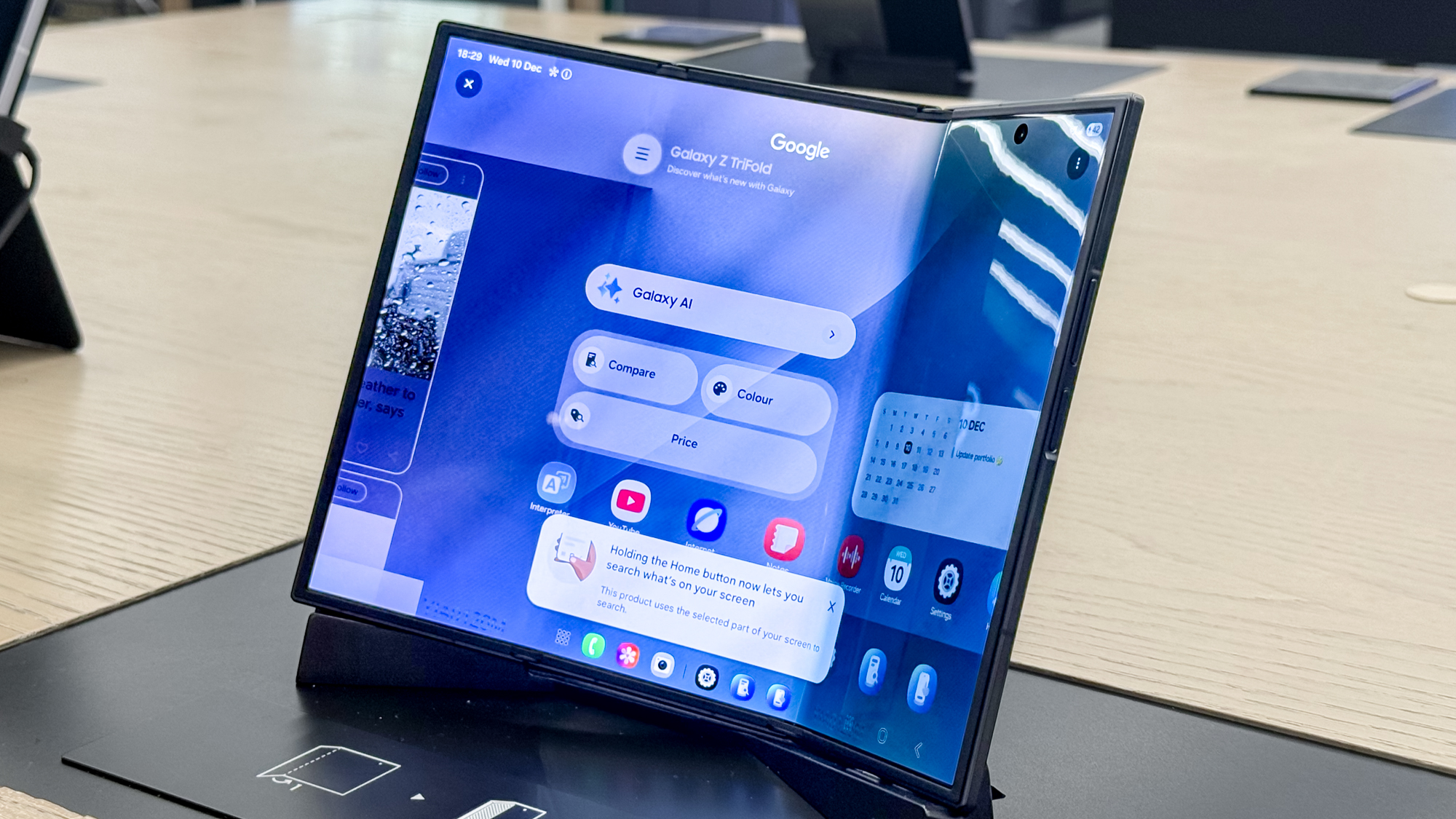
Using a trifolding phone in real life is a pretty surreal experience. You pick up what seems like a traditional smartphone, but it unfolds into a large tablet-like screen, and that alone feels quite futuristic. This is also visually stunning, thanks to Samsung’s excellent inner display that offers excellent colors and supports up to a 120Hz refresh rate. The two creases are definitely noticeable but not too visible.
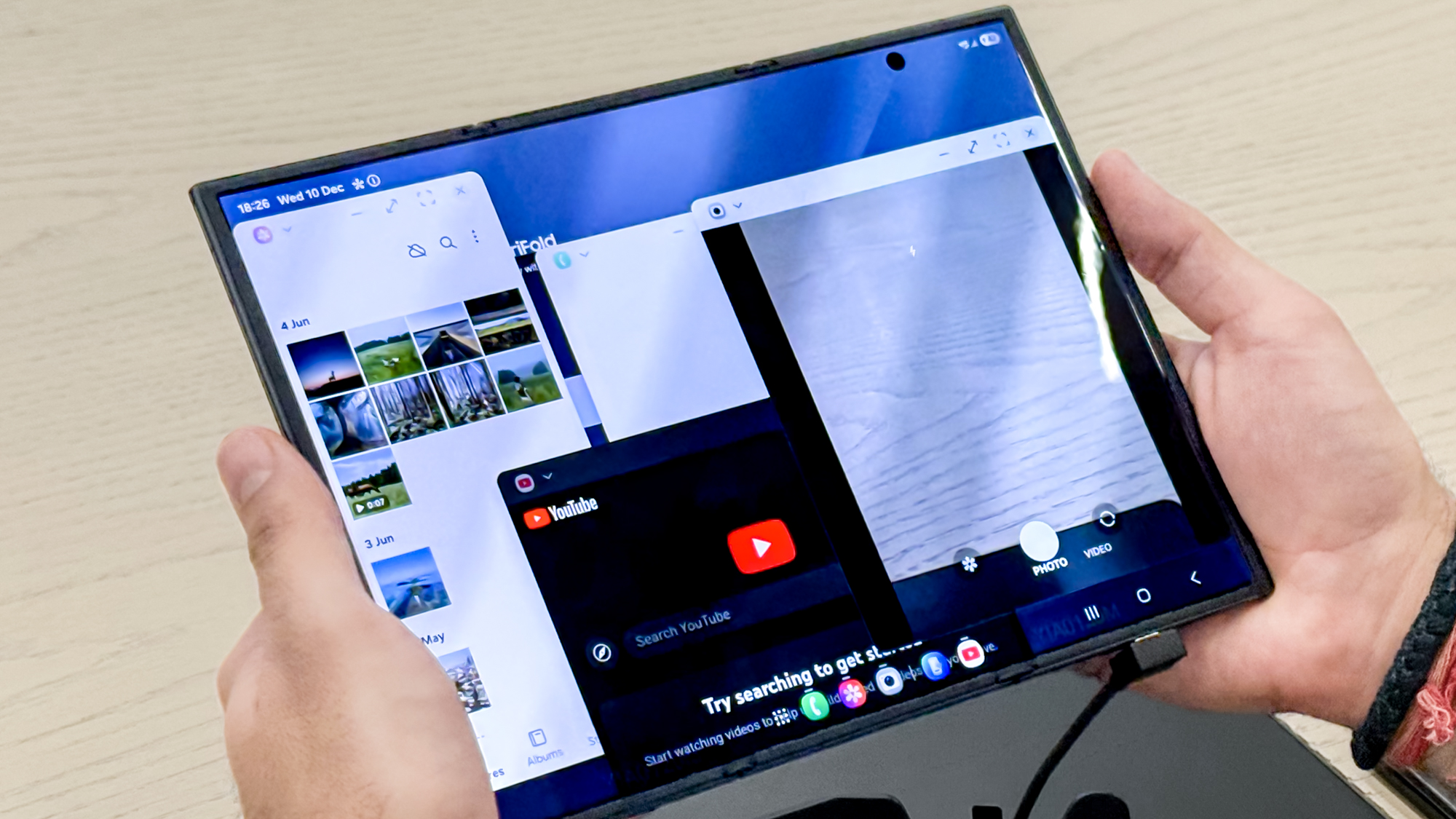
Samsung has always provided some of the best foldable software in the industry, and the Galaxy Z TriFold is no different. You can open multiple apps in separate windows and work on them side by side, exactly like a tablet or touchscreen laptop.
(Image credit: Tom’s Guide / Sanuj Bhatia)
It is also one of Samsung’s first phones to support “Standalone DeX” mode, which means you can pair it with a Bluetooth keyboard and mouse and use the whole setup as a portable smartphone-tablet-computer hybrid.
The TriFold isn’t using Qualcomm‘s latest Snapdragon 8 Elite Gen 5 chipset. Instead, it relies on the Snapdragon 8 Elite found in the Galaxy S25 series and Galaxy Z Fold 7. But even if it’s not the very newest silicon, the TriFold still handled all the apps I opened in multiple windows during my hands-on session without breaking a sweat.
Galaxy Z TriFold: Some issues and omissions
(Image credit: Tom’s Guide / Sanuj Bhatia)
While I didn’t have much time to play with the Galaxy Z TriFold at the Dubai Mall, I was still able to spot a few things that could become issues over time, and one glaring omission in particular.
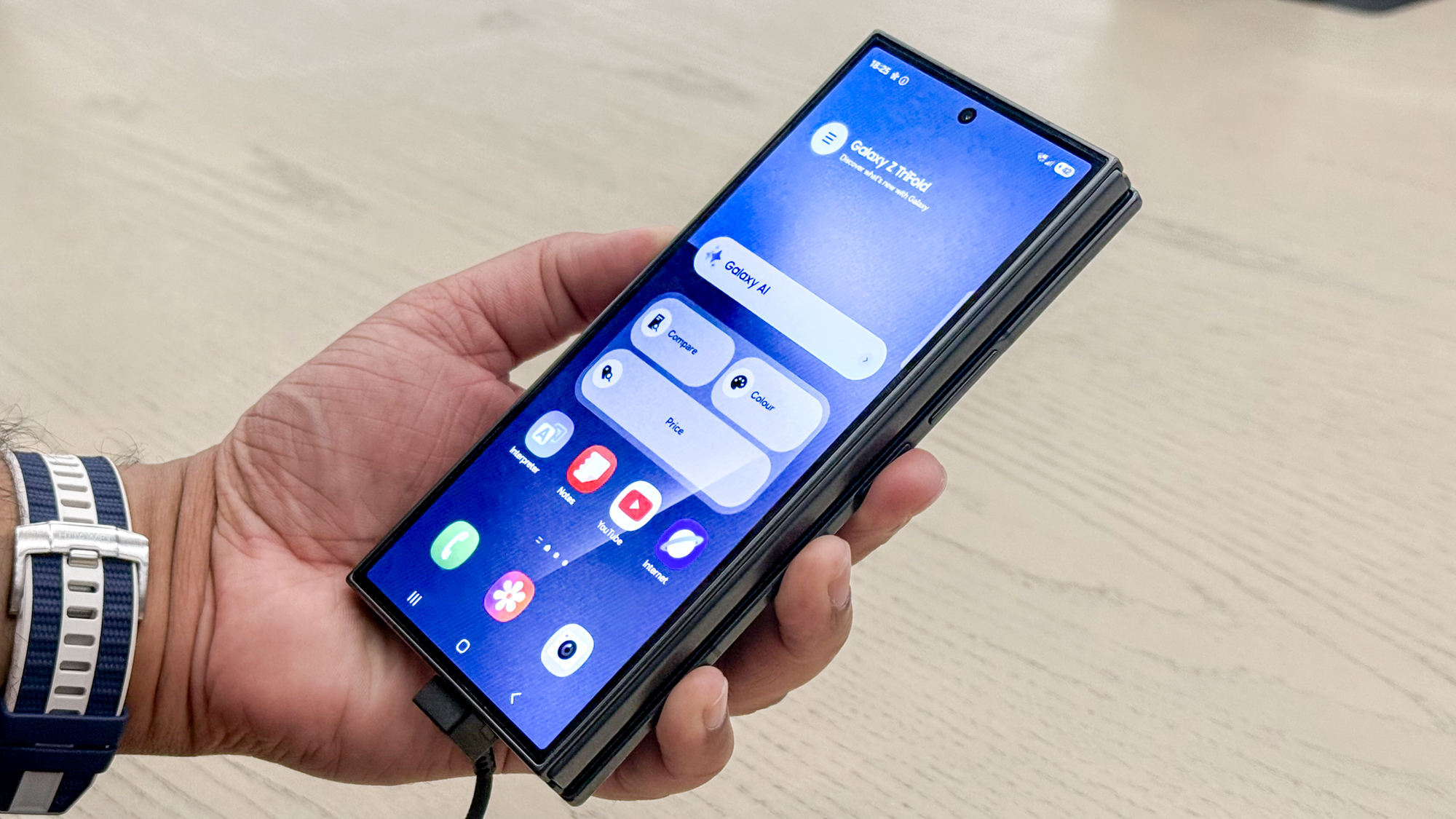
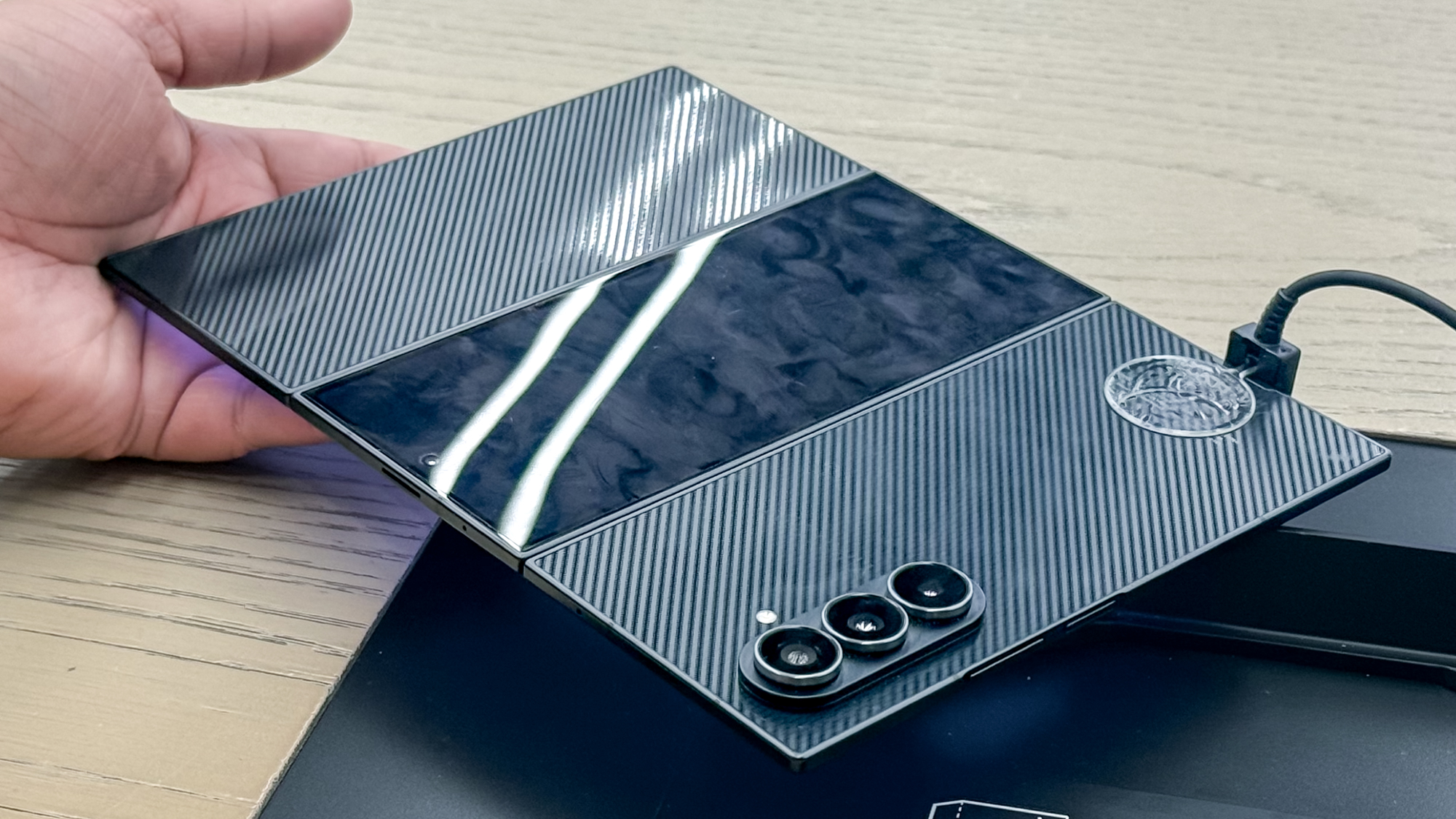
The first issue I encountered was that whenever you use the device unfolded, you’ll inevitably smudge the cover screen, located in the center back of the device.
This comes down to Samsung’s design choice. Instead of using a single tri-folding screen that bends in a Z-shaped layout, which would’ve made the phone’s name live up to the “Z TriFold” branding, Samsung went with a U-shaped design where the cover screen sits in the middle of the back panel when the device is fully unfolded.
The result is that your fingers constantly touch the cover screen and the carbon-fiber textured panels when unfolded, making the device smudge easily.
(Image credit: Tom’s Guide / Sanuj Bhatia)
And this brings me to the omission: the inability to use the device in a configuration beyond open or closed. The Huawei Mate XT uses a single trifolding panel that lets the user operate it as a normal cover screen, a book-style foldable (using two of the three inner screen panels), or a full tablet.
Due to Samsung’s design, this simply isn’t possible on the Galaxy Z TriFold. This could be due to durability concerns or because Samsung expects users to jump straight to the large tablet mode, but it’s still something I missed after coming from the Mate XT. You don’t even get Flex Mode abilities like you do on a Z Fold or Z Flip, which lets you use apps with unique control options when the phone is partially open.
A promising foundation
(Image credit: Tom’s Guide / Sanuj Bhatia)
On the whole, my time with the Galaxy Z TriFold actually made me hopeful about the device and the form factor.
Look at where Samsung started with the original Galaxy Z Fold and where we are with the Galaxy Z Fold 7. The company has evolved the category so much that I genuinely believe trifolding smartphones could become an inflection point for the industry.
A single device that works as your phone, your tablet, and your laptop feels more realistic than ever. And with Android-powered laptops incoming, I fully believe this shift could happen — and the Galaxy Z TriFold could be the start of it.
Follow Tom’s Guide on Google News and add us as a preferred source to get our up-to-date news, analysis, and reviews in your feeds.
More from Tom’s Guide