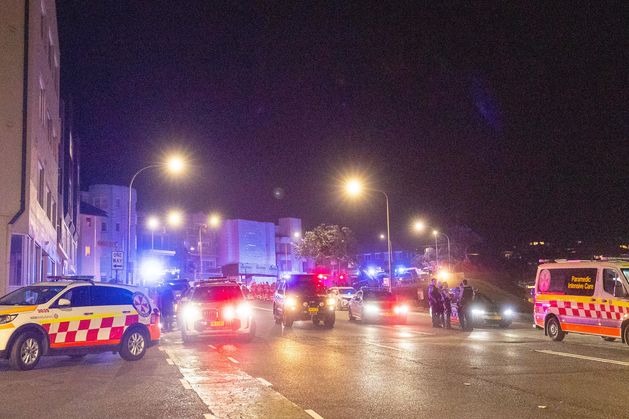
Sajid Akram (50), who was killed by police during the shooting at a Hanukkah event in Sydney on Sunday, had moved to Australia in 1998 and rarely visited his family back in the southern Indian state of Telangana, police said.
Australia’s immigration authorities said earlier that Akram had travelled to the Philippines just weeks before the attack using an Indian passport, though it was not clear at that stage whether it was the country of his birth.
A Telangana police official said Akram visited India six times since 1998, mainly to deal with “property matters and visits to his elderly parents”. He did not return for his father’s funeral.
Akram’s relatives “expressed no knowledge of his radical mindset or activities, nor of the circumstances that led to his radicalisation”, the Telangana police official told BBC News.
“The factors that led to the radicalisation of Sajid Akram appear to have no connection with India or any local influence in Telangana,” the official said.
Akram had no criminal record before leaving India. He had obtained a degree in commerce before moving overseas in search of work but continued to hold his Indian passport, police said.
Naveed survived after being shot by police, was hospitalised in a coma
He married a woman in Australia described as being of European origin and had two children, both Australian citizens.
Authorities said Akram carried out the attack along with his son, Naveed Akram (24). Naveed survived after being shot by police, was hospitalised in a coma but regained consciousness on Tuesday. He has been charged with 15 counts of murder.
Australian authorities earlier said the father and son had spent almost all of November in the Philippines.
Their trip was confirmed by Philippine authorities after ABC cited security sources as saying the attackers could have travelled there for “military-style training”.
Sajid Akram had gone to the Philippines on his Indian passport, officials said. The duo had given Davao as their destination upon arrival, Dana Sandoval, a spokesperson for Australia’s immigration bureau, said.
Australian media reported that Naveed Akram had previously come to the attention of authorities over alleged links to an Islamic State cell in Sydney.
Prime minister Anthony Albanese confirmed the younger man was flagged in 2019, but said an “assessment was made that there was no indication of any ongoing threat or threat of him engaging in violence”.