The smartphone industry has matured to a point where annual upgrades often feel iterative rather than transformative. Yet every so often, a device arrives that genuinely shifts expectations. vivo’s new X300 Pro ( ₹109,999) is one such contender on the basis of its ambitious mobile photography advances. But is it enough to challenge entrenched players like Apple and Samsung and ward off competition from Google, OnePlus, OPPO, and Xiaomi in the ultra-premium segment? I took the vivo X300 Pro for a spin for a couple of weeks to explore whether it lives up to its promise—and whether it deserves a place among the best smartphones of 2025.
Sculptural design
vivo has always leaned toward elegance in design with a consistent design identity, and the X300 Pro continues that tradition. It’s a gorgeous phone and the glass front and back framed by a polished aluminium chassis, exudes sophistication. At a shade under 8mm thickness and weighing 226 grams, it feels quite substantial — but just manages to tip into unwieldy territory. However, because the weight distribution is ideal, it doesn’t feel top-heavy.
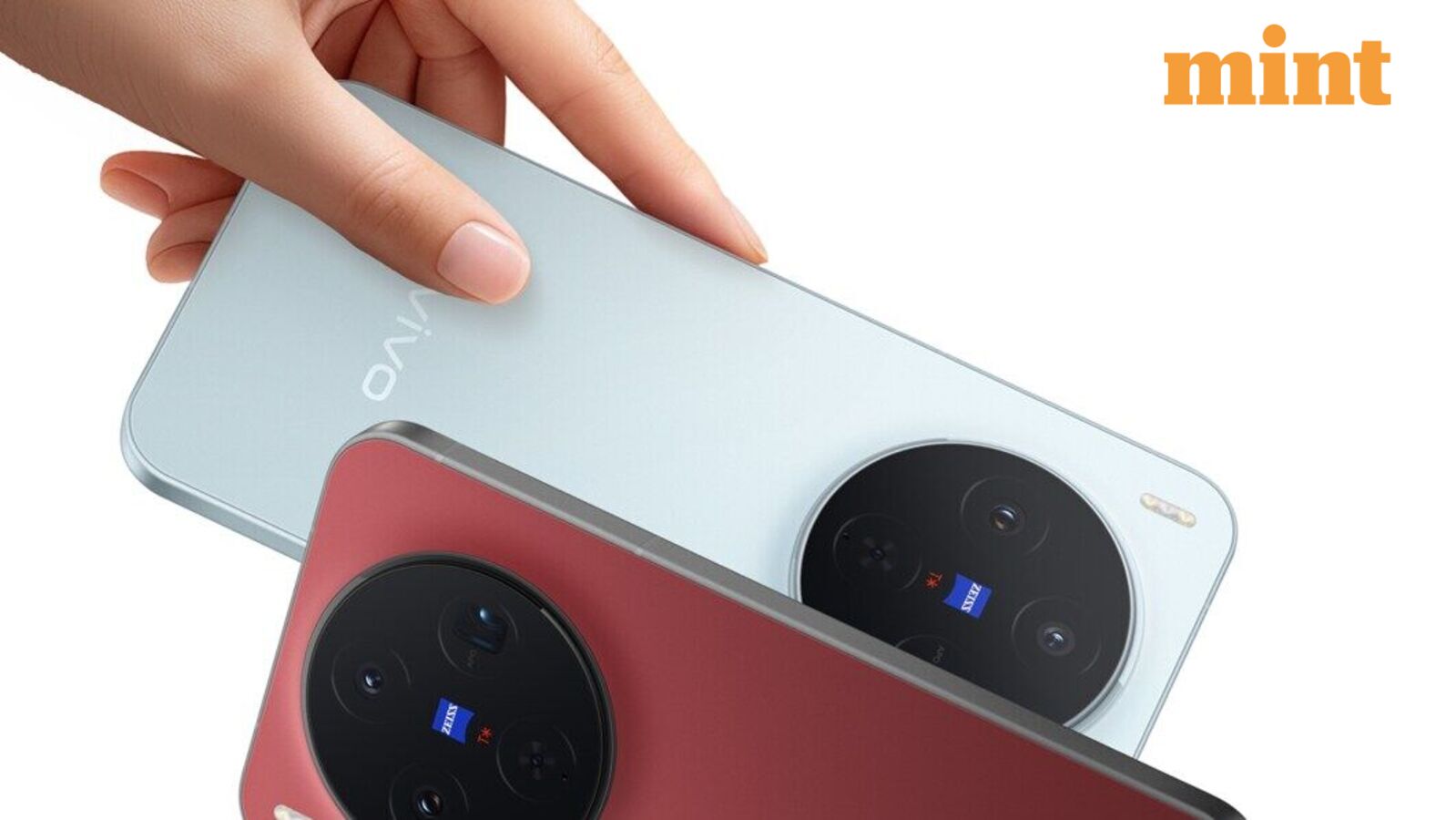
The oversized circular camera module is the most striking design element, although this year’s camera bump is smaller than last year’s. While the protrusion is a tad excessive, the symmetry and detailing lend it a distinctive character. There are some nice touches—the sidewall of the camera chassis features engravings mimicking the texture of a classic camera lens. Plus, it doesn’t wobble when used lying flat on a desk. Dominating the rear, the large camera module signals vivo’s priorities: photography is the headline act.
Importantly, it carries dual IP68 and IP69 certification for dust and water resistance, ensuring durability matches aesthetics.
And then there’s the 6.78-inch LTPO AMOLED display which is quite a visual feast and the dynamic 1–120Hz refresh rate, helps delivers sharpness and fluidity in equal measure. HDR10+ and Dolby Vision support ensure vibrant colours and deep contrast, making streaming content a joy.
vivo promises 4,500nits of peak local brightness, and in real world conditions, outdoor visibility is excellent even under harsh sunlight. Unlike some Android flagships that lean toward oversaturation, vivo has tuned the X300 Pro for accuracy, though you can switch to a vivid profile if desired or adjust the colour balance just the way you like it.
Sustained performance
At the heart of the vivo X300 Pro is MediaTek Dimensity 9500, paired with 16GB of LPDDR5X Ultra RAM and 512GB of UFS 4.1 storage (in China, a 1TB storage variant is available as well).
The top-of-the-line specifications ensure blistering performance across tasks, from gaming to multitasking, and there isn’t much in the way of overheating. In fact, while vivo likes to talk more about the phone’s camera capabilities, it’s terrific gaming chops are overlooked.
Like other Chinese smartphone makers, vivo has embraced Silicon-Carbon battery tech, and the X300 Pro builds on this foundation. The phone gets a 6,510mAh battery that’s designed to last two days — that’s 510mAh bigger than the X200 Pro. Plus, it doesn’t take too long to charge the phone thanks to 90W fast charging, charging the phone from 0 to 100 percent in under an hour. A quick 20 minutes of charging can bump the battery to 50 percent right away. There’s also 40W wireless charging (up from 30W in the predecessor) and reverse wireless charging for accessories.
Essentially, vivo X300 Pro delivers excellent endurance. In mixed use–browsing, social media, streaming, and photography–the phone can comfortably stretch to two days of usage. Note: Extensive camera use dents the battery life.
Camera excellence goes further
Of course, the camera system is the headline feature here. Co-engineered with ZEISS, the X300 Pro boasts of a primary 50-megapixel camera, a 200-megapixel telephoto camera with up to 20x zoom support, and a 50-megapixel ultra-wide camera. At the front, you get a 50-megapixel wide-angle selfie camera with 92-degree FOV and f/2.0 aperture.
The X300 Pro packs cameras that deliver same exceptional photos in terms of colour, detail, and exposure across its different lenses. The main sensor captures stunning detail with natural colour reproduction and excellent dynamic range. Low-light performance is particularly impressive, thanks to the large sensor size and advanced noise reduction algorithms. The telephoto lens delivers sharp results even at high zoom levels while the ultra-wide lens maintains consistency with minimal distortion, making it ideal for landscapes and architecture.
While the X300 Pro excels at photography, vivo has also upped the ante on video recording this time around. Stabilization is rock-solid, and vivo’s cinematic modes add creative flair.
At the moment, the X300 Pro is arguably the most compelling smartphone camera system available today. It doesn’t just compete with rivals — it often surpasses them.
The Telephoto Extender Kit
vivo has extended the stellar camera chops on the X300 Pro by offering an additional 2.35x Telephoto Extender Ki co-developed with ZEISS. It upgrades the 85mm telephoto lens to 200mm one, allowing you to capture distant subjects with excellent clarity. It is essentially, an add-on optical zoom kit.
The lens needs to be attached to the included case. The sturdy case snaps on with a firm grip — it offers a kick stand for propping up the phone and two eyelets for attaching a strap to hang the phone around your neck, like a camera, since that’s what you’re using it as.
Could a combination of such contraption and the advances in camera capabilities make for a DSLR replacement that mobile photography has been aiming for since forever? It’s not for everyone, mind you, but it’s also not a gimmick.
Finally, OriginOS Arrives
With the X300 series, vivo has finally retired Funtouch OS in favour of OriginOS 6, its once-China-exclusive user interface layer now rolled out globally. This marks a significant shift in vivo’s software identity.
OriginOS 6 is built on Android 16 and introduces a cleaner, more dynamic design language. The interface emphasizes fluid animations, translucent layers, and adaptive widgets. The app launch speeds and the animations definitely feel smoother, and app switching too is faster compared to Funtouch OS.
Clearly, OriginOS feels more polished and modern that the dated Funtouch OS experience.
There are some nifty new features like Origin Island (a persistent on-screen hub similar to Apple’s Dynamic Island), notification stacking, and Flip Cards (for lockscreen) that make multitasking more intuitive and user experience more enjoyable.
Cross-device integration is nicely done. OriginOS supports clipboard sync, file sharing, and screen mirroring across Windows PCs and even Apple devices, making it easier to work across ecosystems.
vivo is also upping the ante on long-term support committing to five major OS updates and seven years of security patches for the X300 series. This might not match Google and Samsung at the moment but should allay concerns for most premium Android buyers.
The premium paradox
Pricing is where vivo faces its toughest challenge. The X300 Pro is priced at ₹109,999, placing it squarely in the ultra-premium segment. To transform the phone into a camera powerhouse, you’ll have to shell out an extra ₹18,999 for the Telephoto Extender Kit.
At this level, consumers expect not just cutting-edge hardware but also brand prestige and ecosystem integration. That’s a shame because the X300 Pro justifies its price not just with its camera capabilities, but also everything else that makes for a 2025 flagship camera. You won’t regret the purchase — in fact, you’d likely be surprised, especially if you’ve jumped the fence from the Apples and Samsungs.
That said, if you want to save some cash, you might want to pick its younger sibling, the vivo X300 (starting from ₹ 75,999) which offers significant upgrades from its predecessor and actually delivers quite a punch. It’s a compact premium smartphone that should work for people of all hues.