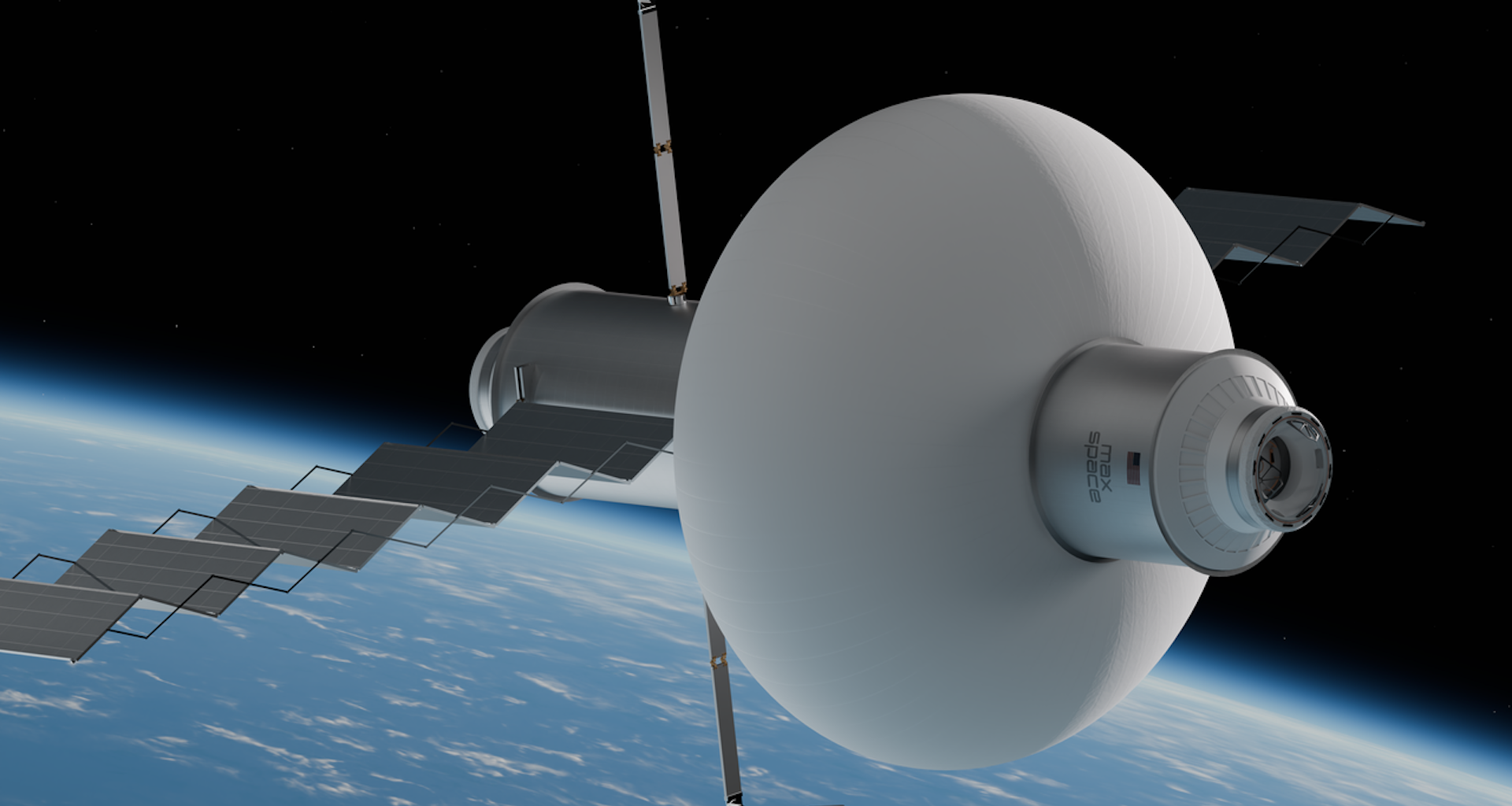
As NASA and the US look toward a new era of private space stations, startup Max Space is developing expandable orbital modules.
This week, Dec. 17, the company announced new plans to build its own space station. The company’s new design, called the Thunderbird Station, can be launched to orbit on a single Falcon 9 rocket launch.
Once there, it would expand to a volume of 350 cubic meters—roughly a third of the volume of the International Space Station (ISS).
Max Space’s expandable space station
When it emerged from stealth in April 2024, Max Space had no plans to build its own space station. The company had just unveiled its expandable module technology. Max Space claims its modules are unlike those of other space companies. They provide greater safety and better scalability, allowing operators to build “stadium-sized” space stations.
The startup had originally planned to offer its technology to companies planning to lift their own space stations to orbit. However, according to a SpaceNews report, the company changed tack when NASA announced a revised approach to its Commercial Low Earth Orbit Destinations (CLD) program in August. NASA announced over the summer it would award multiple Space Act Agreements to help fund new commercial space stations.
“It was pretty clear that was an opportunity for us to put a proposal forward to show how these modules can really be used for human habitation,” Max Space CEO Saleem Miyan told SpaceNews in an interview. “That CLD proposal gave us an incentive to strategically look at how we would bring forward the roadmap, and so that’s exactly what we’ve done.”
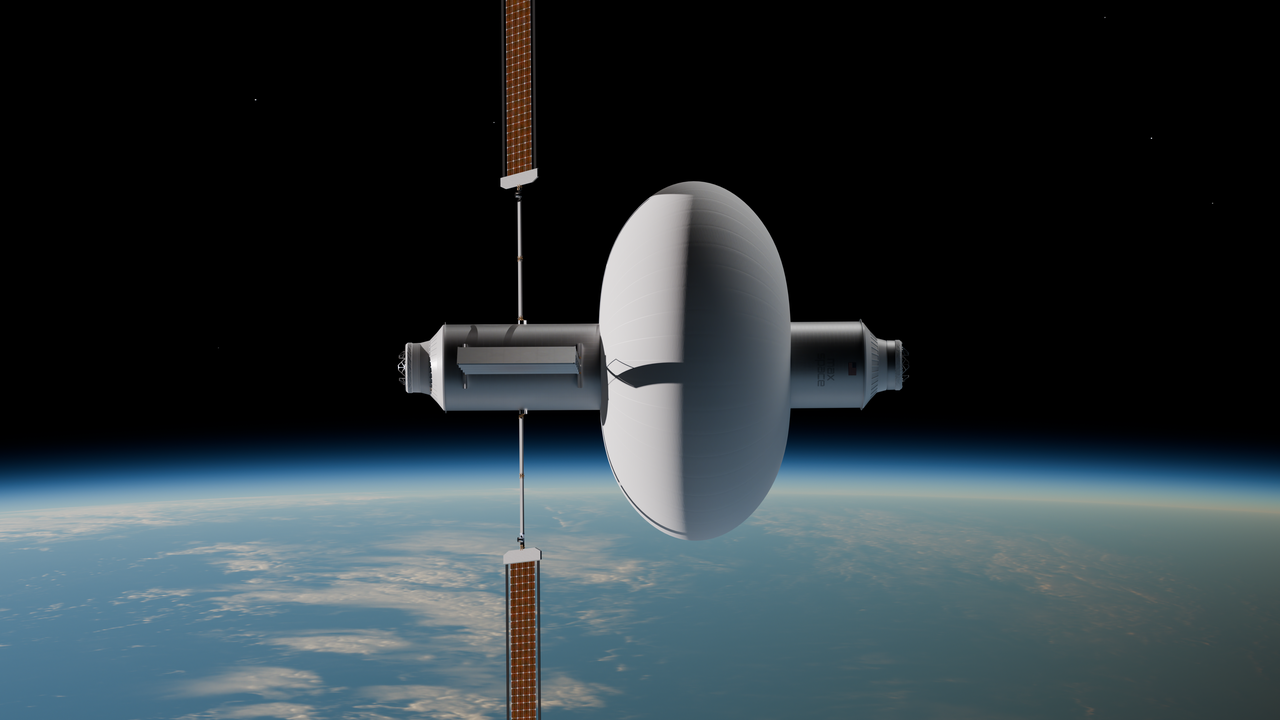 An artist’s rendering showing a side view of Thunderbird. Source: Max Space
Now, Max Space has unveiled its Thunderbird Station, which features two docking ports and was designed to support a crew of four in space. The company hired former NASA astronaut Nicole Stott and former NASA associate chief scientist Kartik Sheth. Both have played a key role in maturing Thunderbird habitat and laboratory concepts.
A reconfigurable habitat
Unlike the Thunderbird Station, most space stations require several launches to fully lift into orbit. Thunderbird can be lifted in a single Falcon 9 launch thanks to its “morphic interior structure”. Essentially, it uses a soft, reconfigurable material for the interior.
The company says this allows for a highly customizable interior that can be adapted for crew quarters, orbital lab space, and in-space manufacturing.
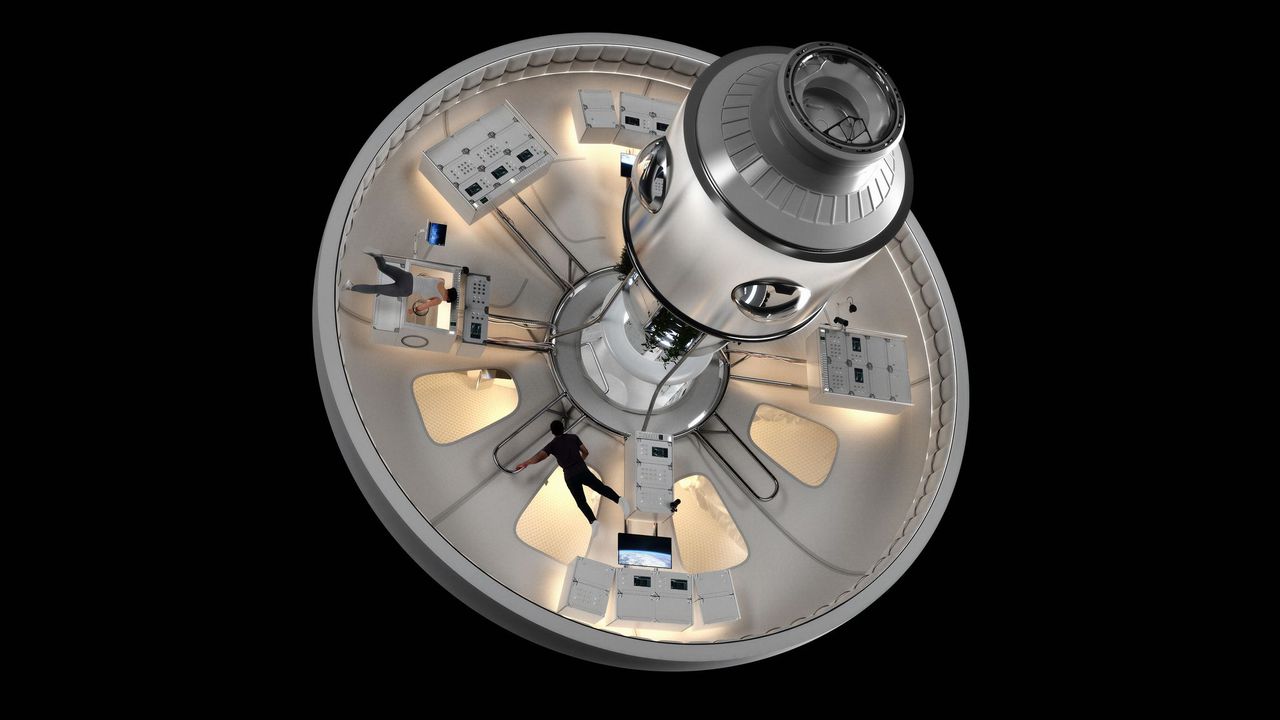 An artist’s rendering showing the inside of Thunderbird. Credits: Max Space
Max Space claims that its new design is gaining interest beyond NASA’s CLD program. It believes it could eventually serve customers looking to continue to perform science once the ISS is deorbited around the year 2030.
Max Space aims to launch a small prototype of Thunderbird in early 2027 aboard a SpaceX rideshare mission. If all goes to plan, it will then look towards launching a full-sized station to orbit. This would see Max Space join a growing list of firms looking to build the US’s successor to the ISS: a network of private orbital stations, expanding humanity’s footprint in space.