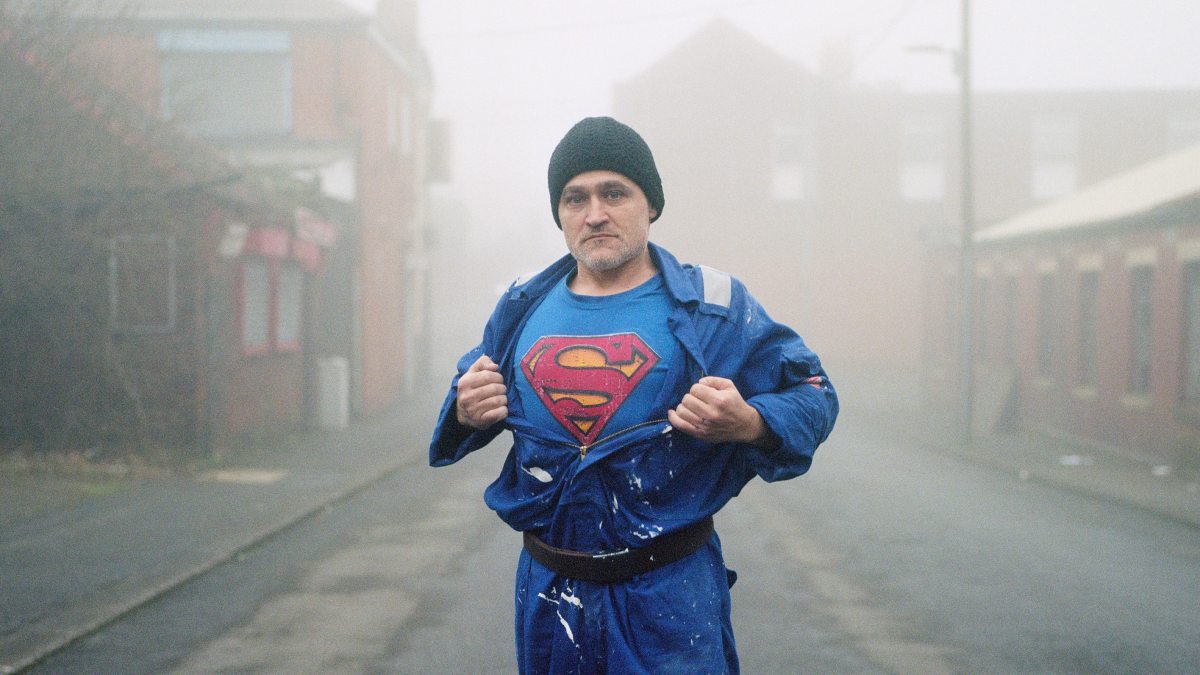
When Britain voted for Brexit, much of France was mystified. Seeking to shed light upon the “funny bunch” of people who had decided to leave the European Union, Ed Alcock, a British photographer based in Paris, crossed the Channel to capture some of the faces of the UK.
The result was an “affectionate” personal view of a somewhat eccentric nation that holds a strange fascination for the French. Alcock’s images were so striking they helped earn him France’s most prestigious photography prize, the Prix Niépce Gens d’Images.
He is one of only a handful of non-French photographers to be awarded the prize and the first Briton. The distinction has led to a display of his photographs at the Bibliothèque Nationale de France, the national library in Paris created by François Mitterrand, the fervent EU federalist who was president between 1981 and 1995.

Ed Alcock is one of few non-French photographers to win the prize
AI-ESTELLE BARREYRE
The exhibition, which opened this week, features shots of his family but also of the towns that are his roots, such as Sleaford in Lincolnshire, where his grandfather lived, and Horden in Durham, where his great-uncle, a miner, died of pneumoconiosis at the age of 17 in 1925.

You Have One Unread Message, from the series Love Lane
ED ALCOCK/MYOP
“The exhibition is about my memories of growing up, of becoming a father, about family stories and secrets and about the wider story of Britain today and Brexit.
“It is a personal story, which touches on deindustrialisation, which is something I grew up with. It’s my Britain, essentially the east coast,” Alcock said.

Yellow Square, from the series Hobbledehoy
ED ALCOCK/MYOP
Photographers enjoy a lofty status in France, where the likes of Henri Cartier-Bresson and Robert Doisneau, famous for capturing The Kiss by the Hôtel de Ville in 1950 and a previous winner of the Prix Niépce, are treated as artists, Alcock says. “In France, the average Joe thinks of photographers as artists first and artisans second. In the UK it feels often as if it’s the other way round.”

The Kiss by the Hôtel de Ville by Robert Doisneau
ROBERT DOISNEAU/ALAMY
Yet Alcock, 51, who has lived in France for about half of his life, says it is a pleasure to go back to work in the UK. “When you wander around any English high street, there are all sorts of rather quirky individuals, and I feel affectionate about that.
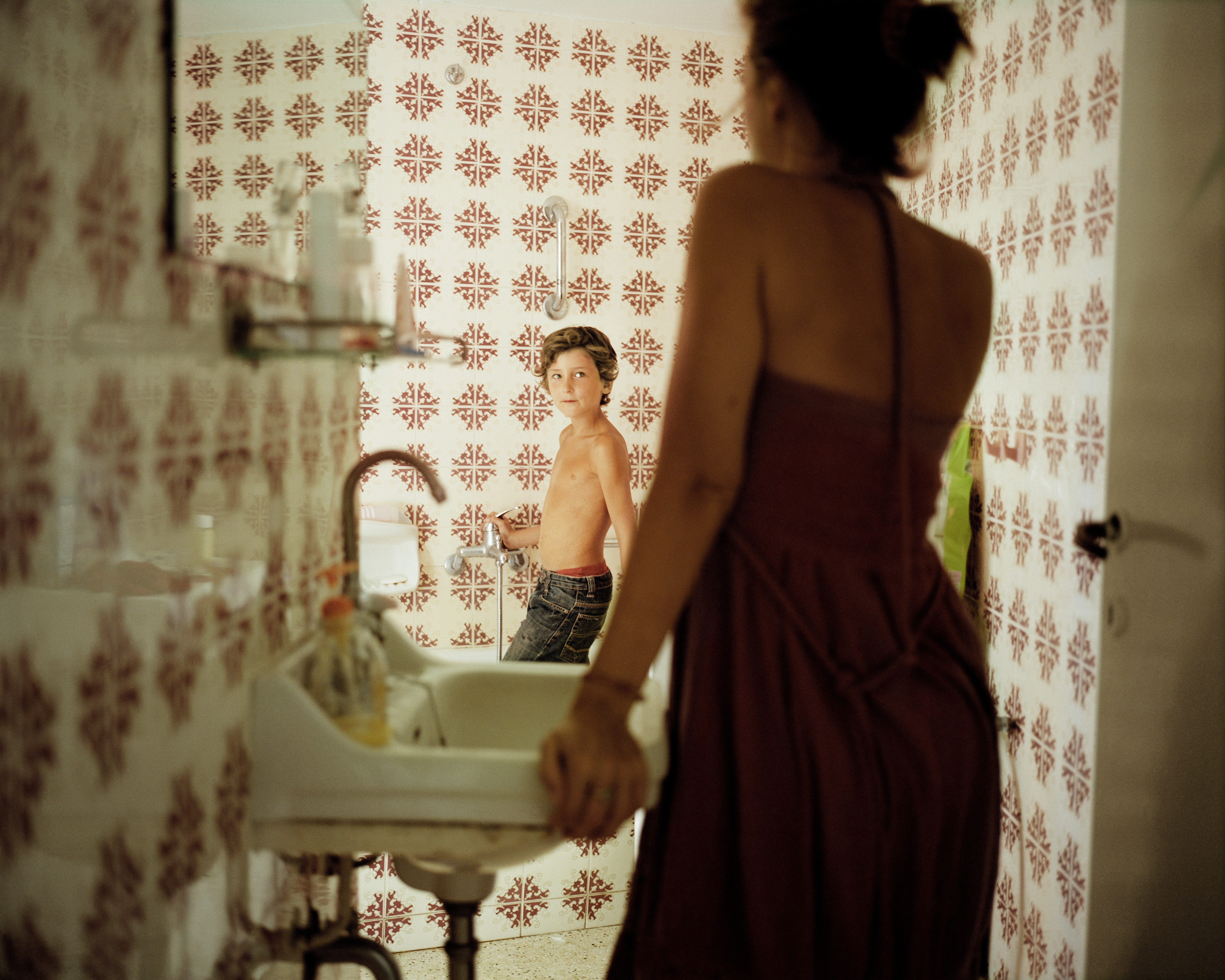
Mother and Son (II), from the series Hobbledehoy
ED ALCOCK/MYOP
“We are a funny bunch. There is a slight, even unconscious, desire to stick out, which is unlike the perfect composition you see in France. There is something slightly imperfect about the British, which makes them perfect for photographers.
“France is a very different place to work; they are a little bit better groomed, and also less keen to expose themselves. When you wander down the average high street and ask people if they will be photographed, you get a 90 per cent rejection rate. In England there is a 90 per cent acceptance rate. They are two very different countries in that way.”
• Inside the homes of 1900s London — from slums to the grandest designs
At the heart of the exhibition are the photographs of Britons he took after the Brexit vote. He captured those on both sides of the debate against the backdrop of deindustrialisation, notably in the areas from which his family hails.

Jacc and Morgan, in the Rain, from the series Buried Treasure
ED ALCOCK/MYOP
In doing so, he highlights the currents, largely invisible to the many French travellers who don’t venture beyond London, that swirl under the surface of British society.

It Has Begun, from the series Home, Sweet Home
ED ALCOCK/MYOP
“The exhibition is more about the tension irrigating Britain today, which was visible well before Brexit,” he said. “When the Brexit vote came through, I was personally very surprised, but if I had really thought about it I didn’t have much reason to be surprised. My personal feeling is pro-European but at the same time, a lot of people that I grew up around voted for Brexit, so I feel an intimate connection with the subject.”