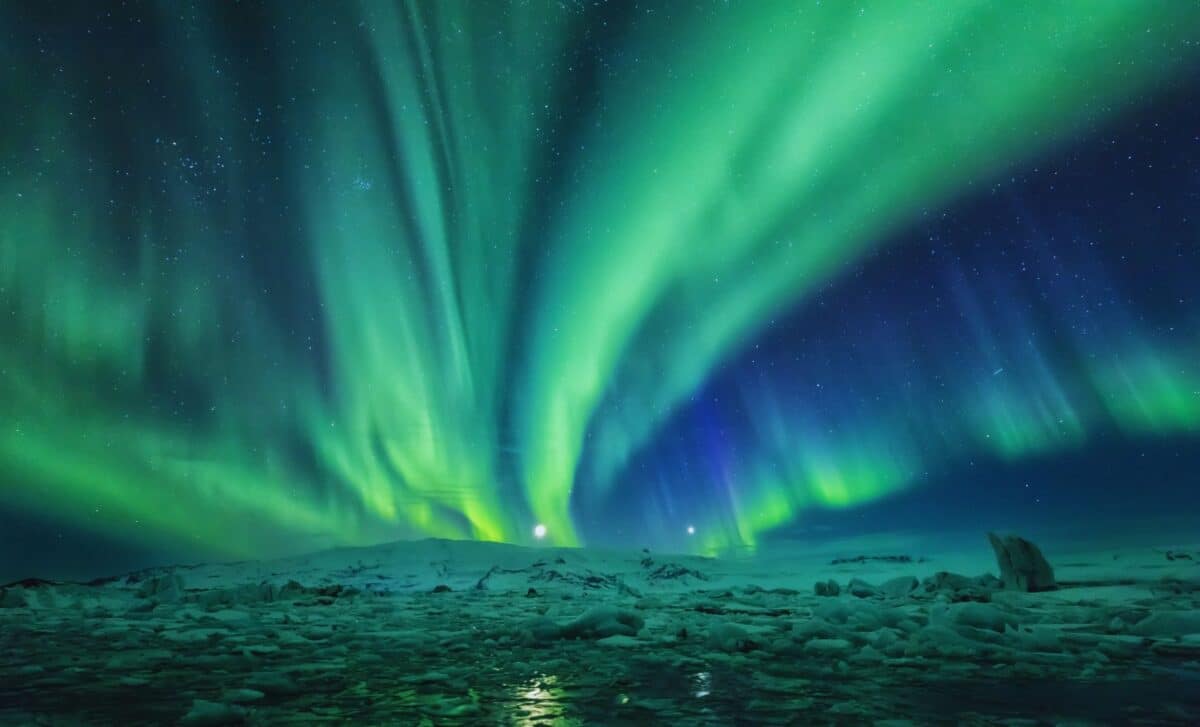
The northern lights are likely to take a break this weekend, with minimal aurora activity expected over the coming nights. This December, the skywatchers who usually chase the mesmerizing lights of the aurora will have to manage their expectations. The geomagnetic conditions are forecasted to stay calm, making the chances for any spectacular displays of the northern lights pretty slim.
As the year winds down, aurora chasers may have been hoping for one last dazzling show of the season, but the latest updates from the NOAA Space Weather Prediction Center paint a rather quiet picture. Geomagnetic activity is expected to remain subdued, with the northern lights visible only in the far northern regions.
Solar Winds: The Hidden Drivers of Space Weather
The northern lights, or aurora borealis, are a direct result of solar wind colliding with Earth’s magnetic field. This solar wind, a stream of charged particles from the sun, triggers the stunning light displays when they interact with the gases in Earth’s atmosphere. When solar wind speeds are low and geomagnetic conditions are stable, aurora activity generally decreases in intensity.
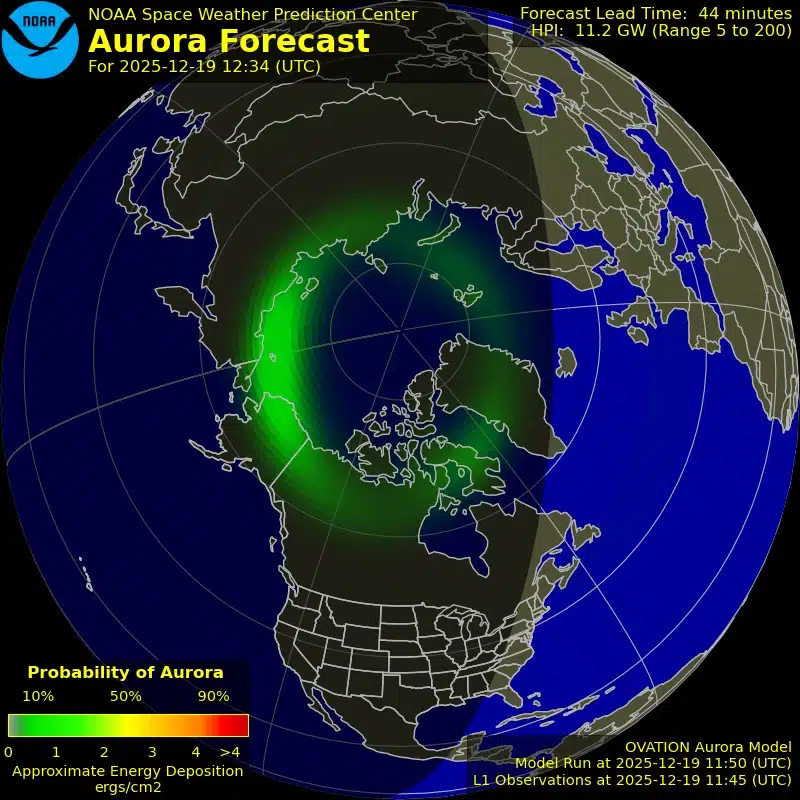 NOAA map showing high aurora visibility in northern regions, with green areas indicating the best chances. Credit: NOAA
According to the NOAA Space Weather Prediction Center, solar wind has been relatively calm lately, contributing to this quieter period in aurora activity. The sun isn’t particularly active at the moment, meaning we’re in a bit of a “lull” when it comes to auroras. While solar wind is the main driver, there are many other factors, like the alignment of the Earth’s magnetic field, that determine how spectacular the lights will be on any given night. For the next few days, it seems like the lights will be keeping to themselves.
High Latitudes Are Your Best Bet
The good news is that the auroras are still expected to be visible in some high-latitude regions. Alaska, northern Canada, and parts of Scandinavia are likely to have the best chances of seeing faint or brief aurora displays, though visibility will depend on the local weather and time of night.
Unfortunately, this means that anyone hoping to see the northern lights from more southern locations, such as the northern United States or Europe, will likely be disappointed. The auroras just won’t stretch that far south, especially when solar wind activity is low. For the most part, the show is reserved for those who live in the farthest reaches of the Northern Hemisphere. Still, for those lucky enough to be in aurora territory, the sky is worth a second look.
Late-Weekend Shifts: Could We See a Surprise?
Although the forecast for December 19–20 points to quiet skies, there’s always room for unexpected shifts. The solar wind is unpredictable, and even minor bursts in activity can sometimes produce a brief aurora show. As stated by the NOAA, while things look calm for now, there’s always the possibility that a late-weekend flare-up could catch people off guard.
Experts at NOAA have long warned that space weather patterns are notoriously difficult to predict in the short term, and even minor shifts in solar wind can create unexpected auroral displays. Therefore, enthusiasts should continue to monitor updates, especially late in the weekend, as solar conditions could bring some surprises to the night sky.