Bea SwallowWest of England
 PA Media

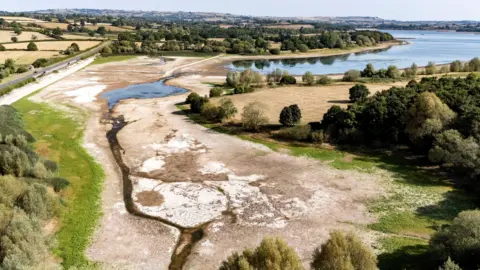
England experienced the second driest six-month period (from March to August) since records began in 1871
Recent heavy rainfall has pulled the west of England into “recovery” status following an extensive dry spell.
Prolonged dry weather status – a precursor to drought – was announced on 10 July by the Environment Agency (EA) for its Wessex area, which includes Bristol, Somerset, Dorset, Wiltshire and parts of south Gloucestershire.
The warning followed the driest spring in a century and the hottest summer on record – a combination which depleted water reserves and triggered hosepipe bans.
Now the EA has revealed most of the West Country’s water situation is recovering, with Wiltshire to follow suit once groundwater levels recharge.
 PA Media
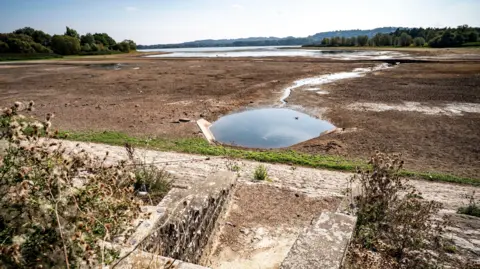
A dry spring and summer exposed the parched lake bed at Chew Valley reservoir
If below-average rainfall had continued, drought was expected in the West Country next March.
But in a dramatic turnaround, September saw 142% of the long-term average rainfall, followed by 128% in November and a similarly wet start to December.
The EA confirmed “high river flows and the partial refilling of water company reservoirs are signs that the water situation is improving”.
 Environment Agency
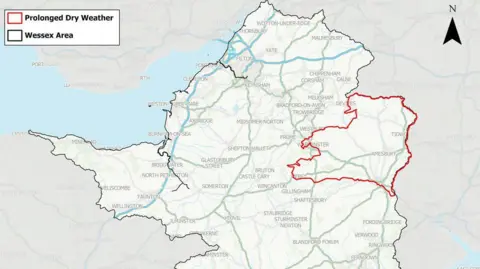
Parts of Wiltshire, indicated by the red outline, are to remain in prolonged dry weather status until the groundwater aquifer recharges
However, groundwater levels in the chalk aquifer – a vast underground store of fresh water – below the upper Hampshire Avon in Wiltshire remain “exceptionally low”, the agency added.
It said underground aquifers provide much of our drinking water, and these need to be replenished over several months.
This area from Devizes down to Salisbury will remain in prolonged dry weather status until the aquifer is recharged.

Ian Withers from the Environment Agency said consistent rainfall is still needed to prevent the water supply from “deteriorating” again
Ian Withers, EA area director for Wessex, said: “The return of heavy rain has benefited the environment after a very dry period.
“But there is no guarantee that sustained rainfall will continue. We still need a wet winter to prevent the water situation from deteriorating again.
“The risk of flooding remains even during a drought. Stay alert, follow flood warning guidance and be ready to deploy any personal property protection,” he added.
Reservoir levels for Wessex Water and Bristol Water, as of 15 December, were 94% and 77%, respectively.