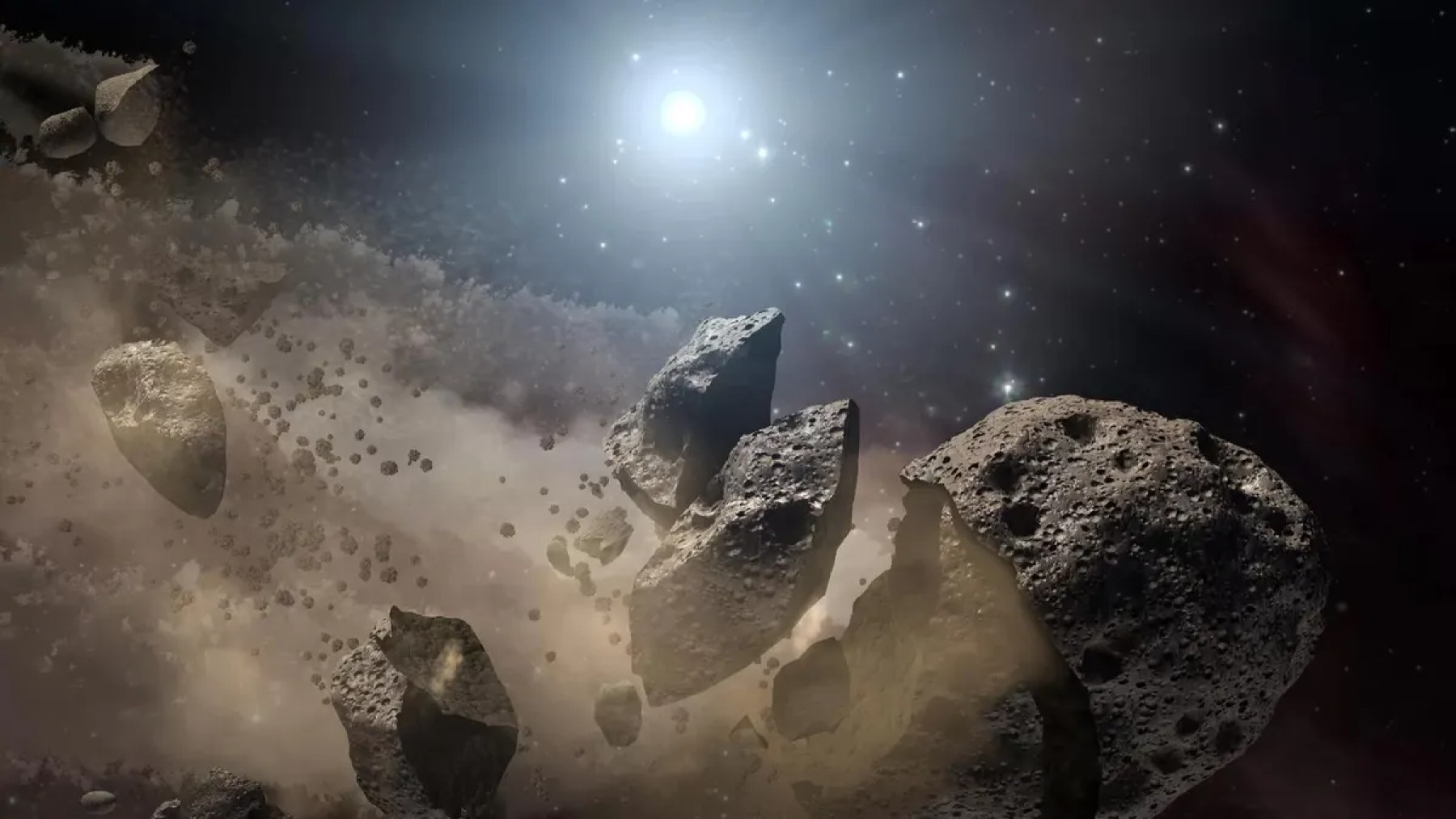
For centuries, NASA has gazed at the night sky, dreaming of untapped wealth in the cosmos. With improvements in spaceflight and robotics, that dream is edging closer to reality—private companies and national agencies alike now eye asteroids not just for science, but for the raw materials they harbor. At the forefront is 16 Psyche, a massive metal-rich asteroid nestled in the main belt, and a prime candidate in this unfolding space-age prospecting race. In some cases, the universe holds more gold and precious rocks in an asteroid than it has on Earth.
An asteroid with gold
In 2019, astronomers stunned the public with rough estimates valuing Psyche’s metal reserves—iron, nickel, and gold—as high as $700 quintillion, a figure so large it made headlines suggesting “everyone on Earth could become billionaires.” The number sparked not just excitement, but real-world conversations about the future of mining and resource economics—up to and including fears about crashing global markets, inflation, or the geopolitical scramble that might follow.
Yet beneath the hype lies a deeper tension: extracting vast quantities of precious metals from an asteroid isn’t just a matter of having the machinery—it’s about logistics, cost, and timing. Even if Psyche holds metal worth untold trillions, flooding Earth’s markets could annihilate those asset values and ripple through financial systems. Meanwhile, the technical and legal hurdles—ownership rights in space, transport costs, in-orbit refining—have barely been addressed.
NASA will launch a mission
Now, NASA is shifting from speculation toward action. Its Psyche spacecraft, launched in October 2023, is designed not to mine, but to map and analyze the asteroid’s structure and composition—offering critical data ahead of any possible extraction. That mission, set to reach Psyche in 2029, could redefine not just our understanding of planetary cores but also whether cosmic gold is a legend or a ledger we can actually balance.
NASA has identified over 1.3 million asteroids in our solar system, many of them rich in valuable metals like platinum, cobalt, and gold. Some, like 16 Psyche and 241 Germania, are believed to be remnants of failed planets—stripped-down planetary cores floating in space. Others, such as Bennu and Ryugu, are carbon-rich and hold clues about the origins of water and life on Earth.
The impact of NASA reaching Psyche
One small near-Earth asteroid, known as 2011 UW158, is believed to contain an estimated $5.4 trillion worth of platinum. Some models suggest that a single successful mining mission could exceed Earth’s entire annual metal production — a shift that could disrupt global markets overnight.
Asteroids have shaped Earth’s history in profound ways — not just as existential threats, but possibly as life-givers. Some scientists believe that asteroid impacts may have brought key ingredients for life to Earth — including water, carbon, and amino acids. At the same time, the threat of future asteroid impacts remains very real. NASA’s DART mission, which successfully nudged a small asteroid off course in 2022, marked a major milestone in planetary defense efforts.
Preparations for the mission
As researchers prepares to study Psyche more closely, the mission’s outcome won’t just help future mining efforts. It could also unlock a better understanding of how planets form, how wealth is distributed across the solar system, and how fragile—or lucky—life on Earth really is.
These asteroids hold more than just metal — they carry history, risk, and possibility. Asteroids have reshaped our planet before, and they could do so again — which is exactly what NASA’s latest mission is working to prevent. It’s a scenario famously dramatized in the movie Armageddon, where a team of miners is sent into space to drill into an asteroid and stop it from colliding with Earth.