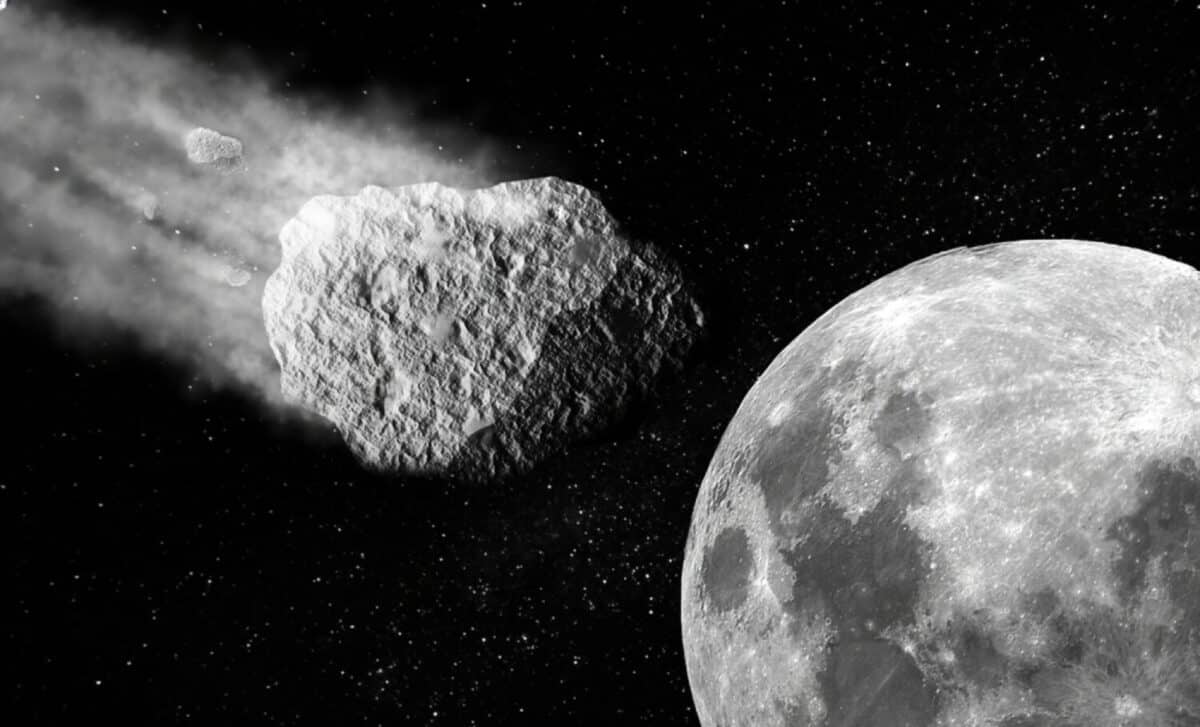
A recently discovered asteroid, about the size of a small building, could strike the Moon on December 22, 2032. While the probability remains low, scientists say the potential fallout could be visible from Earth, and possibly affect satellites and astronauts.
The object in question, named 2024 YR4, was first identified in December 2024. Since then, its trajectory has been closely studied, and though early concerns of an Earth impact were dismissed, a different scenario has gained attention: a lunar collision with surprising implications.
Visible From Earth, Powerful On Impact
At a recent meeting of the American Geophysical Union, researchers raised the possibility that a Moon impact could scatter a wave of tiny meteorites into near-Earth space. While the chance of a direct hit stands at roughly 4 percent, there is an estimated 1 percent likelihood that such an impact would also send debris outward, posing risks to satellites in orbit and even future crewed missions, according to Science News.
If 2024 YR4 hits the Moon, the collision would release an enormous amount of energy, equivalent to 6 million metric tons of TNT. That’s about 400 times the explosive power of the atomic bomb dropped on Hiroshima, as noted by NASA aerospace engineer Brent Barbee.
According to astronomer Patrick King of the Johns Hopkins University Applied Physics Laboratory, the explosion could be seen “should probably be visible [from Earth] depending on the local viewing conditions,” particularly from Hawaii and parts of the western United States. King presented simulations estimating that 86 percent of potential impact points would fall on the near side of the Moon, making visibility more likely.
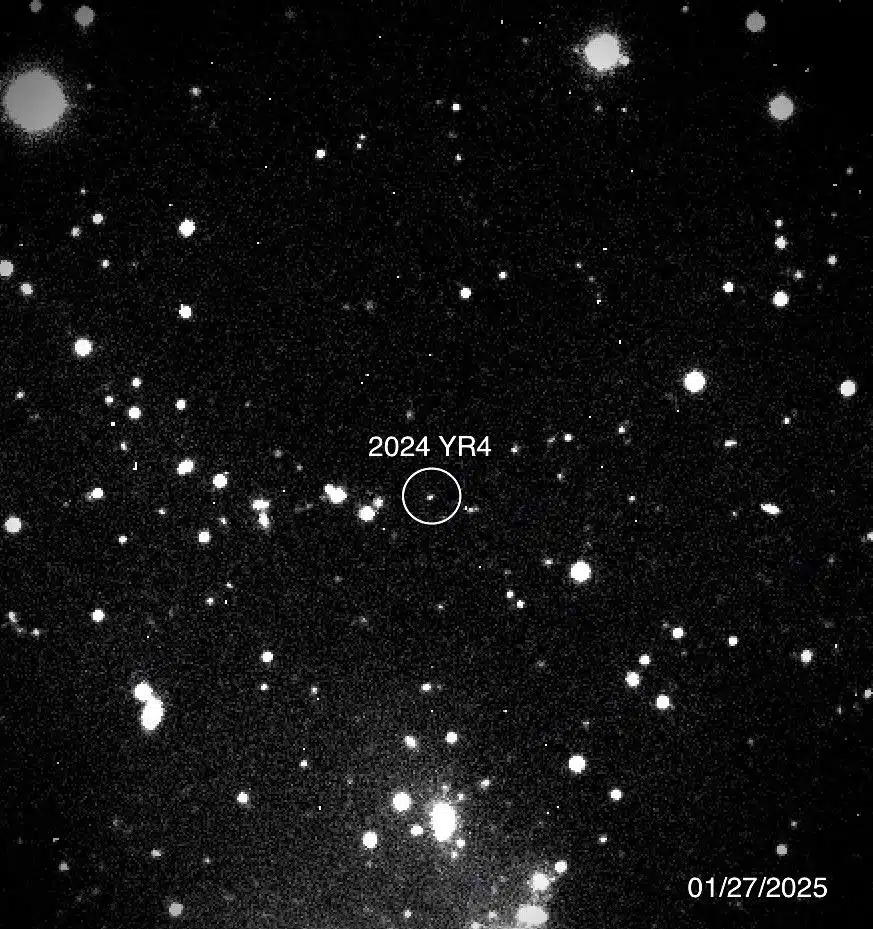 Asteroid 2024 YR4. Credit: NASA
An Outsized Problem For A Modest Asteroid
Despite its relatively small size, about 60 meters across, 2024 YR4 presents significant challenges. Its mass and structure are still uncertain, making it impractical to deflect using current space defense methods.Barbee outlined during the annual session,that while a direct deflection may not be feasible, there’s still the option of using a fast-moving impactor or even a nuclear device to break the asteroid apart.
But timing is critical: any such intervention would need to take place at least three months ahead of a potential impact. He also emphasized the need to develop and launch a reconnaissance mission to be developed and launched in the next few years, if serious action is to be taken.
“If there are any missions to YR4, they would essentially need to start their development very, very soon,” Barbee warned during his presentation.
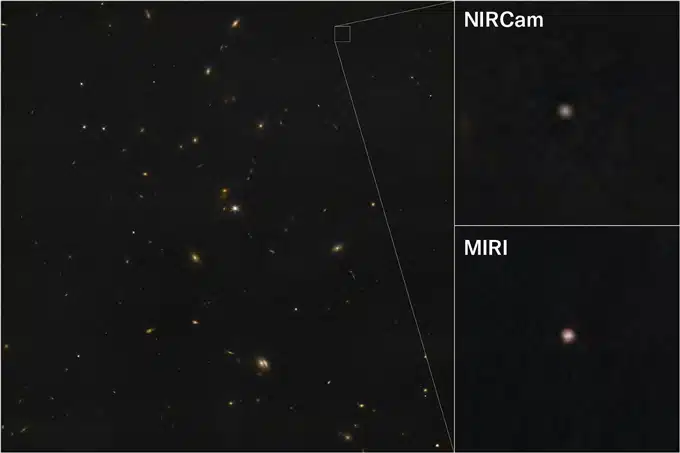 In March 2025, the James Webb Space Telescope captured images of 2024 YR4, giving researchers an initial idea of how big the asteroid might be. Credit: NASA, ESA, CSA, STScI, Andy Rivkin/APL
JWST Poised To Confirm Or Dismiss Moon Impact Scenario
The next opportunity to improve estimates of the asteroid’s path could come in February 2026, when the James Webb Space Telescope (JWST) is scheduled to observe 2024 YR4. According to Barbee, these observations might significantly refine the current impact probabilities, possibly even raising them, but they may also rule out the threat altogether. If, for any reason, the JWST cannot complete this observation, decisions may have to be made under significant uncertainty.
Early analysis of the asteroid used JWST’s NIRCam and MIRI instruments in March 2025 to roughly gauge the asteroid’s size, as reported by Science News. These images contributed to refining its trajectory and shifting attention away from Earth as the target. But with the Moon now in focus, the margin for error remains slim, and time, limited.