- Regulations aim to protect environment and ensure safety
- Support for large-scale solar projects to end in FY2027
- Perovskite solar cell development to receive increased backing
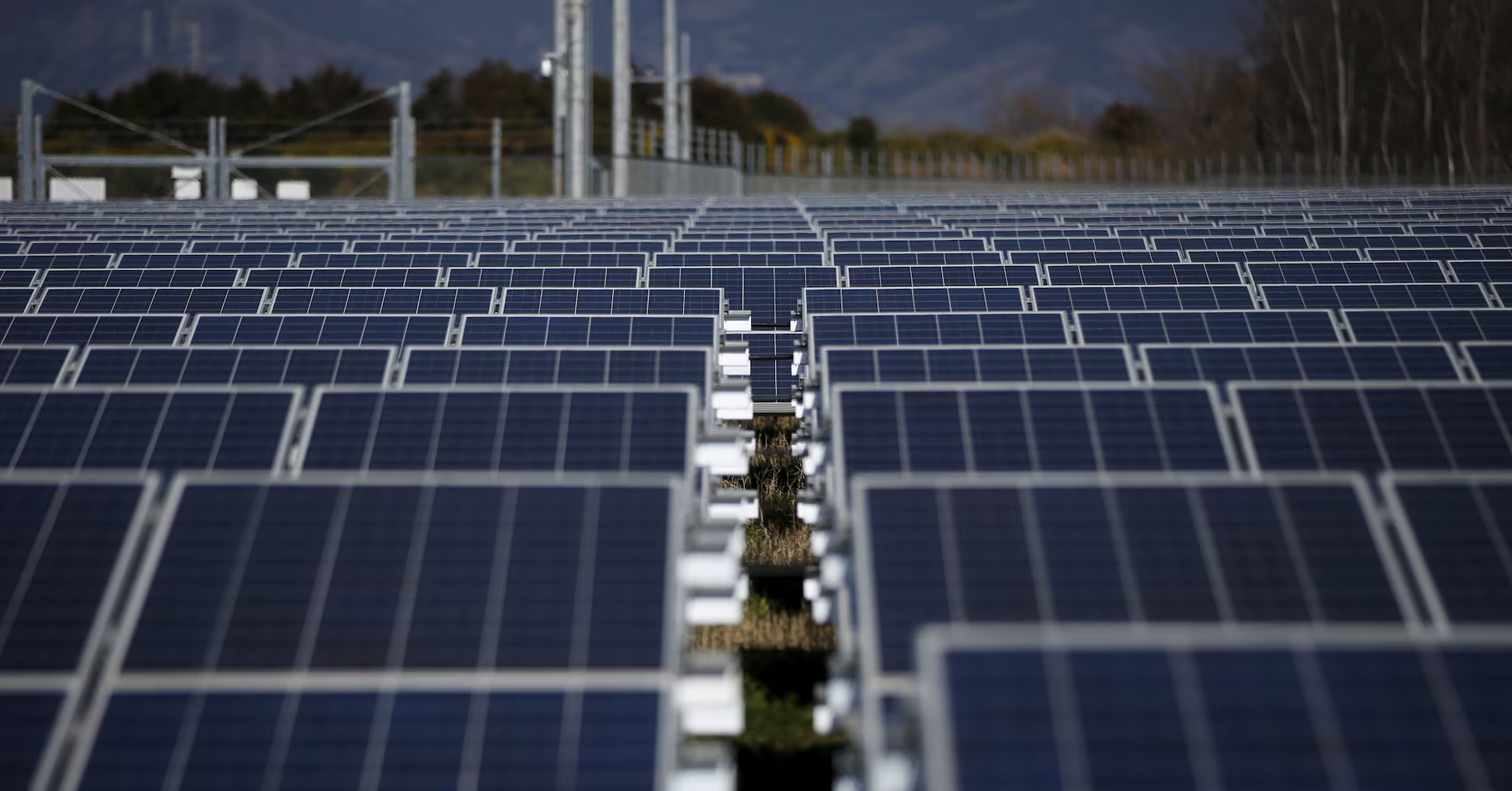
TOKYO, Dec 24 (Reuters) – The Japanese government will tighten regulations and end financial support for large-scale solar power projects to protect the natural environment, ensure safety and preserve landscapes, government officials said.
The move is part of a package of countermeasures targeting mega-scale solar farms endorsed on Tuesday and aligns with Prime Minister Sanae Takaichi’s stance calling for limits on large solar projects. She has argued that many panels are made overseas, notably in China, and that mega-solar installations risk damaging Japan’s scenery and natural environment.
Sign up here.
Combined with growing uncertainty surrounding offshore wind projects due to rising costs and developer withdrawals, a potential slowdown in solar farm development could further dampen the pace of renewable energy growth in Japan, the world’s fifth-largest carbon dioxide emitter.
The government is considering discontinuing support through the feed-in tariff (FIT) and feed-in premium (FIP) schemes for ground-mounted, large-scale commercial solar power generation starting in the fiscal year beginning in April 2027, an official at the industry ministry said.
Under these schemes, renewable power producers are either guaranteed a fixed purchase price for electricity over a set period or sell power on the market while receiving a premium on top of the market price.
Details, such as the exact project size threshold for terminating support will be finalised later, the official said.
Support for existing facilities and residential installations will continue, while backing for the development of perovskite solar cells will be strengthened. Perovskite solar cells are a next-generation solar technology developed by Japan and the government aims to promote the development.
The government will also consider expanding the scope of environmental assessments. Currently, solar projects under 30 megawatts are not subject to national assessments, but it will consider broadening this requirement, another official at the environment ministry said.
The discussions follow a series of disputes over mega-solar development projects near Kushiro Wetland National Park in Japan’s northern island of Hokkaido and other areas. The government, led by the industry and environment ministries, began talks on strengthening regulations in September.
Reporting by Yuka Obayashi
Editing by Tomasz Janowski
Our Standards: The Thomson Reuters Trust Principles., opens new tab