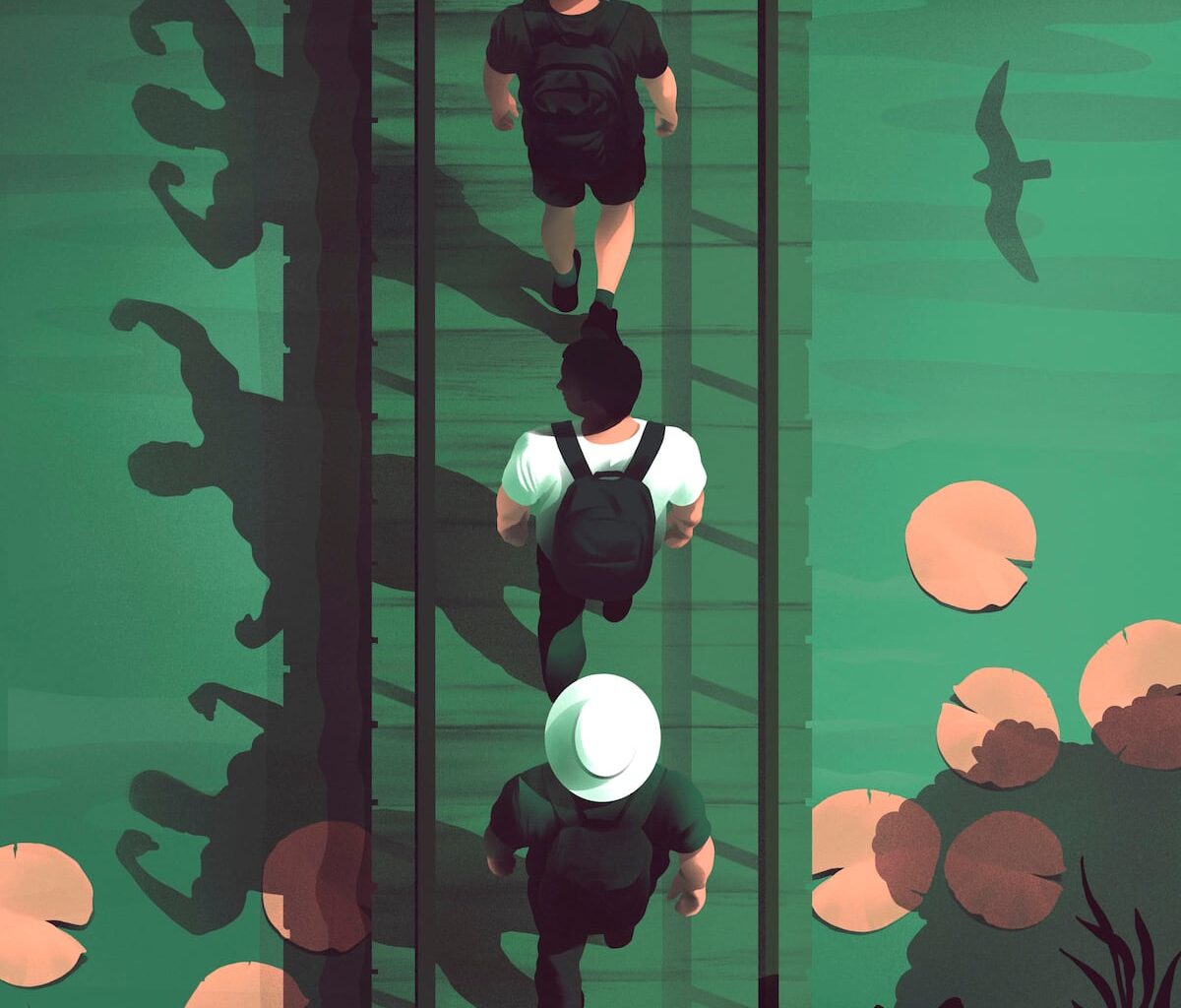
What are men escaping (for a week or, at most, for 10 days) when they go on a retreat in places where no one knows them? Places where no one is aware if they are CEOs, freelancers or rich heirs; if they’re family men, uncompromising bachelors or divorcees, hetero, gay or bisexual? It would appear, according to several folks who are knowledgeable on the subject, that they are running from their environment, from the roles they have been assigned, and from the people who remind them of all of the above. “They are looking for a safe place where there are no expectations of them, where they don’t have to maintain a predetermined attitude and where they can let their guard down,” says Elisa Errea, founder of The Human Studio and The Wine Studio, who organizes retreats and helps many men to draw their “stress maps,” which serve as X-rays of their weaknesses.
Traditional masculinity as defined by stoicism, solvency, self-confidence and the glorification of always being busy is being realigned under the lens of mental health, empathy and self-care. This kind of messaging can awkwardly co-exist on sites like TikTok with toxic hyper-masculinities embodied by the likes of Andrew Tate and the crypto bros, who dare each other to up their burpees count. In contrast, these friendly networks encourage men to ask for help, to take care of themselves and accept their emotional vulnerability. In cities like London and New York, hipster barbershops have mutated into wellness spaces where, in addition to the usual cosmetic grooming services, personal growth talks are offered and retreats are organized. Figures from the Global Wellness Institute indicate that up to 95% of men have shown some degree of interest in their emotional state during the last year.
The Financial Times says that wellness is the new status symbol among successful men. Conversations among financial gurus have less to do with Lamborghinis and frequent flier miles and much more with detox retreats, ozone therapy, hyperbaric chambers and genetic testing. If before, success was defined by being busy, now it’s about having time to reset at least two times a year.
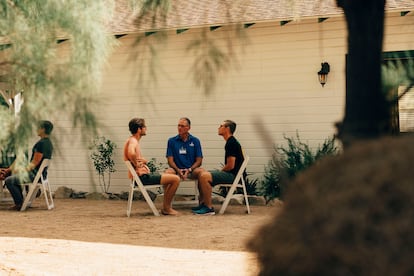 Evryman Retreat, in the United States, where men can purge their toxic emotions.Evryman
Evryman, a men’s wellness platform founded in 2016, was among the first to switch up men’s traditional weekend plans, presenting eight-day retreats in Canada’s Glacier National Park, near the U.S. border. The program, directed at people who live an accelerated lifestyle, organizes participants into groups of 15 to 20 men, and includes four hours a day of hiking, two of which take place in absolute silence, plus guided conversations about the past, relationships, work, and personal issues. An entire day is dedicated to trying to understand and control fits of angers, followed by meditation sessions and ice baths for at least three minutes, a kind of therapy that is well-known on Instagram and TikTok by the moniker “cold plunge”, and which promises to elevate energy, concentration and one’s sense of self-efficacy.
The type of man who attends the experiences varies, but nearly all participants are going through a crisis, whether it’s a separation, an ending, the death of a parent or entering a new decade, age-wise. “Many times, they’ve had an anxiety attack that they confused with a stroke, or they think they can’t control their anger or that they’ve ended up all alone,” says Errea, adding, “Although nothing particular has to happen to you to go on a retreat.”
Luxury wellness centers have found a thriving customer base among businessmen and CEOs. They label them “leaders” and promise them a reset that will return them to the grind fresh, agile and energetic, with their hormones balanced and if necessary, treatment underway for obesity or to stop hair loss (two of men’s great fears, alongside erectile dysfunction). These retreats for “top-performing businesspeople” are like spiritual MBAs where men can refine their social skills, train their emotional connections and try to knock down barriers that prevent them from showing vulnerability. At the SHA Wellness Clinic in Alicante province, in the Spanish Mediterranean, such men can be seen relaxed, wrapped in white bathrobes, discussing their progress on the cell phone and screen detox program, or feeling challenged by the anti-inflammatory diet that restricts certain stimulants, like alcohol and coffee. They sign up for the Leader’s Performance program — prices start around $4,000 — where their sympathetic nervous system activity is regulated, they’re taught to manage stress and to improve the quality of their sleep. It’s one of the programs with the highest rate of returning customers, the clinic reports.
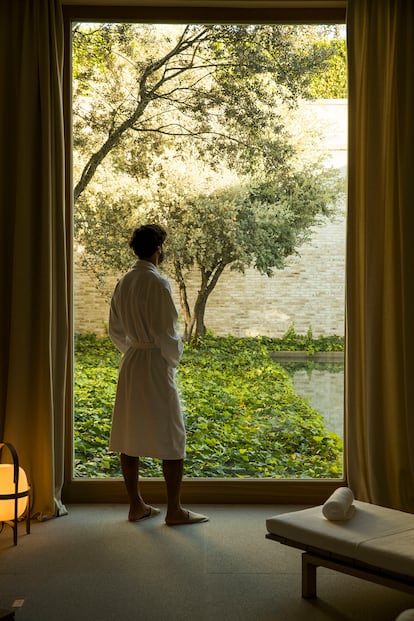 Relaxation area at the Santuario Wellness & Spa Abadía Retuerta in Valladolid, a complex that offers men’s retreats and programs to alleviate chronic stress.Abadía Retuerta
The figure of the solitary leader is one of the subjects approached during these retreats. “You can have the most toned biceps in the world and the biggest checking account, but if you are emotionally isolated and socially disconnected, you won’t be happy,” a therapist might tell participants. According to the Loneliness Barometer, in Spain 20% of men suffer from “unwanted loneliness” and experts believe that figure could be much higher. And although figures for women are similar, it’s believed that cultural barriers prevent men from asking for help.
A retreat that takes participants away, physically and socially, from their regular environment, to a “safe space” to be fragile and imperfect in front of equally vulnerable strangers. “Retreats often take place in exuberant natural areas that generate a tribal atmosphere that leads people to connect with their deepest essence and escape the accelerated digital environment that our personal and professional lives tend to take place in today,” says Elisa, who organizes retreats at the Casa de Indianos (Liandres, Cantabria, Spain) and at Abadía Retuerta (Sadrón de Duero, Valladolid, Spain).
Located in Campwell Woods, a town hidden away in the Wiltshire forest in the United Kingdom, is the Both Sides retreat, which calls itself “a physical, emotional and spiritual journey created for men of all ages and backgrounds” designed so that participants can “rediscover and redefine masculinity.” It promises to “foster community and connection with ourselves and the earth that we walk on.” The retreat was co-founded in 2020 by Anthony Mullally, a retired Irish rugby player who wanted his teammates to stop eating meat. Here, retreats last for three nights and seek, according to promotional materials, to break down masculine stereotypes and re-establish men’s integrity through mindfulness exercises.
Other big fears can lead men to consider a retreat, among them hair loss and declining testosterone levels. In such cases, retreats are led by doctors, who monitor their meals and do at least two assessments meant to help balance hormonal levels. Spoiler: this is not cheap. “There’s an enormous gap in men’s hormonal health, there’s no awareness about testosterone fluctuations and their impact on sexual desire and aggression. Menopause is discussed widely these days, but men are surprised when they see the shifts in their testosterone. They don’t even measure it,” says Errea.
Insomnia and chronic stress are two common symptoms that Mike Dos Santos has seen in the men who come to the Abadía Retuerta Wellness Sanctuary. José Calderón, CEO of Organic & Vegan Signature Spa in downtown Barcelona, thinks that men go to a spa or retreat because of symptoms that worry them, like muscle tension and the consequences of long-term stress, like grinding teeth, chronic muscle contractions and mental fatigue.
Is an absence of women an essential part of a men’s retreat? It would seem that the feminine presence can stimulate expectations of traditional gender roles and the associated fears that men look to escape. They would stop seeing the retreat as a safe space. Although Errea, who also organizes mixed retreats, thinks that the true success of a retreat lies in trust. “The most important thing is to create a tribal atmosphere among everyone,” she says.
Sign up for our weekly newsletter to get more English-language news coverage from EL PAÍS USA Edition