
I wish I could say that Christmas was a holiday period I look forward to but I would be lying if I said it wasn’t a time of slight dread.
My parents divorced when I was seven in 2009, so Christmas has always been complicated. When I was younger, I would spend Christmas with one parent and New Year with the other. However, as I have got older, I now decide how I will divide my time over Christmas, which brings with it a certain amount of stress.
Growing up in London I was surrounded by friends facing similar quandaries. At my primary school, the split of divorced/separated to together parents was about 40/60. Excuses such as “Sorry I left my PE kit at Dad’s” or “Miss I need some paper: I left my exercise book at Mum’s” were uttered often.
In my group of best friends, two of us had parents who were together and two had parents who were divorced. Some of my friends had parents who could still spend Christmas together despite their separation, others did Christmas morning with one parent and Christmas evening with another, others just did their Christmas with one parent always, and so on.
Where and when I grew up, parental divorce and separation were topics open for discussion. In Ireland, where I’ve been living for five years since moving to Dublin for college, it’s different.
“I find one problem with having divorced parents is that Christmas ends up lasting for ages, I’d rather just celebrate for a day,” says Daire. From Kilkenny, Daire (21) is one of few people my age in Ireland who would talk to me about having separated parents.
Asking Irish friends on a group chat if they knew anyone who had divorced parents I got back, “Mine are still married and so are my friends’ parents from home” from a friend who grew up in rural Sligo. “Same here, sorry … Trying to think of anyone I know whose parents are divorced,” texted another friend who grew up in central Dublin.
These friends were all born after divorce was legalised in Ireland in the 1990s, but still I can count on one hand the number of people I have met of my own age who have divorced parents.
When I eventually found Irish people who had divorced parents who seemed happy to share their experiences, a pattern emerged. Those who checked with their parents if it was okay to speak to me about this topic were told it was not. They decided not to speak to me for fear of upsetting their families.
It’s incredibly emotionally draining trying to meet everyone’s expectations
— Mick
Some mentioned that their parents’ divorce was a sensitive topic for their grandparents. It seemed as if divorce or separation was a tolerated fact, but not accepted or endorsed between generations. Being from a small country adds another layer of complexity as it means that people are more likely to be identifiable.
This year will be the first year that Mick (23) and Ella* (21), both from Dublin, are splitting between their respective sets of parents, who only separated this year.
Though Christmas is fast approaching, Mick is still unsure about how he will be dividing his time. “They’re both hurting and want me around, and I’m stuck in the middle trying not to make either of them feel worse,” he says. “I feel guilty no matter what I decide, and it’s incredibly emotionally draining trying to meet everyone’s expectations.”
Ella, whose mother is Irish and father is Italian, will be spending Christmas in Italy with her father’s family.
“My nonna is dying and this will be my last Christmas with her. I am also doing a Christmas dinner here with my mum before I leave. I’m sad, scared of it all, while also trying to enjoy the holiday. I’m worried my mum will be lonely. I’m worried Christmas will be awkward,” Ella says.
Both Mick and Ella have fond memories of childhood Christmases and are anxious about the feelings that the festive period may conjure up this year. “I used to love Christmas. It meant visiting my family in Italy or having a proper Irish Christmas here – presents, good food, cultural traditions and time with my cousins. I love everything about Christmas,” Ella says.
Right now, Mick’s ideal Christmas looks like one where he doesn’t feel responsible for keeping the peace in his family: “Just a day where everyone is okay, even if we’re not all together,” he says.
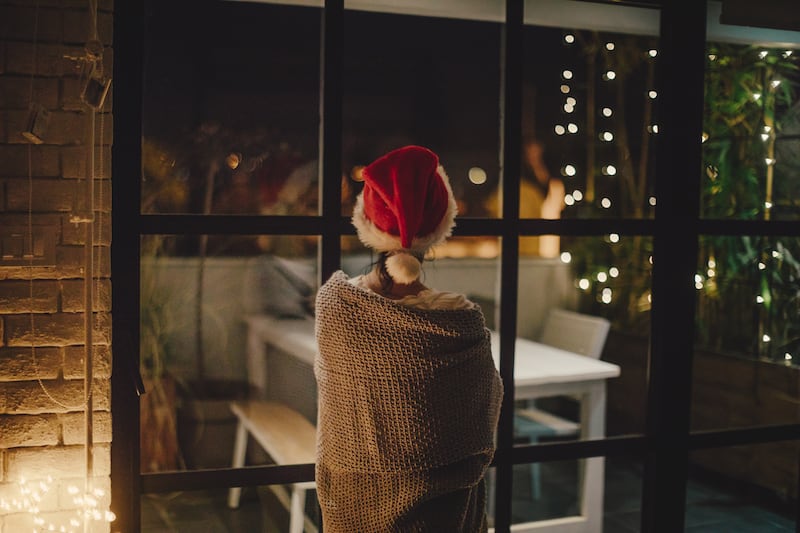 This idea of double of everything is often presented to children of separated parents as a huge positive, as if having separated parents automatically means that one gets two Christmases. Photograph: Getty Images
Ella believes that, because divorce is still unusual in Ireland, those around her struggle to have empathy for what she is going through. “People can’t conceptualise how it feels to have divorced parents. Sometimes I feel so alone. People can be so self-obsessed and dread spending time with their family, showing no gratitude for what they have,” she says.
Similarly, Mick feels that having parents divorce when you are older doesn’t make it any easier, and that’s a misconception some people have. “There’s grief in losing the version of family you grew up with, and Christmas makes that loss louder. Balancing two households, two sets of emotions and your own feelings is exhausting. It’s not just logistics – it’s mourning what used to be,” he says.
For Lauren Halligan, who’s 38 and from Swords in Co Dublin, having separated parents at Christmas is all she has ever known. They divorced when she was four years old: “As soon as it was legal,” Lauren says. “They got divorced around 1998/1999.”
As a child, Lauren would have two Christmases on the same day. She would open her stocking and presents and then have a Christmas lunch with her mother’s side of the family in the morning and early afternoon, before being picked up by her father in the evening for a big Christmas meal, stockings and presents. She would typically then return to her mum’s house at some point on St Stephen’s Day.
“As I grew up I did find it taxing to have to get up and out after Christmas dinner when all most people want to do is curl up in front of the telly with a box of celebrations,” Lauren says.
We have had to re-strategise to make sure we get to see everyone
— Lauren Halligan
She believes that having divorced parents who were very cordial and flexible is what has made Christmas such an enjoyable time for her. “My folks get on great. They never made it awkward or fought over who got what in terms of Christmas. They still exchange Christmas cards,” she says. “My dad and stepmam have always been adamant that we could change the plan as soon as it did not suit me any more.”
When Lauren was in her mid-20s she asked to change her Christmas routine so that she would spend Christmas Day with her mum and stepdad and then have another Christmas with her dad and stepmum the next day. “I started going out to my dad’s on St Stephen’s morning for brunch and presents. I found that it took the pressure off as we were all in great form and not tired or full of turkey,” she says.
Since welcoming her first child three years ago, her family’s Christmas routine has changed once again. “Since the kids came along, they’re three and almost one, we have had to re-strategise to make sure we get to see everyone,” she says.
The most stressful part of Christmas for Daire is the lead up when plans are being made and she and her siblings have to figure out how they will fit into everyone’s itinerary.
“Over the last few years I have had some pretty rough Christmases. There have been many years where I haven’t wanted to celebrate at all, and would have preferred to just be alone for the holidays,” she says.
“I think having divorced parents makes the holidays more stressful and emotional, especially when the divorce or separation is fresh. Usually, we spend a few days with my mum and her side of the family and a few days with my dad and his side.”
I find it much easier to approach [Christmas] with lower expectations
— Daire
The week of Christmas itself involves quite a lot of travel for Daire and her siblings as her mother’s and father’s families live on opposite sides of the country. The siblings mostly travel by bus or train from one family to another, and due to the often disrupted nature of Irish travel infrastructure, especially in rural areas, travelling between places can be time-consuming and exhausting.
[ ‘Trust me, I’m a family Christmas expert and these are the rules to live by’Opens in new window ]
When asked about what her ideal Christmas would look like, Daire says she looks forward to a time when she and her siblings would live somewhere that allows them to host Christmas, as they are currently students and recent graduates. She would like to be able to just stay in one place for the whole Christmas period with no travelling required.
The notion that every person who has divorced or separated parents has “two Christmases” is one Eva (23), from Dublin, wishes to dispel. This idea of double of everything is often presented to children of separated parents as a huge positive, as if having separated parents automatically means that one gets two birthdays and two Christmases, and therefore more presents and attention overall. This idea also presumes that parents are in the financial position to give their child as many gifts or presents as they used to when they were with their partner.
Eva’s parents separated before she was born and were never married. “My typical Christmas is just my mum and I at home. When I was younger, I would alternate who I spent Christmas with each year,” she says. “Since my grandparents on my mum’s side have both passed away, I now spend the day with her.”
She feels she has the balance right now that it’s more settled, with Eva travelling to her father’s family on St Stephen’s Day. “When I was younger, Christmas was hard because of the feeling of having to choose between spending Christmas with my mum or dad. It always felt like I was going to disappoint one side,” she says. Now that she has moved past that period, she really enjoys Christmas.
[ How to survive Christmas with a difficult familyOpens in new window ]
Similarly, although Christmas is not the easiest time of year for Daire, her attitude towards it has improved as she has grown older. “I find it much easier to approach with lower expectations and the idea that this is just an opportunity to visit my family,” she says.
“Now that my parents have been separated over 10 years, it doesn’t get to me as much and we’ve settled into our own routine of enjoying the holidays.”
*Some names have been changed