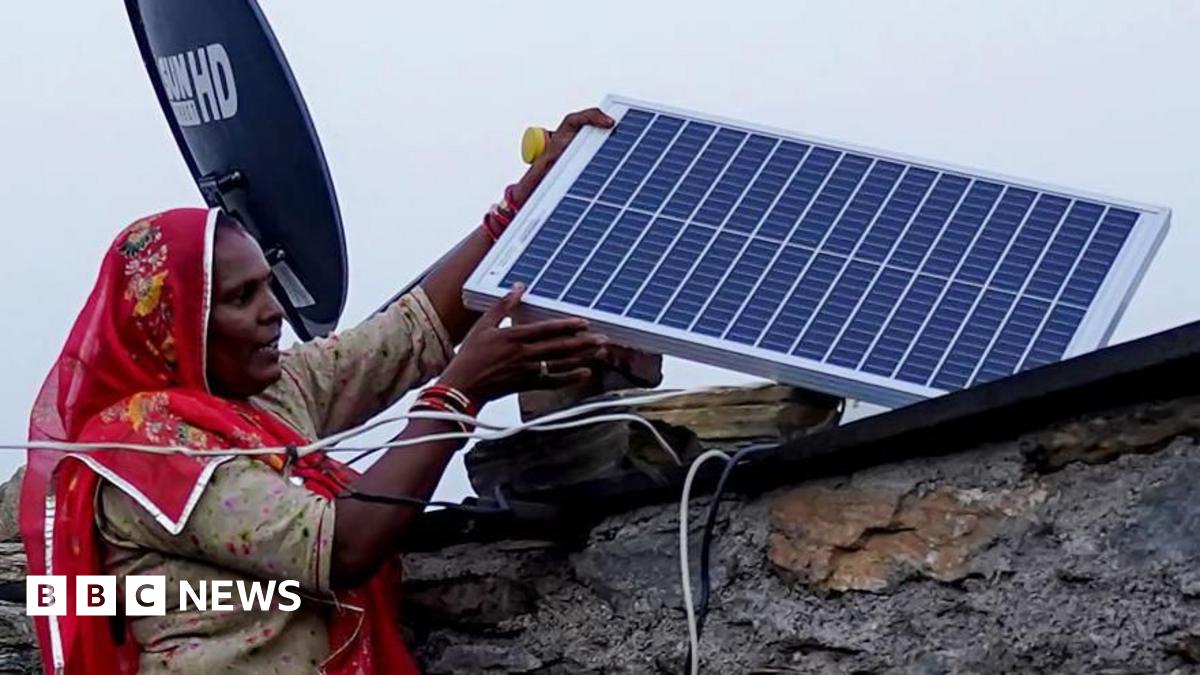
India has no official data on solar waste, but a study estimated around 100,000 tonnes by 2023, rising to 600,000 tonnes, external by 2030. For now, the volume is small, but experts warn the bulk is yet to come – and without rapid recycling investment, India could face a growing waste crisis.
A new study by the Council on Energy, Environment and Water (CEEW) estimates that India could generate more than 11 million tonnes of solar waste, external by 2047. Managing this would require almost 300 dedicated recycling facilities and an investment of $478 (£362m) over the next two decades.
“Most of India’s large solar parks were built in the mid-2010s, so the real wave of waste is coming in 10 to 15 years,” says Rohit Pahwa of energy company Targray.
India’s solar-waste projections mirror global patterns: the US, external may generate 170,000–1 million tonnes and China nearly one million tonnes by 2030, following rapid solar expansion in the 2010s.
The policy landscape, however, differs significantly.
In the US, solar-panel recycling is mostly market-driven under a patchwork of state rules. China’s system, like India’s, is still developing and lacks a dedicated regulatory framework.
In 2022, India brought solar panels under e-waste rules, making manufacturers responsible for collecting, storing, dismantling and recycling them at end of life.
Experts say enforcement is uneven, especially for home and small-scale panels, which make up 5–10% of installations. Though modest, these panels can still generate substantial waste, as they are harder to track, collect, and recycle.
Damaged or discarded panels often end up in landfills or with unauthorised recyclers, where unsafe methods can release toxic materials. The BBC has contacted India’s renewable energy ministry for comment.