Ciaran Mullooly has no problem admitting he spent his first few months as an MEP “lost” in the European Parliament.
Navigating the confusing inner workings of the 720-seat parliament is daunting for a first time MEP, particularly a political newcomer. “The first six months was very difficult, but I love it now,” Mullooly says.
Even physically finding your way around the parliament, which sits in Brussels and Strasbourg, could be tough. “I know most of the rooms at this stage, but not them all,” he says.
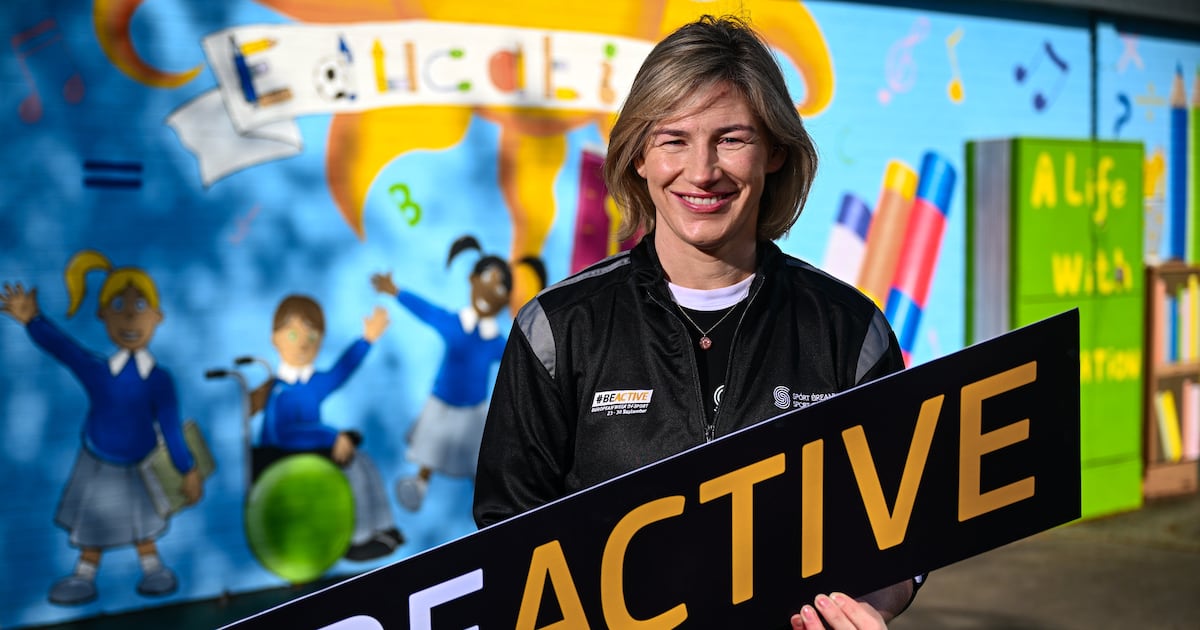
Nina Carberry laughs when recalling an early faux pas after her election as a Fine Gael MEP, when trying to get a short speaking slot in the parliament.
Previously politicians could wave to whoever was chairing proceedings to jump in and make a short point, known as the “catch the eye” rule.
Carberry, armed with speaking notes, was keen to make her first intervention in parliament, so duly threw her hand up and started waving.
She remembers getting a funny look from Mairead McGuinness, Ireland’s EU commissioner at the time, who was in the chamber. “I’m like, oh my god, why are they looking at me weird?” the former jockey says.
Unknown to her, the parliament’s rules had recently changed, requiring MEPs to first press a button to get in a queue to speak. “I never made that mistake again,” she says.
“These are the things you learn, you have to get to know the process. It was quite embarrassing at times, but we got there in the end,” Carberry says. “I feel like I’m settled in now”.
The adjustment to politics for the former Dancing with the Stars winner was a “steep” learning curve. “There’s no training … When you come here, it’s huge,” she says.
In her previous career as a jockey Carberry says she learned how to keep her elbows out in a male-dominated sport. “You could probably argue that a lot of politics is like that as well,” she says.
Joined
Mullooly says things got a lot easier when he joined Renew, the European political grouping that includes Fianna Fáil, French president Emmanuel Macron’s camp and several other centrist parties. The Fianna Fáil MEPs “initially weren’t that keen” on him being taken into the grouping, Mullooly says.
Independents have been a political fixture of both government and opposition for years in the Dáil. In the European Parliament, though, nearly all of the horse trading goes on between the various groupings, so belonging to one matters when it comes to getting on the right committee, or bringing forward legislation.
The parliament is just one piece of the complex puzzle. You also have the European Commission, who initially propose laws, and the Council of the EU, the institution where the 27 national governments have their say.
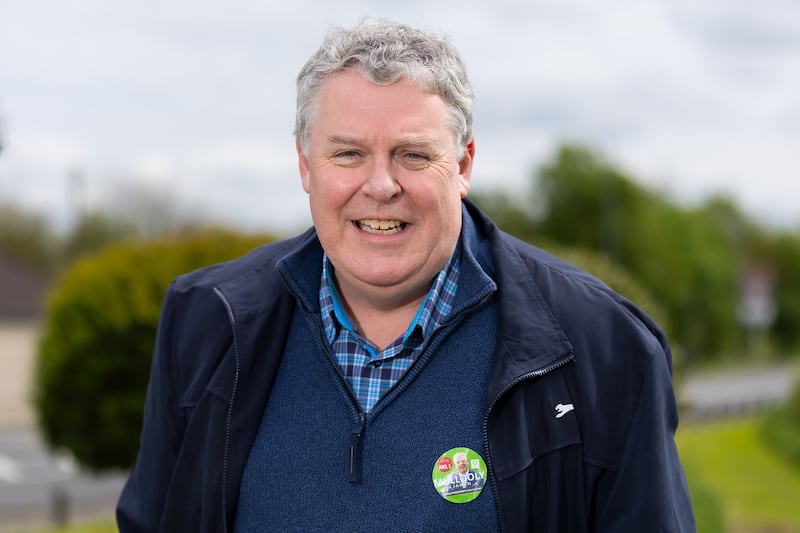 MEP Ciaran Mullooly
“I think the problem is there are too many senior people in the commission who have their own impression of how Europe should be run, they’re not elected,” Mullooly says.
For Carberry, as a Fine Gael MEP she was automatically in the largest grouping in parliament, the centre right European People’s Party (EPP).
Ideologically the group has shifted further rightward and routinely teams up with more extreme populist parties and the far right, to pass or kill laws. That has left Fine Gael in an awkward position.
Carberry says she felt “uncomfortable to speak up” during internal EPP debates about the war in Gaza, where Ireland’s view was a minority one.
The need to spend a lot of time back home meeting constituents is not a challenge MEPs from many other countries have to contend with, due to electoral systems that place more emphasis on parties than individual candidates.
Most Irish MEPs will be back in Ireland for constituency work on the Friday of any week.
Catching the Monday morning red-eye flight to Brussels meant leaving the house at 2am, Mullooly says. “This year I’m coming out more on Sunday evenings, it’s just easier on the body,” he says.
The Independent Ireland MEP says he is still “living out of a suitcase” during the week, staying in hotels or serviced accommodation. He has looked at sourcing a house in Brussels, but hadn’t yet got around to pulling the trigger yet. “I have to really get the act together,” he says.
Both Carberry and Mullooly comment on the vast size of their Midlands North West constituency, which includes 16 counties and stretches from Kildare across to Galway and up to Donegal.
“If it’s not too busy in Brussels I’m going to try now and stay at home for the Monday, whether it’s visiting a school or visiting a business nearby, and then get on the plane,” Carberry says.
Budget
One of the big political fights in 2026 will be over the EU’s next seven-year budget, which will be negotiated over the next year and a half.
The parliament is up in arms over the commission’s plan to roll a whole range of existing EU funds, from CAP farm subsidies, to rural development grants and funding for roads, into national baskets of money each government would be responsible for doling out.
The proposed €2 trillion budget is overly focused on defence and had been “designed by the commission to reflect on what eastern European countries are saying”, Mullooly says.
“The European model has to represent the full share of all the 27 member states, not just seven or eight who have genuine, pressing concerns,” he says.
Carberry says she was “disappointed” at proposed changes that would ringfence less funds for farmers.
“I also know the pressures that are on the budget, whether it’s an increase in defence and security, and knowing that countries have to do that to protect our borders,” she says.
The parliament would hopefully be able to push for stronger guarantees that more funding would come back to rural areas, the Fine Gael MEP says.
The Government would play a “big part” in steering the negotiations during the second half of 2026, she says, a reference to Ireland holding the rotating EU presidency, an influential deal-making role.
Protecting children online and stricter regulation of vaping products were two things Carberry says she would like to see the EU do more on.
“I’ve two young girls at home,” she says. There was no “silver bullet”, but mandatory age verification to make sure young children were not using social media platforms would be a good start, she says.
MEPs should be a bridge between what was going on inside the EU system and local organisations or constituents, Mullooly says.
“If at any point I’m saying ‘I’m wasting my time here’, I won’t run for re-election, because I’m one of these people I have to see some sort of practical result,” he says.
“It’s not a secure job and you have to deliver,” Carberry says. “I wouldn’t like it to stop now anyway. So I’m enjoying it. I enjoy my job, I feel like I’m getting better at it,” she says.