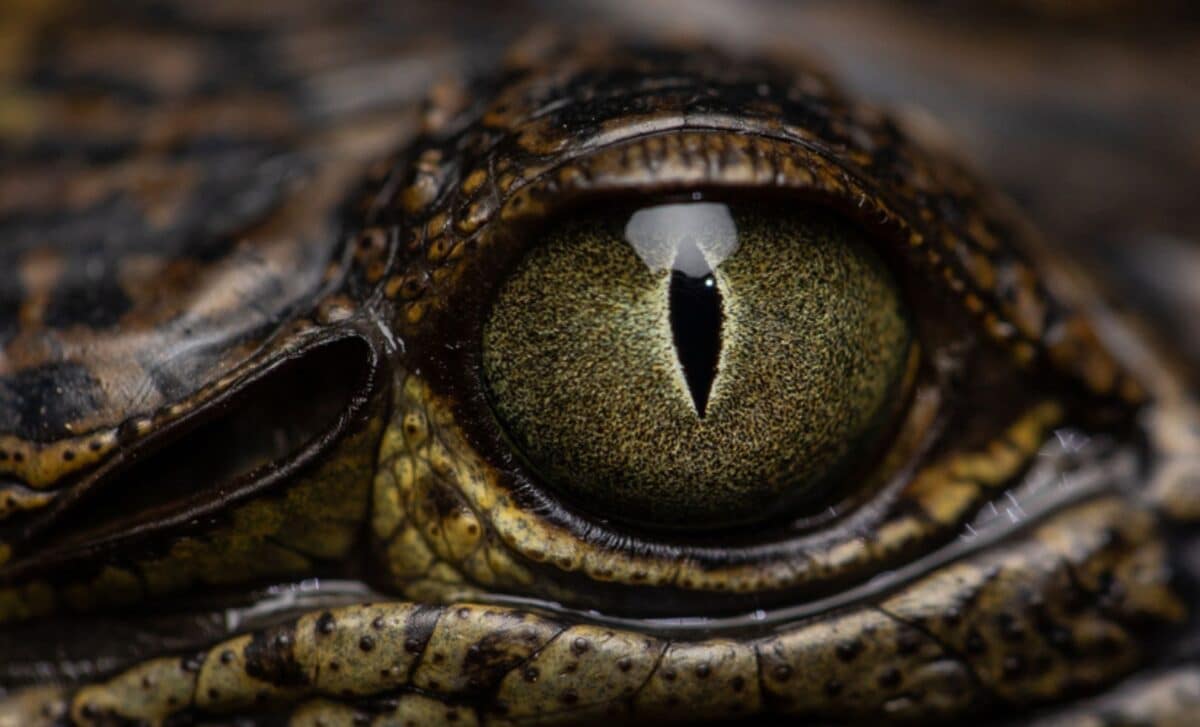
A snake with deep black skin and large, dark eyes has been confirmed as a newly identified species on Misima Island in Papua New Guinea. The animal, now formally named Dendrelaphis atra, was found during a scientific survey of reptile populations in the Milne Bay Province, a region recognised for its high number of endemic species.
The species was described in a peer-reviewed study published in Zootaxa in April 2025 by Fred Kraus, a herpetologist at the University of Michigan. His work documents the identification of four previously unknown species of tree snake, each restricted to a separate island within the Louisiade Archipelago.
Misima Island, where D. atra was first encountered, has been subject to extensive land use over the last century, including commercial gold mining. Despite this disturbance, the island continues to host unique wildlife, suggesting that its ecological systems remain incompletely documented.
A Distinct Reptile With Unique Pigmentation
Dendrelaphis atra belongs to a group of arboreal, non-venomous colubrid snakes distributed across Southeast Asia and northern Australasia. What sets this species apart is its nearly uniform black colouration in adulthood, coupled with an unusually smooth, slender body form and prominent black eyes.
The snake displays ontogenetic melanisation, a developmental change in colour over time. Juveniles are pale grey-brown, but darken significantly as they mature. This full-body pigmentation is uncommon among related species and may be linked to specific habitat or behavioural traits, although further research is needed to determine its ecological role.
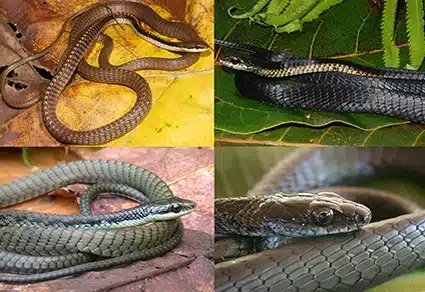 A Dendrelaphis atra, or atra tree snake. Photo from and shared by Fred Kraus
Initial specimens were located in a former mining zone on Misima Island, then later recorded in forest ridges and modified landscapes such as village gardens. These findings suggest that D. atra may be more flexible in its habitat use than some other endemic reptiles in the region.
The species name derives from the Latin word ater, meaning black. Detailed morphological comparisons published in Zootaxa confirm that the snake differs significantly from other members of the Dendrelaphis genus in scale patterns, coloration, and geographic distribution.
Island Endemism and Biodiversity Mapping
The Milne Bay Province is known for supporting high levels of biological endemism, particularly among reptiles and amphibians. Located in the southeast of Papua New Guinea, the area includes dozens of large and small islands that are often ecologically isolated. These conditions promote speciation, where isolated populations evolve into distinct species over time.
The discovery of D. atra, along with three other new Dendrelaphis species on Rossel, Sudest, and Woodlark Islands, strengthens this pattern. Each of these species is currently known only from a single island, and all were found in habitats that had received little to no previous herpetological study.
Although Papua New Guinea is recognised as one of the most biologically rich countries in the world, large portions of its fauna remain undocumented. Many areas have not undergone detailed biological surveys, in part due to difficult terrain, low population density, and limited research infrastructure.
The Louisiade Archipelago, in particular, remains underrepresented in global biodiversity databases. The 2025 study by Kraus builds on earlier efforts to characterise the reptiles of this region, contributing directly to broader understanding of island biodiversity in the South Pacific.
Implications for Conservation and Research
The presence of D. atra in both disturbed and natural habitats raises questions about its population status and resilience. Although the species has now been described, no estimates exist for its population size, distribution density, or long-term viability. Without such data, assessing its vulnerability to land-use change or climate impacts remains difficult.
Misima Island has experienced intermittent interest in mining redevelopment since the early 2000s. The rediscovery of species in post-extractive landscapes may inform future environmental assessments, particularly if proposed development projects are reactivated.
The documentation of this new snake also underscores the importance of morphological fieldwork in identifying species. While genetic analysis is increasingly used in modern taxonomy, the initial recognition of D. atra was based on in-person observations and physical comparisons with other known species.
More broadly, the discovery aligns with growing calls in the scientific community to expand biological inventory efforts in the tropics. Targeted fieldwork in island environments, even in areas with previous human disturbance, continues to reveal new species that had previously escaped scientific attention.