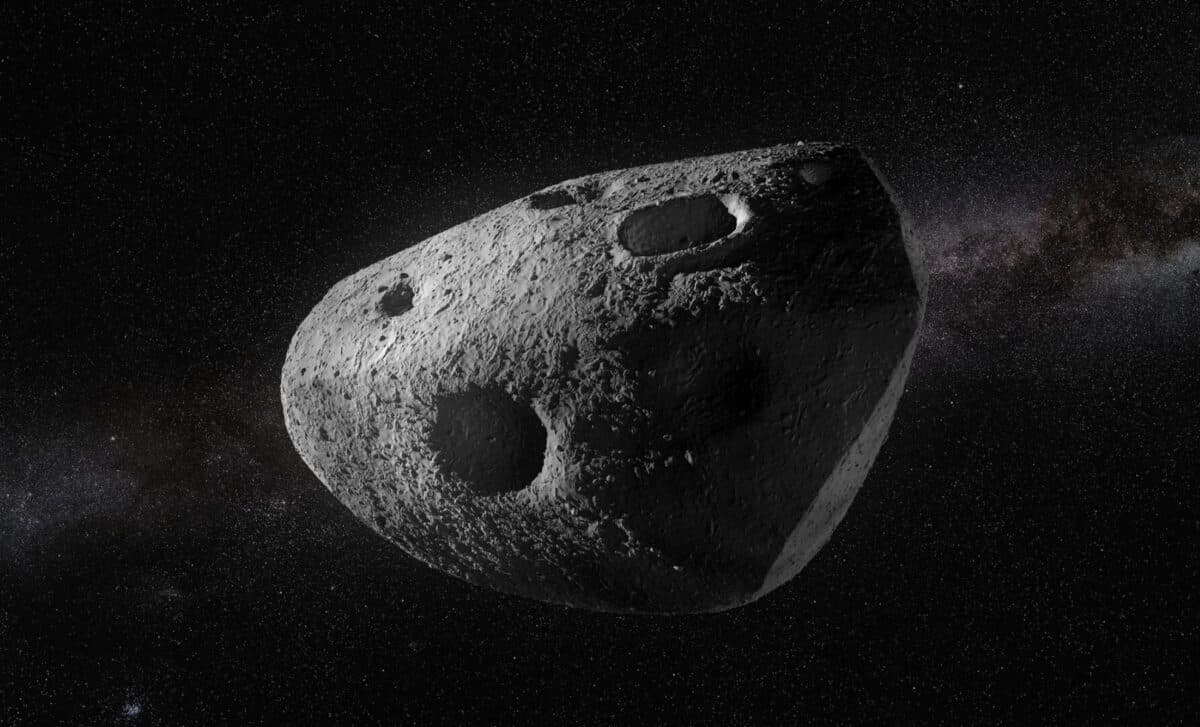
In 2029, the world will witness a rare celestial event when the asteroid Apophis, a 375-meter-wide asteroid. flies by Earth at an astonishingly close distance. To study this phenomenon, the European Space Agency (ESA) and Japan’s JAXA are teaming up for the Ramses mission, an international effort to observe how Earth’s gravity affects the asteroid. The mission aims to collect valuable data to advance planetary defense techniques, an area of growing importance in space exploration.
On April 13, 2029, Apophis will pass within 32,000 kilometers of Earth, about one-tenth the distance to the Moon. While this asteroid does not pose a direct threat to our planet, its close approach presents a unique opportunity for scientific discovery.
A Shared Mission: ESA and JAXA Unite for Space Safety
The collaboration between ESA and JAXA on the Ramses mission is a significant step forward for both space agencies. The mission will study how Apophis reacts to Earth’s gravitational forces, an essential component of planetary defense.
According to Cosmos, it will launch the Ramses spacecraft aboard its H3 rocket, while ESA will contribute key scientific expertise, including mission planning and execution. The collaboration also includes the development of advanced technologies, such as a thermal infrared imager, which JAXA previously used on the Hayabusa2 mission.
“Ramses needs to happen,” said Fujimoto Masaki, Director General of the JAXA Institute of Space and Astronautical Science, emphasizing the importance of this international effort. “We have been working closely with ESA Space Safety Program, and this was a mission where we wanted to offer major cooperation.”
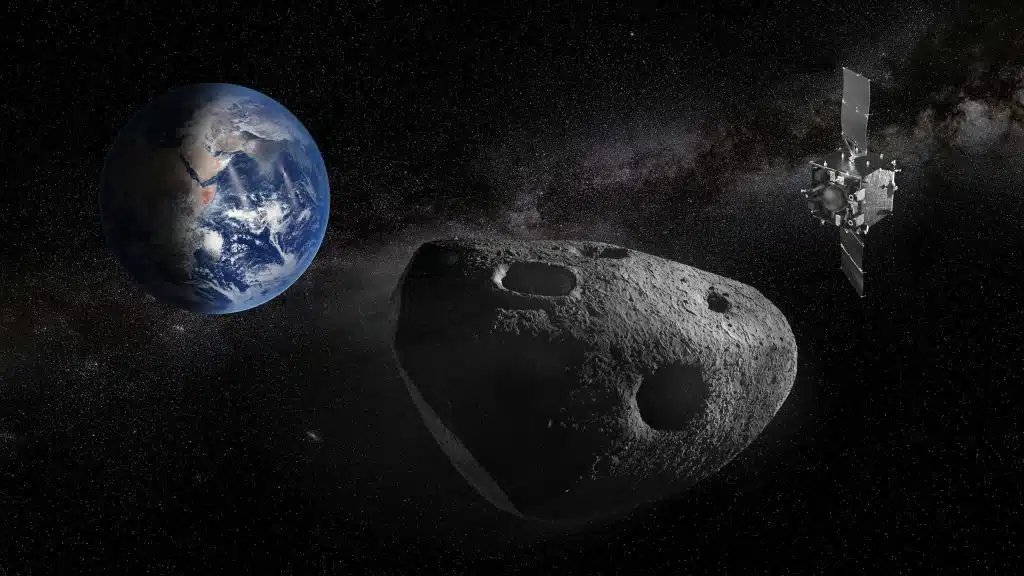 Conceptual image of ESA’s Rapid Apophis Mission for planetary protection. Credit: ESA
Ramses: A Pillar of Planetary Defense
The close approach of Apophis offers a rare opportunity to study the asteroid’s response to external forces, which could help protect Earth from future asteroid threats. As explained by Patrick Michel, planetary scientist at the French National Centre for Scientific Research (CNRS), the mission will help scientists understand how small celestial bodies behave under gravitational stress, a key piece of the puzzle in developing deflection techniques.
Ramses’ findings could significantly enhance the current understanding of asteroid deflection, particularly how different methods, such as kinetic impact, might work. The mission’s timing is critical, as planetary defense systems are still in the early stages of development. As Michel explains,
“In this unique time, nature is doing the job for us. Nature will provide the interaction, and we just have to observe.”
This observation could lead to new insights into how an asteroid’s trajectory can be altered.
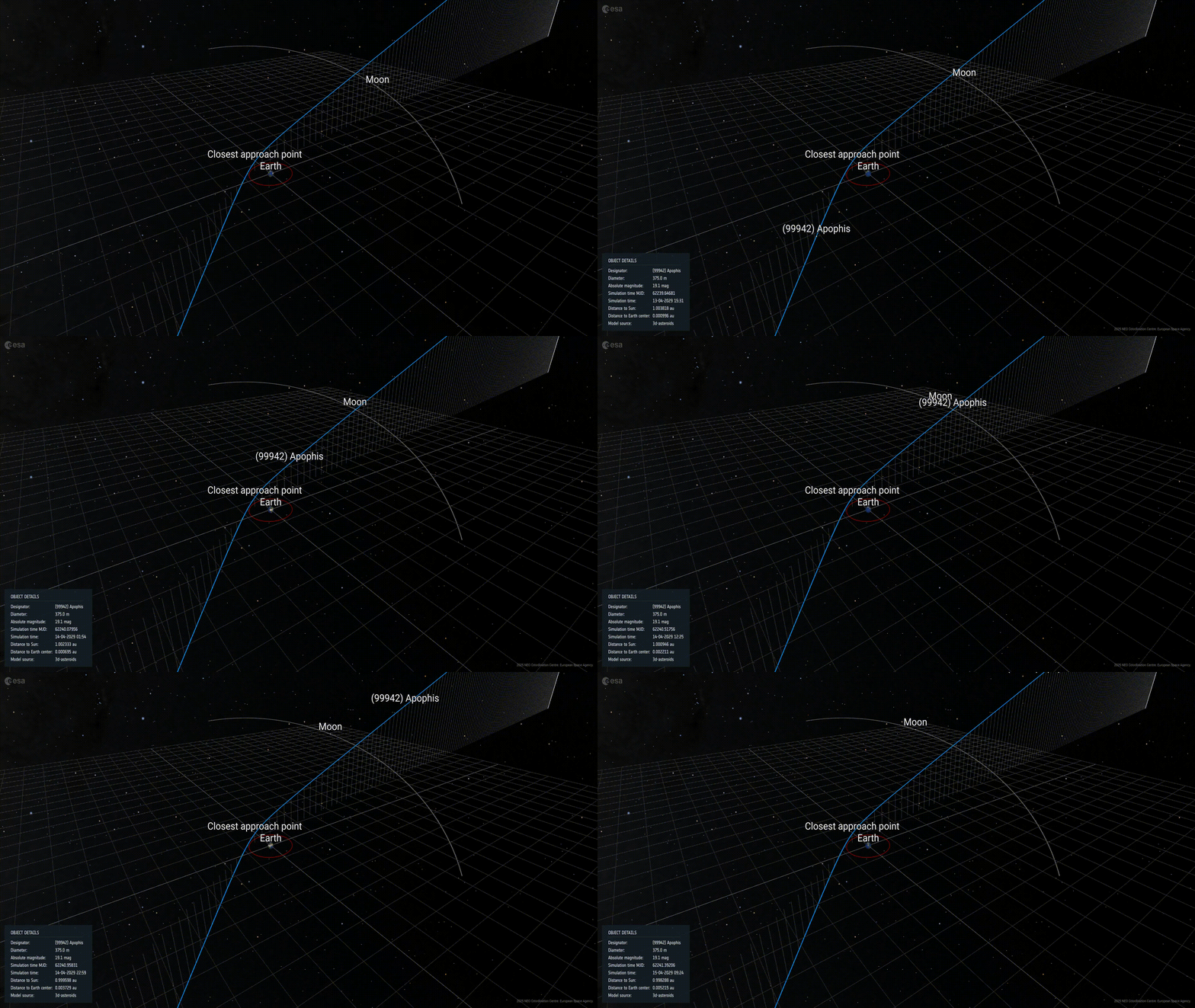 Visual representation of how Earth’s gravity will affect the orbit of asteroid Apophis during its close flyby in April 2029. Credit: ESA
A New Era of International Collaboration
The project also shows how important cultural exchange and teamwork are in space exploration. Even with the challenges of different work styles and red tape, both agencies have built a solid partnership, driven by their shared passion for advancing space science. Michel thinks the strength of their collaboration will go beyond just the scientific community, sending a strong message of global cooperation as the world gets ready for Apophis’ close approach in 2029.
“When everyone looks at Apophis, we will have two main agencies together on the asteroid. And that’s a great message,” he said, emphasizing the significance of such a joint mission.