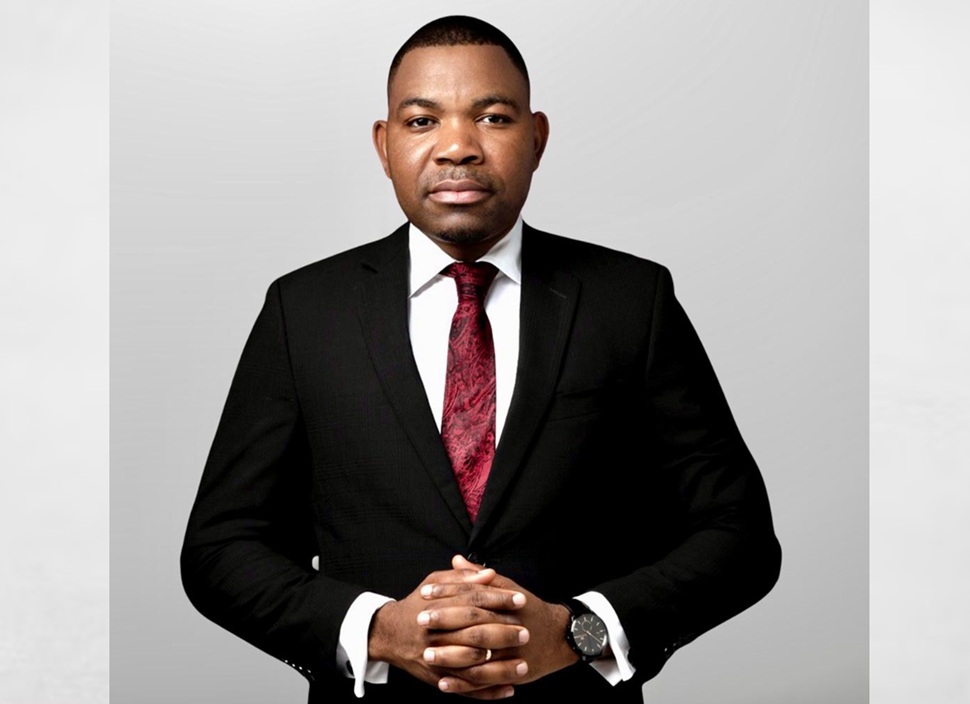
File photo: Courtesy of MozParks
Onório Manuel, Director-General of MozParks, the company that manages the Beluluane Industrial Park, warns that Mozal’s departure could cost the country more than finding a solution to the dispute over electricity prices. Speaking to ‘O País Económico’, Manuel explains that losing yet another industry, after several in the past, could give the country a “bad reputation” and deter major investments.
O País Económico: We now have another company investing in the Beluluane Industrial Park, namely in a mobile phone assembly industry. What is the significance of this investment in a context where the Park’s main company, Mozal, is threatening to shut down due to the unsustainability of its business?
Onório Manuel: In a context, as you rightly said, in which we are discussing Mozal’s future, this newly launched project represents diversification. It means opening space for the Beluluane Industrial Park to be seen not only as a location that hosts Mozal and Mozal’s suppliers of goods and services, but also as the epicentre of industry in Maputo Province and at national level.
We have been promoting this movement so that Mozambique, through industrial parks, can find the path towards sustainable industrialisation. That is why we argue that Mozal should not close. What we advocate is that Mozal should also deliver a more positive contribution from a social and economic perspective. This necessarily involves looking at what Mozal can do even more in Mozambique, and our idea is that Mozal should leave between 40% and 50% of the aluminium in the domestic market so that, from this aluminium, we can induce downstream industrialisation of the aluminium sector. We are talking about windows, doors, cans, rims, among many other components that can be manufactured from aluminium. This could bring real social and economic value to our economy. For this reason, we will continue our commitment to industrialising the country, not only by looking at the anchor company, in the context of Mozal, but also by focusing on economic diversification. Today we are proud, because we already have five companies in the technology sector. We are talking about data centres, and today we are here with the mobile phone company.
O País Económico: Turning more specifically to the Mozal issue, we know that the company is already in the process of terminating contracts with other service providers. We would like to understand the impact of the company’s possible departure.
Onório Manuel: I recall that we conducted a major interview at the time when we marked 24 years of the Beluluane Industrial Park. We explained the diversification we managed to achieve. That does not mean we want to say that Mozal’s exit will have no impact. We estimate that around 4,000 jobs could be at risk with Mozal’s departure. We are talking about approximately 1,200 directly employed by Mozal itself and around 3,000 employed by companies that provide goods and services to Mozal. We estimate that an average of 20 companies in Mozal’s value chain may be affected. For this reason, we consider the impact to be very high, and we have seen various analyses, comments and opinions, which we respect. However, it is necessary to be aware that Mozal is not just any industry; it is a robust industry. That said, Mozal must also contribute much more to the national economy.
For this reason, we believe that the path forward requires concessions from both sides, in order to reduce or mitigate the risk arising from Mozal’s closure, which also carries non-economic value, namely confidence in the country in terms of attractiveness and the retention of large-scale industry. Historically, Mozambique has not been good at retaining the large industries we once had. We are talking about Mabor, Vidreira, Maquinag, among other major industries that we failed to maintain. But that is the past. In the present, we cannot allow yet another industry to close, because any large investor coming to Mozambique to invest will always conduct due diligence to understand the macroeconomic context for hosting large-scale industry. Unfortunately, it is part of our history that we had major industries that we could not retain. To have yet another one, in the 21st century, that could not be maintained, regardless of the reasons, in future investment due diligence it will not be seen as a matter of lack of energy or lack of technical capacity. What will remain on record is that Mozambique cannot retain large industries, and this could cost far more than the electricity price we are currently discussing.
O País Económico: How many companies have already closed in the Beluluane Park due to Mozal’s decision? And what, as manager of the Beluluane Park, do you know about the negotiations taking place between Mozambique, South Africa and the two companies involved?
Onório Manuel: I will start with the simpler question. Regarding the negotiations, I know nothing. The Government and Mozal are negotiating – that is all we know.
As you also know, we are part of the leadership of the Confederation of Economic Associations of Mozambique (CTA). One of the appeals we made was that the CTA should be included in the negotiations, as a mechanism to bring balance between the parties. We are expecting that the CTA will be included, and from that perspective I may know much more. Regarding companies that have closed: at this moment, companies have reduced production capacity, because some of the companies that provide services to Mozal have other activities outside the Park, that is, outside the Beluluane Industrial Park. This allows companies to, in some way, reduce staff but not definitively close. We have not yet received any notification of any company having closed, but rather a reduction in activities, which also implies a reduction in the number of workers.
O País Económico: And this reduction, can we speak in percentage terms or in numbers?
Onório Manuel: The companies were not specific. They only communicated that they would reduce their workforce as a result of the reduction in activities within Mozal.
O País Económico: What will become of the Beluluane Park if Mozal permanently exits?
Onório Manuel: That is a very useful question, and I would like it to be faithfully conveyed in the terms in which I will answer. Mozal is very important to the Park. It is the Park’s anchor company. In the early years, we were 100% dependent on Mozal, but because we understood that it was necessary to reduce dependence and diversify the portfolio of companies in the Park, from 2005 onwards we began attracting other industries that have no relationship with Mozal. In short, what I want to say is that the Park will be extremely affected if Mozal closes. We pray that it does not close, but if it does, we will be extremely affected. However, the Park will not close. Today we are witnessing yet another example of diversification. The mobile phone company does not depend on Mozal. We have companies producing beauty products, hair products, we have data centres, steel pipes, cement, cashew nuts, and other industries.
This is to say that, as a Park, we remain firm. And an important message associated with this question is a call for attention to the whole country: every major project must necessarily have an industrial park as a mechanism for diversification. Mozambique cannot depend on mega-projects.
The economy needs to consolidate and diversify. That is why, within the expansion of industrial parks, we developed a strategy to establish 20 industrial parks nationwide, anchored to major projects, so that in the future, any change in a mega-project will not bring the economy to a halt.
By Clemêncio Fijamo
Source: O País Económico