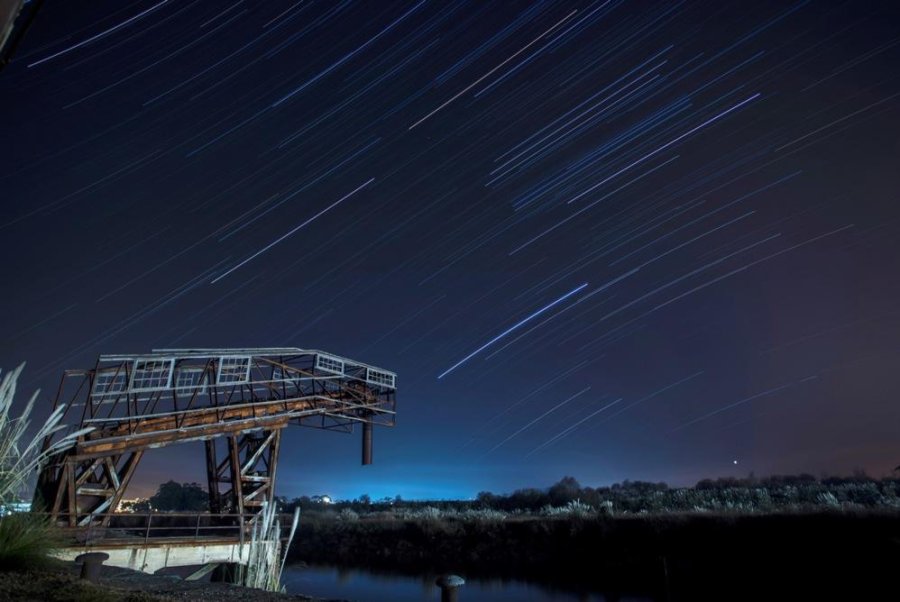
Dec. 26 (UPI) — The annual Quadrantid meteor shower will be visible as Earth passes through the icy debris and dust from Dec. 28 to Jan. 12, with up to 120 meteors per hour.
The blue meteors with fine trains that make up the Quadrantid meteor shower will reach peak activity on Jan. 4 in locales with no cloud cover, but a full moon will affect viewing quality.
It’s important to avoid areas with bright lights to get the best possible view, which makes locations like Death Valley National Park ideal for sky-gazers, according to experts.
Most rural areas that are several miles away from urban centers and other sources of bright lights at night are also fit for viewing, they said.
The Quadrantid meteor shower is one of the best to view and was created by asteroid 2003 EH1, which scientists say probably is an extinct comet.
“It was either a piece of a comet or a comet itself, and then it became extinct,” NASA meteor expert Bill Cooke told Space.com.
The meteor shower is made from what was left after the suspected comet’s ice and volatiles evaporated, Cooke said.
Because relatively little is left of the former celestial object, its peak viewing time lasts for hours instead of days as the Earth moves through the most abundant part of the debris field.
Many of the meteors are very fine, which makes them harder to see when the skies are insufficiently dark, which they often are in the Northern Hemisphere.
The Quadrantids are named after the former Quadrans Muralis constellation, which has become a part of the Bootes constellation.
Amateur stargazers can find it by locating the Big Dipper and following the arc of its handle to the Arcturus red giant star that is situated at the bottom of the Bootes constellation.
The meteors will be visible in other parts of the nighttime sky, so it’s important to look around to get the best viewing results.