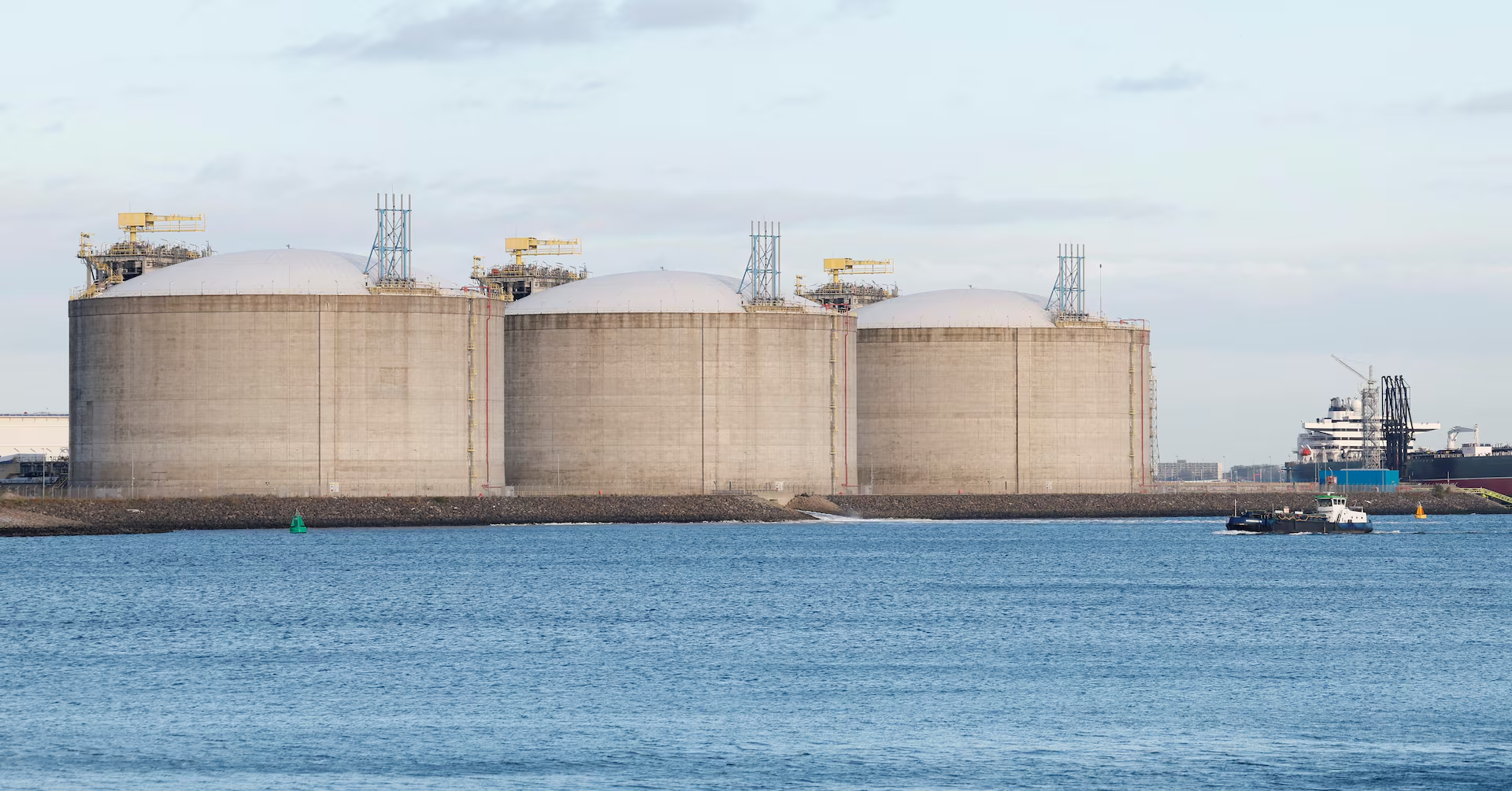
MELBOURNE, Dec 26 (Reuters Breakingviews) – Solar, wind power and batteries are set to make life a misery for the liquefied natural gas market. Some fossil fuel executives already think the push by incumbents like Exxon Mobil (XOM.N), opens new tab, Shell (SHEL.L), opens new tab and Woodside Energy (WDS.AX), opens new tab to hike global production by some 50% by 2030, per the International Energy Agency, is creating a bubble. But renewable energy’s advantages will make the pop even worse.
On the surface, the LNG expansion might look rational. Europe’s share of imports of liquid methane has doubled to 30% since Russia’s 2022 invasion of Ukraine, per Capital Economics, and the rise of artificial intelligence has created a boom in power-hungry data centres. Meanwhile, President Donald Trump is trying to force purchases of more U.S. fossil gas into trade agreements with the EU, Vietnam and others. And the industry argues LNG is the transition fuel to wean the world off coal power – especially Asia, which already accounts for 65% of global LNG imports.
Sign up here.
TotalEnergies (TTEF.PA), opens new tab CEO Patrick Pouyanné, though, told the audience at the Gastech conference in Milan in September that the sector is “building too much”. Vivek Chandra, boss of Gulfstream LNG in Louisiana, summed up the otherwise upbeat mood at the confab as “irrational exuberance”.That’s likely to be an understatement. Gas turbines have roughly tripled, opens new tab in price since 2021 to $2,400 per megawatt-hour, per U.S. utility NextEra Energy. With battery costs falling – by 40% in 2024 alone – all-in renewable generation and storage in 2030 could be up to 56% cheaper than gas, estimates Wood Mackenzie.
It’s already having an impact on the world’s biggest LNG importer, China, which is rapidly expanding its wind, solar and hydroelectric generation. By October, Beijing’s LNG imports had fallen 11 months in a row year-on-year, per data provider Kpler. The People’s Republic is also likely to increase purchases from Russia rather than from the U.S. and Qatar, which are responsible for most of the planned expansion of global supply.
Renewables have another factor in their favour: they’re quicker to install, with major projects taking around a year on average, compared to five years for a gas-fired power plant. And that’s assuming the equipment is readily available. But turbine makers GE Vernova (GEV.N), opens new tab, Siemens Energy (ENR1n.DE), opens new tab and Mitsubishi Heavy Industries (7011.T), opens new tab, which account for 90% of the market, have warned customers they face having to wait as long as eight years for delivery, according, opens new tab to the Institute for Energy Economics and Financial Analysis. That effectively nixes any chance of new gas plants replacing coal-fired power stations in Asian countries from Vietnam to the Philippines.
Excess fuel supplies, a hardware backlog and a more competitive alternative bode ill for LNG market incumbents. A crash is looming.
Follow Antony Currie on Bluesky, opens new tab and LinkedIn, opens new tab.
This is a Reuters Breakingviews prediction for 2026.
For more insights like these, click here, opens new tab to try Breakingviews for free.
Editing by George Hay; Production by Oliver Taslic
Breakingviews
Reuters Breakingviews is the world’s leading source of agenda-setting financial insight. As the Reuters brand for financial commentary, we dissect the big business and economic stories as they break around the world every day. A global team of about 30 correspondents in New York, London, Hong Kong and other major cities provides expert analysis in real time.
Sign up for a free trial of our full service at https://www.breakingviews.com/trial and follow us on Twitter @Breakingviews and at www.breakingviews.com. All opinions expressed are those of the authors.