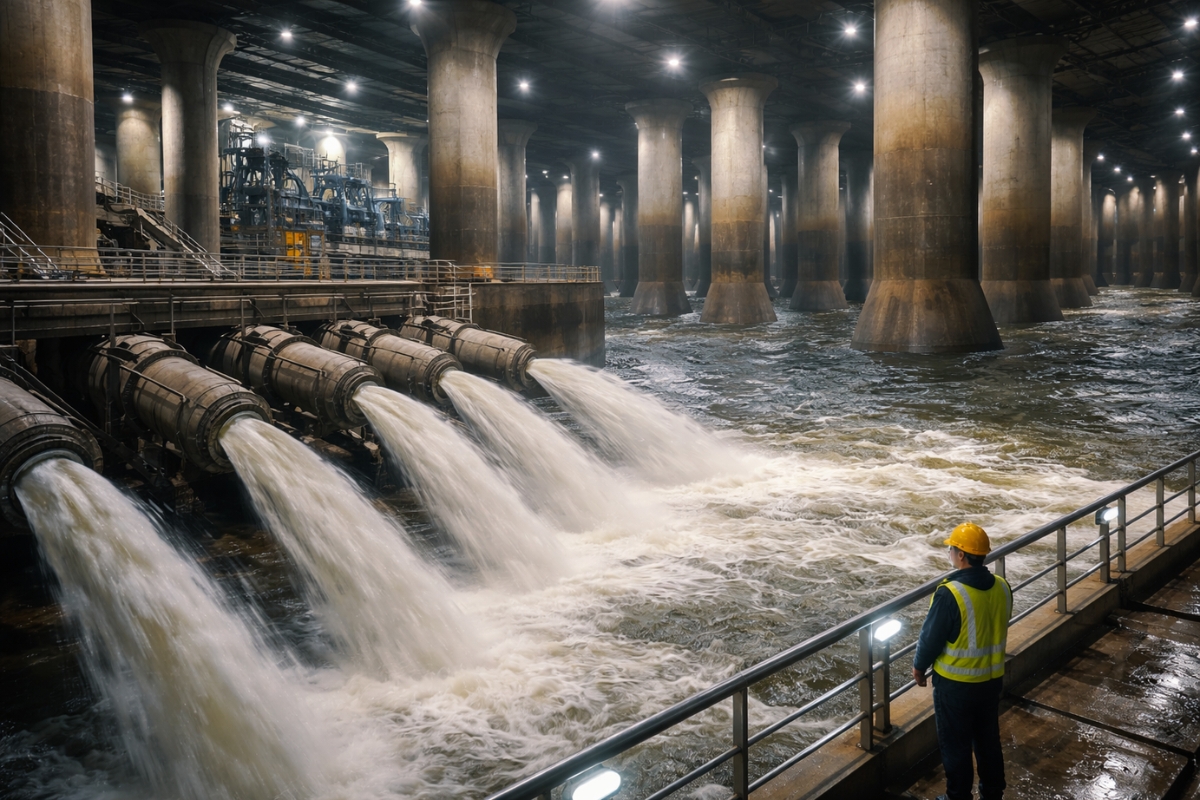

Published
26/12/2025 às 10:27
Most of Tokyo follows the normal rhythm of a megacity, but beneath the streets lies a gigantic structure that changes everything when the rain intensifies.
The Japanese capital has come to rely on an underground system capable of receiving enormous volumes of water and preventing neighborhoods, stations, and roads from becoming impassable.
The most striking point is that this mechanism involves rivers diverted beneath the city and the activation of industrial pumps that need to operate non-stop during critical events.
— ARTICLE CONTINUES BELOW —

What happened and why did it attract attention?
Urban expansion has reduced permeable areas, altered natural watercourses, and increased the risk of flooding during heavy rainfall.
Over time, the traditional drainage model has ceased to keep pace with the reality of a super-dense metropolis, where water finds increasingly less space to drain.
The solution was to move part of the flood control underground, with tunnels and reservoirs capable of receiving water from multiple points simultaneously.
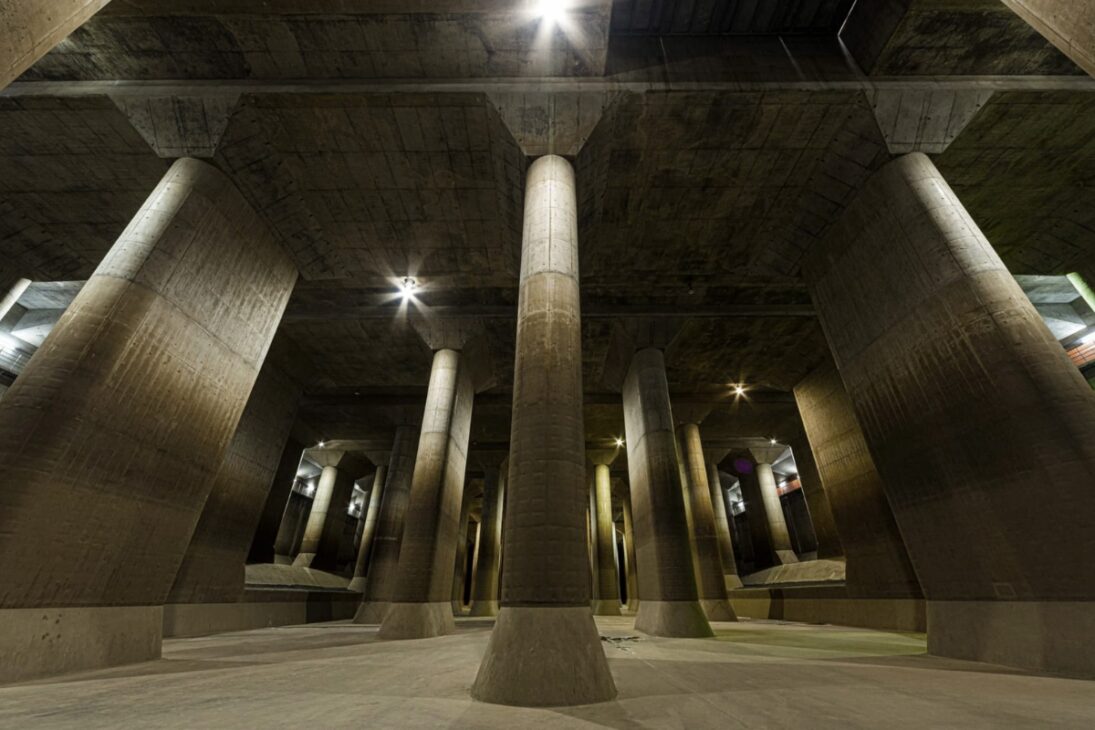 Concrete columns tens of meters high support the main chamber of the underground system, creating a monumental space where water is controlled before flowing through tunnels that prevent flooding on the surface.
How does the G Cans Project work beneath the city?
The best-known system of this strategy is the G Cans Project, officially called Metropolitan Area Outer Underground Discharge Channel.
The structure includes 5 wells enormous, each reaching 70 meters deep, interconnected by tunnels carved into the rock.
These tunnels add up to more than 6 kilometers and channel the water to a main control chamber, where the flow is stabilized before discharge.
The central point of the system is an underground chamber with 177 meters long, supported by large concrete columns.
When the rain intensifies, the water enters through the wells and flows through the tunnels to this space, which functions as a transition and control area.
From there, the flow depends on high-power pumps which push the water to a safe destination, reducing the risk of it returning to the surface.
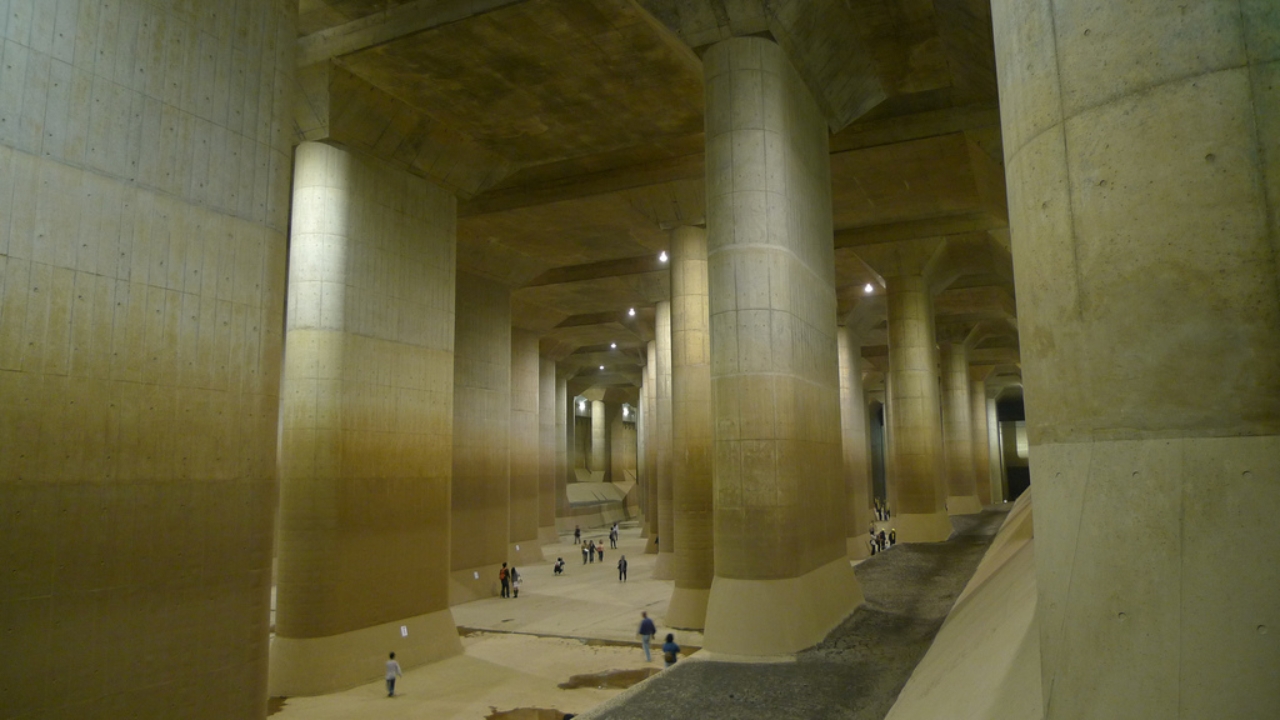 An underground chamber with large concrete columns is part of a system that receives extreme volumes of water, controls the flow of diverted rivers, and helps prevent surface flooding during periods of heavy rain.
What changes in practice for those who live in a metropolis like Tokyo?
During heavy rain events, the difference is evident in real life: fewer blocked streets, a lower chance of transportation disruption, and a reduction in the immediate impact on vulnerable areas.
The city now has an extra layer of protection that is not visible in everyday life, but comes into play when the volume of water rises too quickly.
This model also requires constant operation and maintenance, because its functioning during critical moments depends on the reliability of the entire system.
Why can’t the system stop, even for a short time?
The entire logic of this structure stems from a simple principle: the water needs to keep moving so it doesn’t return to the surface.
When the volume increases rapidly, the ability to capture, direct, and expel this flow becomes crucial to prevent chain flooding.
Therefore, the system functions like a continuous machine, which depends on constant monitoring and an immediate response whenever weather conditions worsen.
Tokyo has adopted an extreme solution to continue existing in an increasingly impenetrable territory.
With 5 wells, 70 meters deep, more than 6 kilometers of tunnels and a chamber of 177 metersThe city transformed invisible rivers into essential infrastructure to keep urban life functioning even on the most critical days.