The National Aeronautics and Space Administration, or more commonly known as NASA, is typically renowned for its contribution to comprehending the cosmos. However, their contributions are beyond space exploration, as their work also focuses on Earth science, climate, and aeronautics. Now, NASA has found the future of mankind. It is extremely far from Earth, and it weighs 3,000,000 tons.
NASA has found the future of mankind
The world evolves around renewable energy, and it seems as if renewable energy may have been revolving around Earth all this time. For those who did not know, there are solar winds in space, which result in high amounts of Helium-3, which is a very scarce isotope, consisting of two protons and one neutron. What makes this isotope so great is its potential to supply safe nuclear energy in fusion reactors, seeing as it is not radioactive and would thus not result in hazardous waste products.
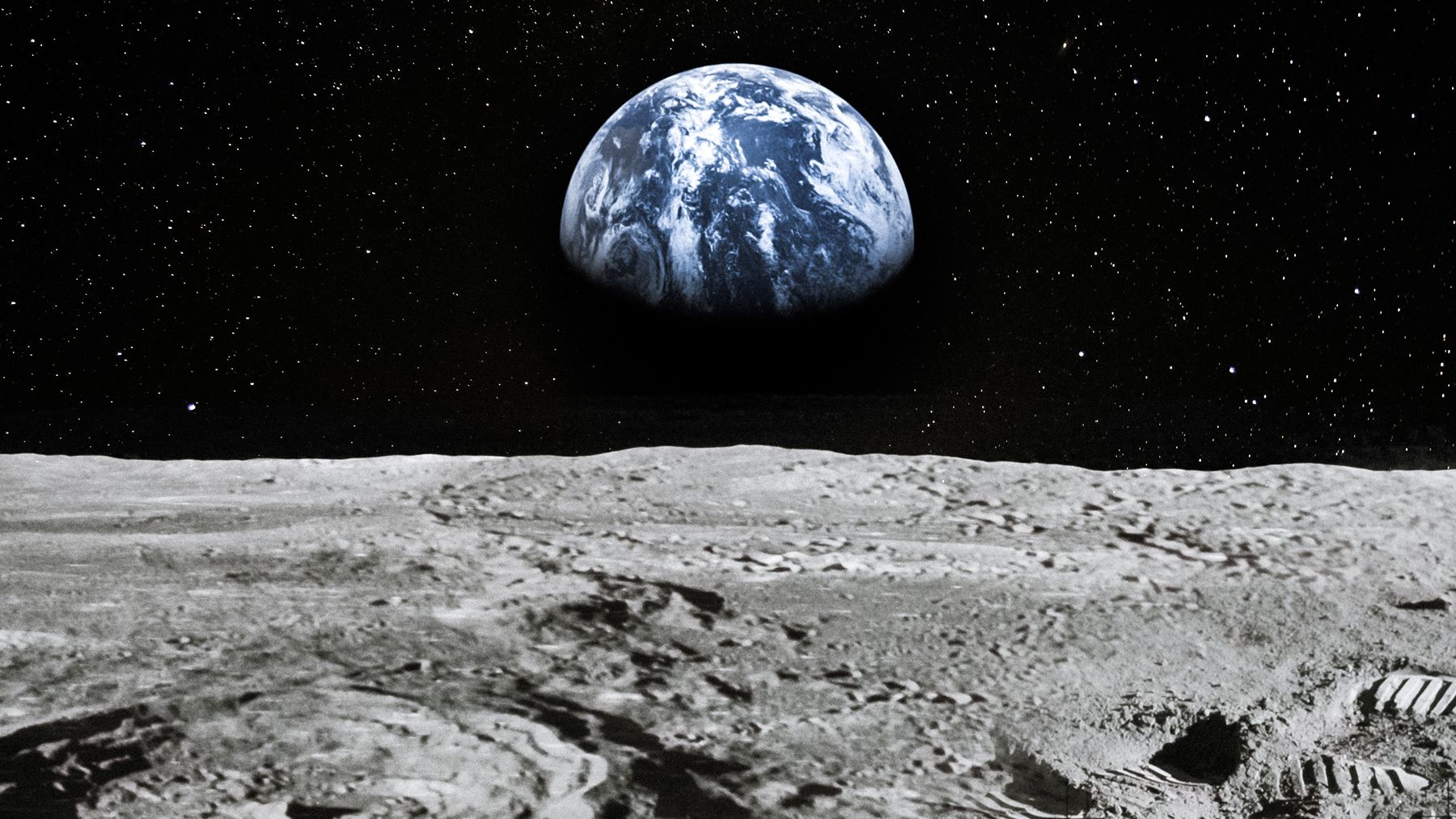
Unfortunately, Earth is safeguarded by its magnetic field, which means no Helium-3 from solar winds. However, the Moon has been proven to be hit by solar winds and thus has high amounts of this valuable isotope. See, renewable energy is revolving around Earth!
“Of the various volatile materials available on the moon, there is potentially only one that has significant value back on Earth. Helium-3, if used as fuel in a nuclear fusion reactor, could become a significant lunar export for power generation around the world.” – Aaron Olson, a NASA Space Technology Research Fellowship recipient
Mining the moon for our future
Mining the moon for Helium-3 is advocated by the Apollo program’s geologist, Harrinson Schmidt. At present, equipment is being constructed to illustrate the mining of Helium-3 and other volatiles from the Moon’s regolith (soil). According to the NASA official website, volatiles can be described as chemical elements and compounds that have low boiling points. Examples of other volatiles on the Moon include water, carbon dioxide, and hydrogen, which are typically located in the cold, shadowy regions of the Moon, such as the Shackleton crater.
A lunar solar wind volatiles extraction system will be utilized to mine the Moon, and its design is funded by the NASA Space Technology Research Fellowship (NSTRF) program. Olson is studying the potential of mining the Moon with this technology through the Fusion Technology Institute at the University of Wisconsin-Madison. Thankfully, the Moon has plenty of Helium-3 to mine, with estimates suggesting approximately one to three million tons within the regolith.
The future of mankind still has a long way to go
Olson and his team have been researching the possibility since being awarded the grant in August 2014. Together with the assistance of the Kennedy Space Center, they will be testing the “implantation system” to insert helium ions into a lunar regolith simulant. Olson also invented a counterflow heat pipe to exchange heat for successive diffusion of helium from the regolith. This approach imitates the mining of helium-3 from the Moon to utilize in Earth’s nuclear fusion reactors.
The next step would be to progress the research to an aircraft demonstration that functions in such a manner that the Moon’s gravity, which is one-sixth of Earth’s, will be simulated. After the completion of this step, the next one would be to augment processing equipment for flights to the Moon.
“From the fusion standpoint, there are large fusion projects like the International Thermonuclear Experimental Reactor and the U.S. National Ignition Facility. They have been making good progress in the last few years.” – Olson
Olson believes that fusion technology’s development “seems like an eventuality.” Should the research progress congruently with fusion technology’s development, we could be looking at a green nuclear energy future.