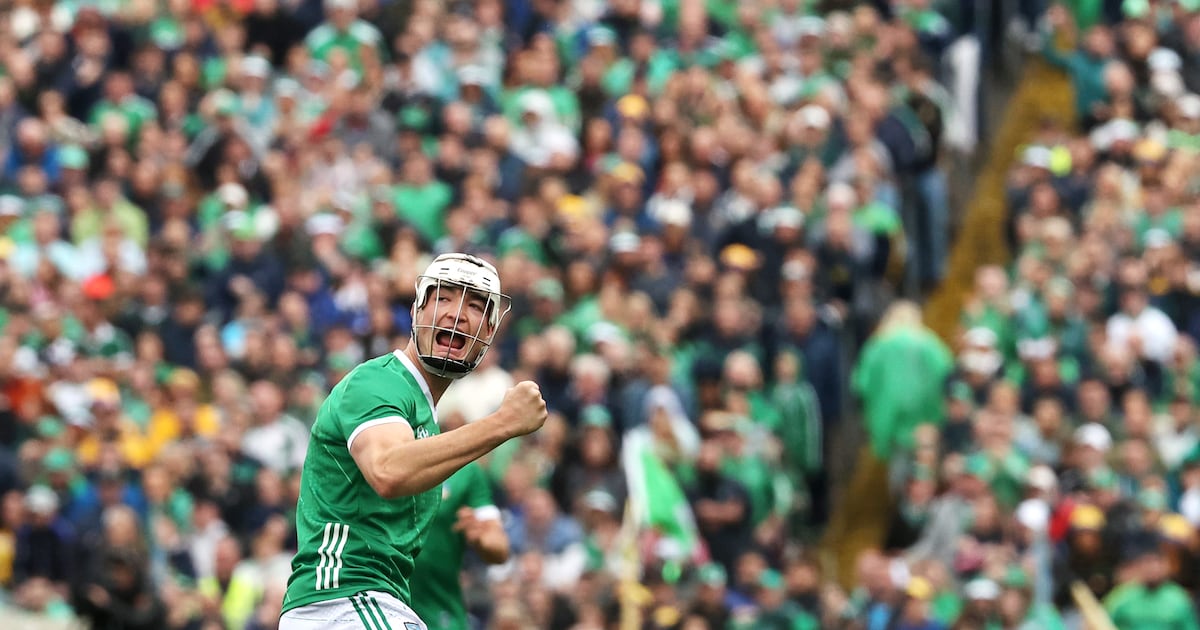
Six months retired now. It was tough to cut ties with the weekly routine of Munster training and to know that I’d never pull on a green jersey again.
I’m not the first, nor the last athlete to face this period of adjustment. The immediate positive is your social life improves exponentially.
I’m still training every day. Well, most days. My wife is worried I might get carried away and enter an Iron Man.
The body feels better than ever and the joints have got used to the road runs after two decades on grass.
All the constant, niggly injuries have cleared up enough for amateur careers in golf, padel and possibly even seven-a-side football to take shape.
For the record, I am not coming out of retirement. A former Ireland team-mate wondered if I would be tempted by the increased number of aerial duels and the need for consistent box-kicking, week-in week-out.
I have had my time. But you definitely need an exit strategy. It has helped to keep busy in the media with a BBC podcast and my column in The Irish Times.
Recently, the Rugby Social pod landed in Willie John McBride’s sittingroom in Moneyglass.
Willie John is almost as legendary an orator as he was captain of the Lions, Ireland and Ulster. I barely said a word during the hour in his company. I’d enough sense to sit and listen to his stories, recalling an epic career.
“I remember going in ’71 to New Zealand,” said McBride. “Carwyn James was our coach and he said: ‘What is the biggest problem when we play against the All Blacks? Every time a British team or an Irish team gets the ball, they kick it. The ball is hard to get, we are not going to kick it back to them, we are going to use it.’”
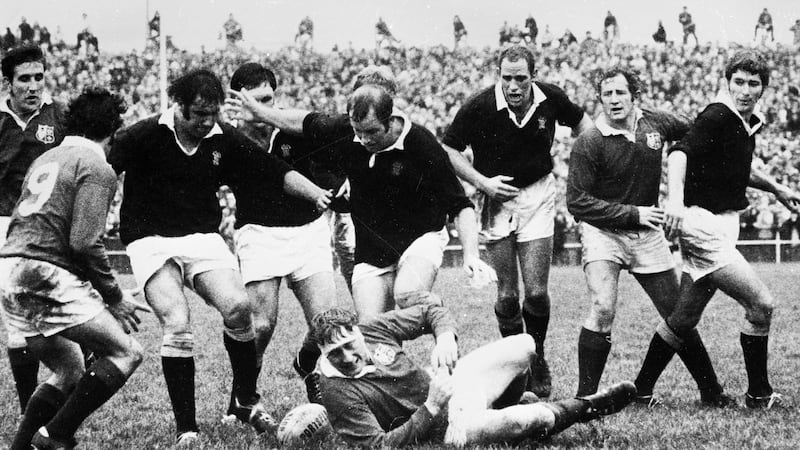 Willie John McBride falls to the ground after being tackled during the first Test in 1971. Photo: Central Press/Getty Images
That opened the door to Willie John listing off the Lions backline from 1971: “Gareth Edwards, Barry John, John Dawes, Mike Gibson, David Duckham and Gerald Davies, with JPR Williams at the back.”
Even at 85, the names came easily to him. It got me thinking about my earliest sporting heroes. It tends to be the first sign of genius you witness and that tends to be local and being from Patrickswell, in the 1990s, that was always going to be Gary Kirby clipping scores to secure county titles for the ‘Well.
Kirby lived down the road.
My hurling career petered out for a simple reason. The hurley and sliotar need to be an extension of your arms if you ever want to feature in Semple Stadium. Growing up, I also played rugby, soccer and plenty of squash.
Nowadays, Patrickswell is a hotbed for heroes with three straight hurlers of the year coming from the club – Cian Lynch, Diarmuid Byrnes and Aaron Gillane – in 2021, 2022 and 2023. They became household names across Ireland at the same time that the number of Limerick rugby players in the Munster academy dropped.
Of course, there is room for hurling and rugby to thrive side by side in Limerick but inside the Munster changing room we used to talk about what position we would play big, skilful hurlers like Byrnes and Gearóid Hegarty.
Backrow is the obvious place, but imagine Kyle Hayes at inside centre for Munster?
The spell was broken these past two summers as the greatest Limerick side, perhaps the best hurling team ever, came up short. Defeat to Dublin suggested that a magical era was coming to its natural conclusion.
I hope not. Most of the players who burst on the scene in 2018 are under 30, so age is not an issue.
It’s hard to keep going back to the well. Most of them have five All Ireland medals and six Munster titles. You almost need the setbacks to reignite the fire. Maybe a few months of golf and padel will clear all the niggly injuries.
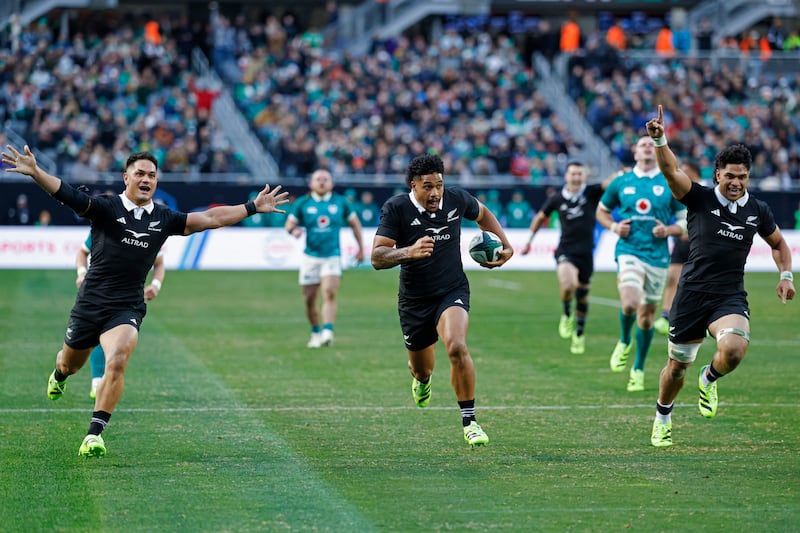 New Zealand’s players celebrate after defeating Ireland. Photograph: Kamil Krzaczynski/AFP via Getty
The Limerick hurlers made winning All-Irelands look routine as they continually snatched victory from the jaws of Cork, Clare, Tipp, Galway, Waterford and Kilkenny.
The levels of conditioning required to dominate down the home straight cannot be maintained forever.
Similarly, the Ireland rugby team was not operating at full throttle in 2025, certainly when compared to the heights of 2023 and 2024.
It’s hard to stay on top of the mountain, year on year. Eventually you have to kick to the All Blacks and see what happens.
Irish rugby is going through a natural period of regeneration and 2026 will tell us more.
I’d compare the Limerick hurlers’ dip – as it is no demise – to Leinster. Both will come good again, sooner rather than later because the foundations in both ecosystems are too strong for either team to go into freefall. Rugby is ingrained in the Dublin schools and the Limerick underage system has a conveyor belt of talent coupled with expert coaching.
I remember our mentality in Ireland camp: we would stay in the fight and know – with absolute certainty – that our conditioning would prevail. Even if it was not true, for a time, we convinced ourselves that we could outlast any opposition.
I’m writing this before the teams are released, but I hope Leinster travel to Thomond Park with all their internationals. I hope they come hunting revenge for Croke Park last October. I’ll do a 5km road run before sitting in to watch, rather than feature, in Munster versus Leinster.